
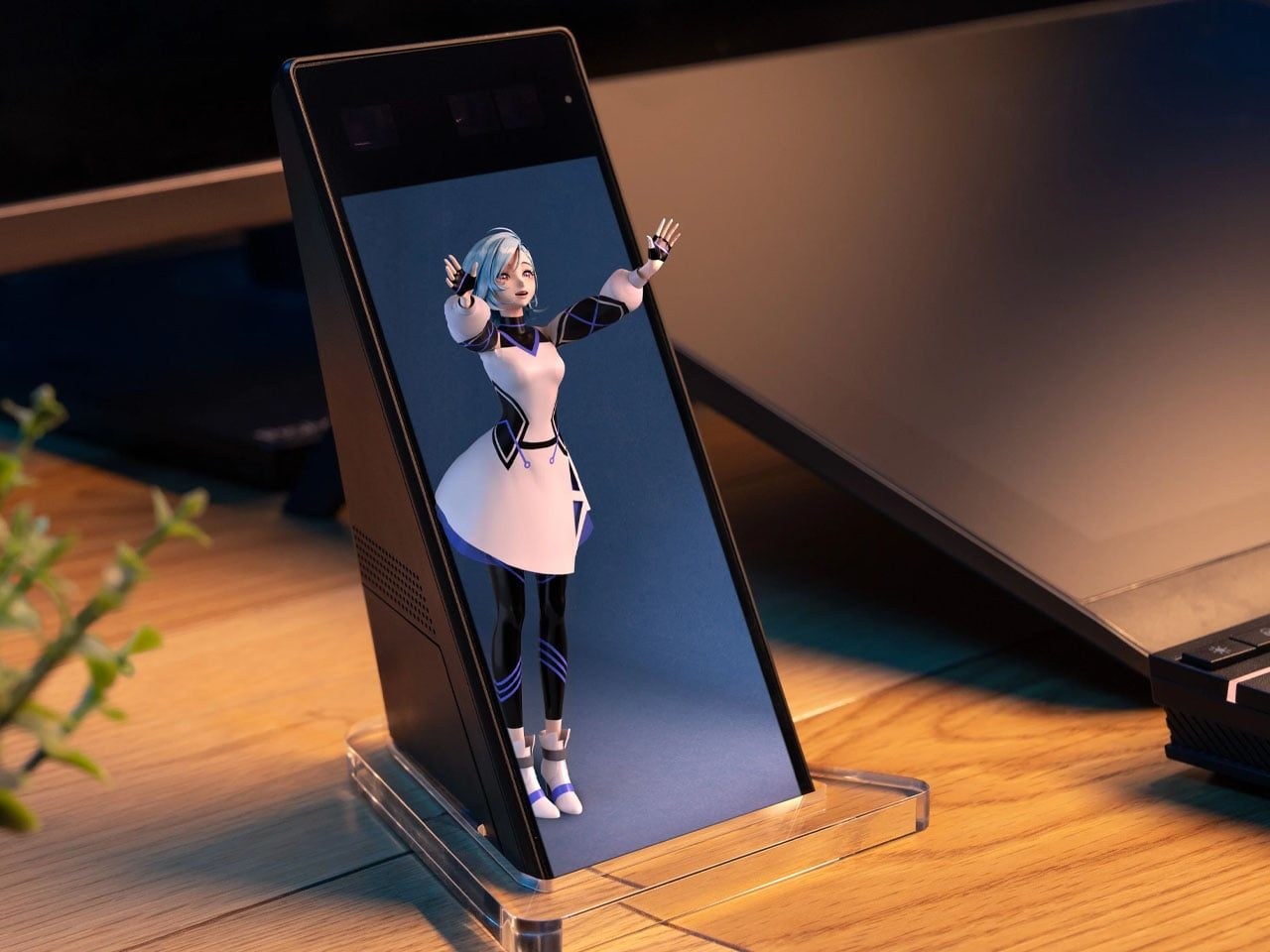
 f your desk is already buried under plastic anime figurines, Sony has found a new solution. It takes up less space on your shelf, but demands significantly more cash from your wallet and raw hardware power from your computer.
Sony has dropped the ELF-MN1, a compact 3D display without a traditional screen, designed for viewing digital figures, special content, and anime avatars without requiring glasses or headsets. Measuring 77x154x94.5 mm, the device sits on a transparent acrylic stand, making the 6-eye glass (or rather, the 6-inch bezel-less screen) literally hover in the air. This collector's joy weighs around 300 grams.
How the hologram illusion works
To make a flat screen display a volumetric character, a built-in infrared sensor tracks the viewer's eyes in real time. It fixes the head's position in space and adjusts the stereo image on the fly. As Sony explains, this tracking system feeds different angles to each eye, creating a sense of depth without bulky glasses or headsets.
Sony claims the ELF-MN1 supports HoloModel digital figures from Gugenka. This lets you drag licensed characters right onto your desktop as digital trinkets instead of buying dusty plastic alternatives. The volumetric image is rendered in real time, and viewing it from a distance of 30 to 80 centimeters delivers the best results.
The ELF-MN1 display uses an eye-tracking system to deliver the best possible view of a 3D image at a resolution of 1,080×2,160 pixels.
Even if you fidget in your chair, the 3D effect holds up and image clarity doesn't drop because the sensors instantly recalculate viewing angles. To complete the illusion of realism, a 1-watt stereo speaker is built right into the device—meaning your digital figurines and anime avatars actually have a voice.
A heavy hardware tax
Before you clear space near your keyboard, check whether your computer or phone can actually pull this off. The display packs an LCD panel with a resolution of 3,840 by 2,160 pixels, a 60 Hz refresh rate, a 1,350:1 contrast ratio, up to 470 nits of brightness, and a pixel density of 403 ppi. These are record numbers among all spatial reality devices from Sony.
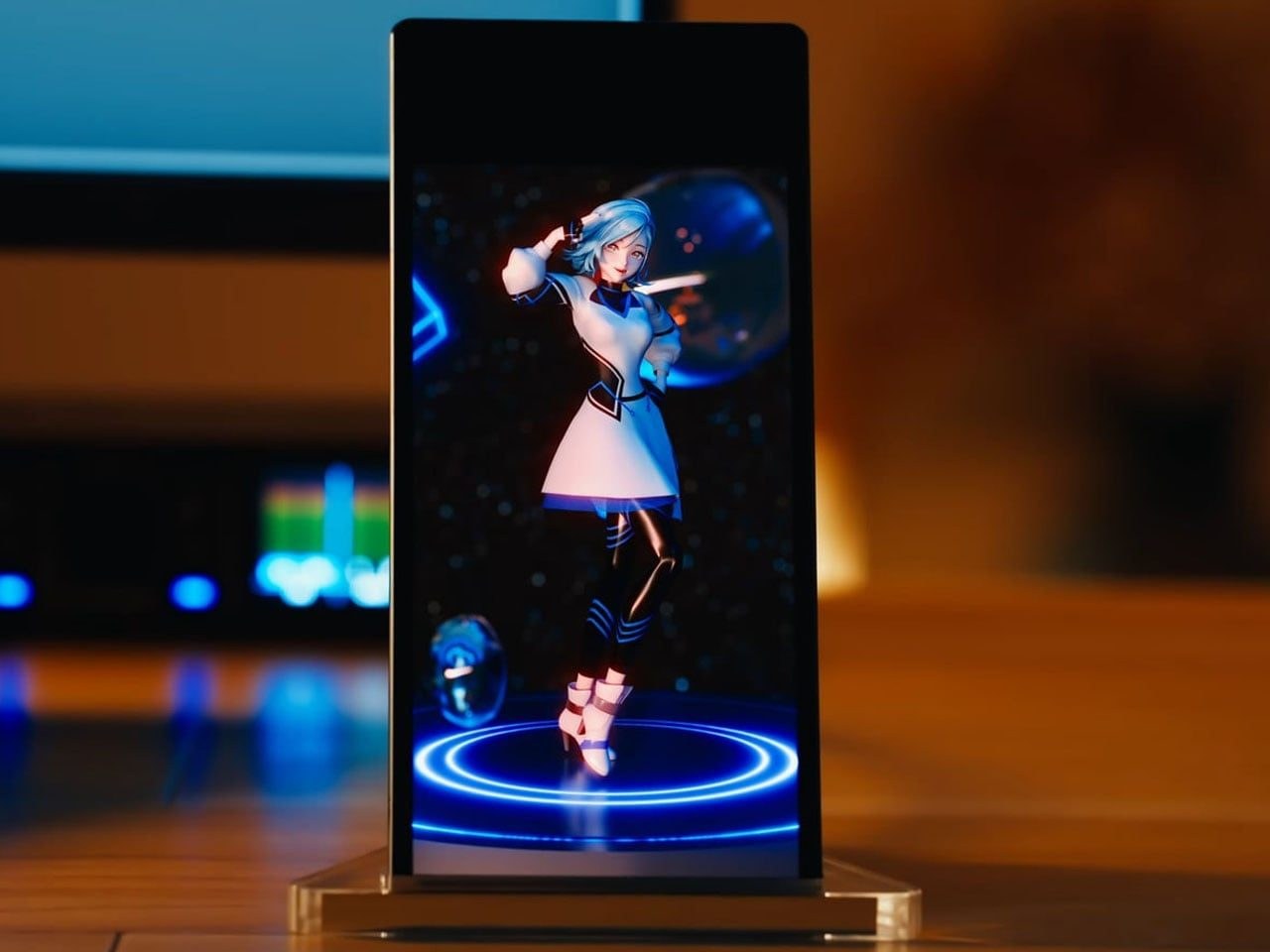
Processing this many pixels on the fly is a serious job for a powerful processor. According to Sony's specs, you'll need a snappy smartphone with a USB-C port and video output support (DP Alt Mode), or a desktop/laptop with at least 16 GB of RAM and a USB-C port capable of pushing 4K at 60 frames per second. If your work laptop is a few years old or lacks these ports—my sympathies, you're out of luck.
Why this thing won't work for you
The main drawback of the technology is total social isolation. The volumetric image is rendered strictly for a single person looking directly into the screen. To everyone else, the anime avatar will look like a formless mess. If a colleague or friend leans over your shoulder to check out your virtual toy, they'll see nothing but a scrambled pixel soup.
For those who want to get their hands on the device before buying, the ELF-MN1 hits Japanese Sony stores for testing starting November 20. It goes on sale in Japan on December 11 for 54,000 yen—roughly 340 dollars.
Why it matters
Why did Sony squeeze 403 ppi into a six-inch desktop display? To pull off glasses-free depth, the ELF-MN1 relies on an infrared eye-tracking sensor that recalculates the image strictly for a single seated viewer. Sony built a clever alternative to collectible plastic figures that remains tethered to demanding hardware rather than functioning as a standalone desk toy.