
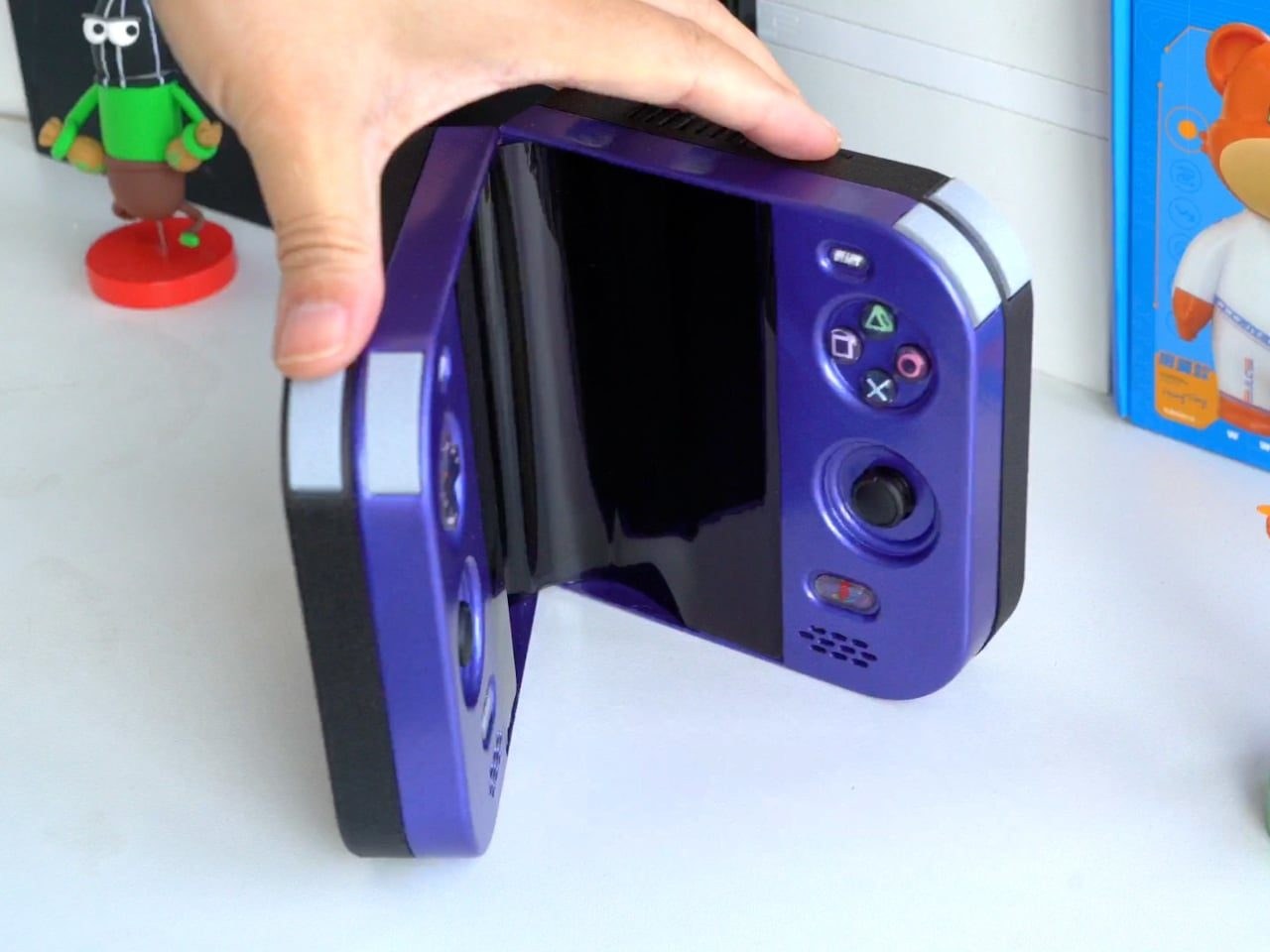
 hen you want to play games from the classic PlayStation 2 era on the go, your options usually involve cumbersome third-party equipment or heavy emulation setups that never quite capture the real thing. The PlayStation 2 DUO brings those pieces together in an unofficial DIY handheld with an unusual trick. Its screen actually bends in the middle, letting you fold the console when it's time to put the game away. As designer LCLDIY demonstrated, this machine forces us to look at old hardware in a completely new light.
Can you buy such a portable PlayStation 2 in stores, or is this just an expensive toy for hobbyists? As LCLDIY showed, you cannot buy it anywhere because this is a completed hobby build, not an upcoming retail product from Sony with a price tag and shelf space. It is a stunning feat of garage engineering, but as the project details confirm, it remains strictly off-limits to anyone who doesn't own specialized tools and soldering gear.
Anatomy of a Foldable Mod
The device avoids the awkward split-screen look of modern folding gadgets by using a single flexible panel salvaged from a foldable phone. That screen is a single flexible panel, rather than two separate displays interrupted by a hinge. Surrounding this folding display is a purple shell featuring a D-pad and four recognizable PlayStation symbols sitting above two analog sticks. Start and Select occupy the upper corners, while speaker grilles sit neatly below the controls.
The PlayStation 2 DUO brings those pieces together in an unofficial DIY handheld with an unusual trick. Its screen actually bends in the middle, letting you fold the console when it's time to put the game away.
Beneath that playful exterior lies genuine PlayStation 2 hardware rather than a modern computer pretending to be Sony's console. Getting it to fit required cutting down the original motherboard and rearranging its supporting electronics. A 3D-printed enclosure brings everything together, turning equipment once tethered to a television into something you can hold between both hands. Separate control boards occupy the two sides, with a ribbon cable linking them across the center, while the trimmed motherboard carries a small cooling fan and heatsink.
Why You Won't See This on Shelves
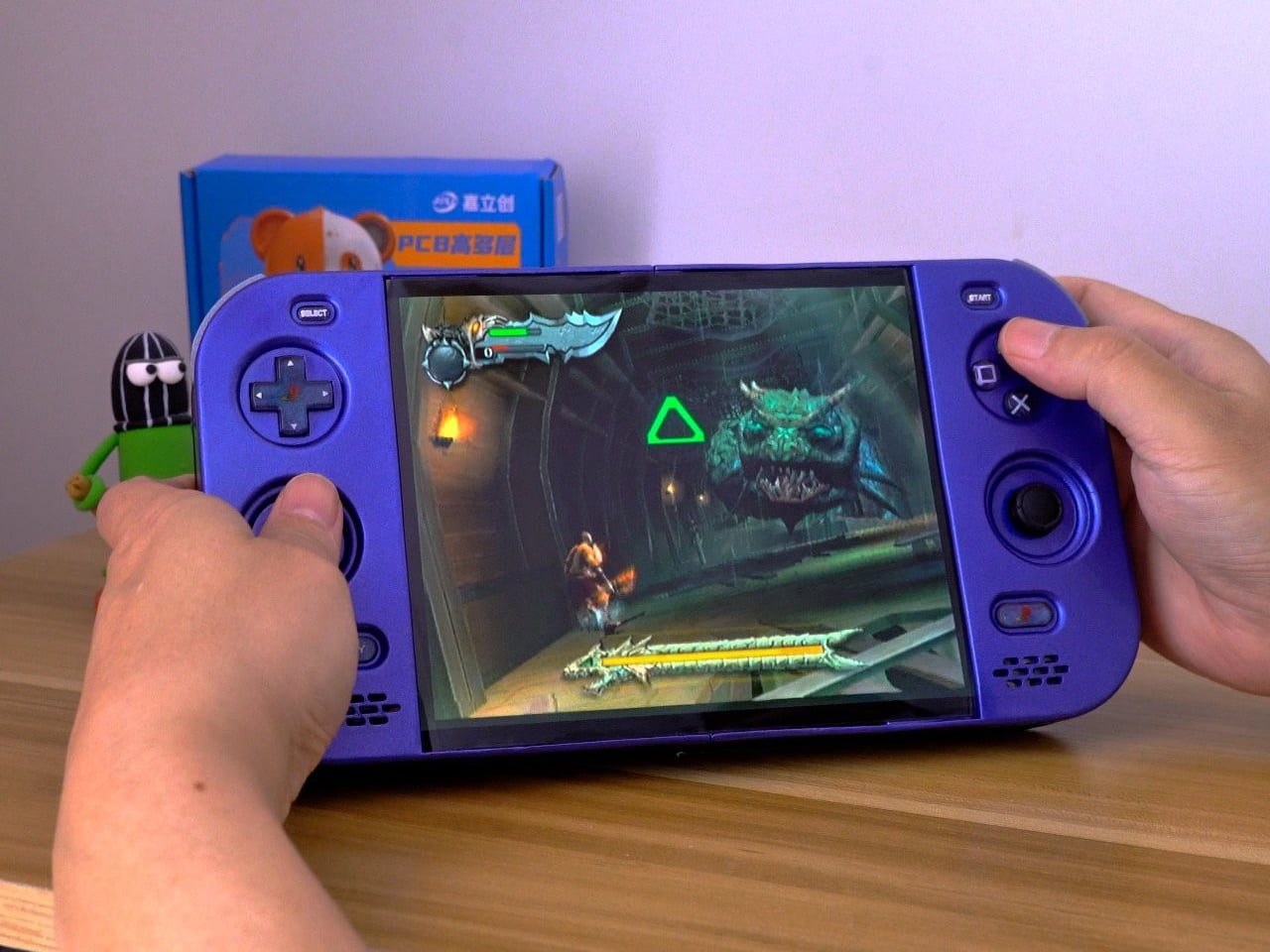
Making a screen bend doesn't make its physical limitations magically disappear. The panel needs room to curve, and forcing it into a sharp fold would damage it, which shaped the casing and its hinge to leave a broad bend instead of squeezing the halves completely flat. That leaves a less tidy package than a commercial clamshell might suggest, designed specifically to keep that delicate display in one piece.
Moreover, the published project information does not establish its weight, closed dimensions, or battery runtime, meaning you cannot easily plan a travel setup around it. Recreating the DUO still involves board modification and careful work around a flexible display, even though enclosure printing files and a PCB archive are available on the project page. As the technical reality of the build shows, if your experience with PlayStation hardware mostly involves inserting physical discs rather than hacking up circuit boards, this brilliant garage experiment is best left as something to admire from afar.
What’s behind it
The risk of destroying a fragile flexible display and the need to manually cut original circuit boards quickly cool any excitement over LCLDIY publishing the build files. While the maker managed to marry genuine PlayStation 2 hardware with a foldable smartphone panel, the device pays for this novelty with bulky hinge ergonomics designed merely to prevent the matrix from snapping. Without factory engineering or disclosed battery specs, the build remains a high-stakes soldering challenge rather than a viable travel gadget. Will any enthusiast actually risk cutting a working motherboard and a donor folding screen for a handheld with completely unknown battery life?