
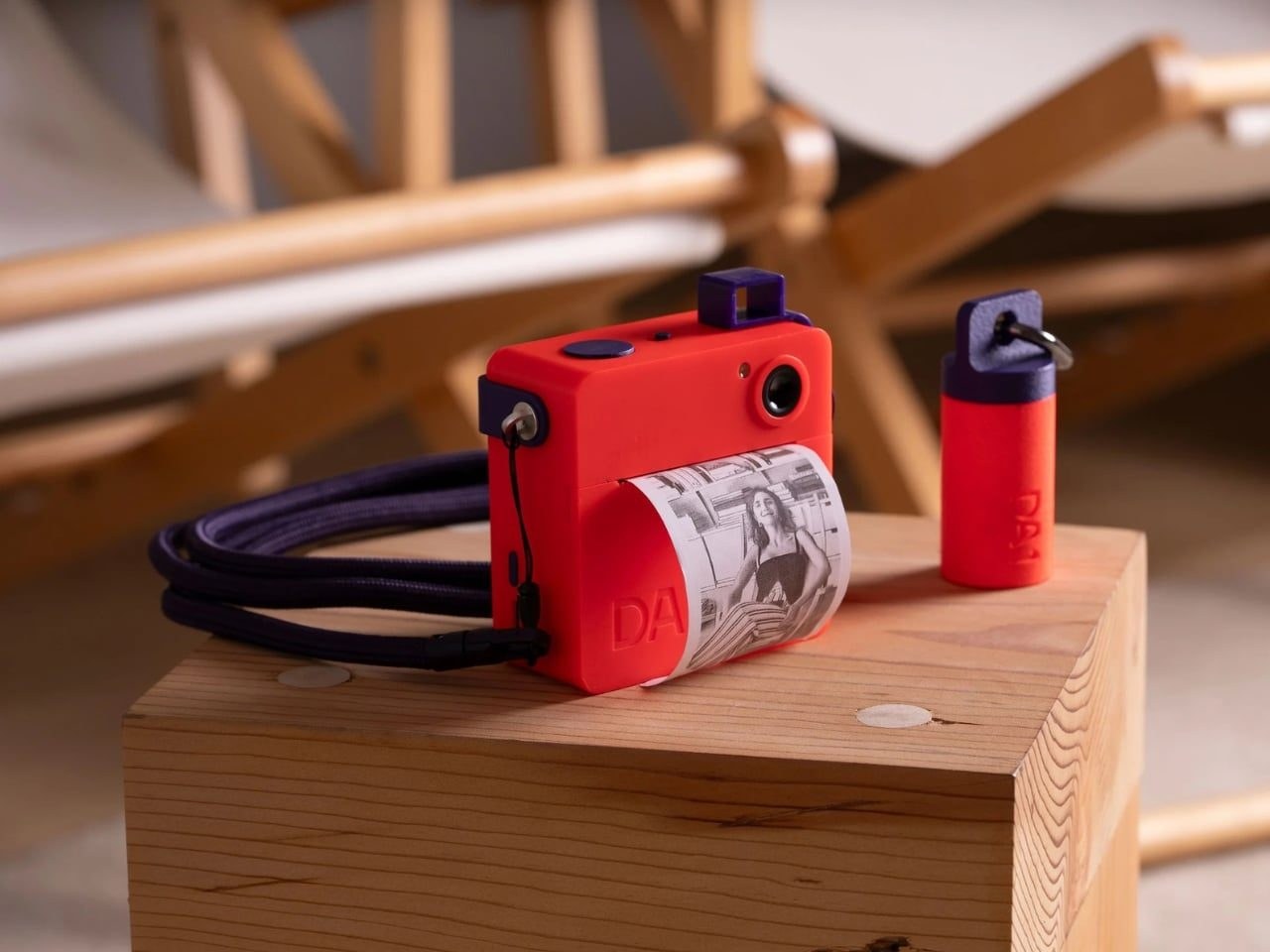
 ifty shots per roll—and that is your entire limit until you reload the paper. The Twogather DA1 camera takes a standard roll of thermal paper, snaps a frame, and immediately spits out a physical receipt with your photo on it. No screens, no internal gallery, and no companion mobile apps.
No memory by design
A complete rejection of previews and digital storage turns this gadget into pure party entertainment rather than a proper camera. You cannot check if someone blinked, you cannot apply a filter, and you cannot later drop the file into your phone's gallery. The main question before buying: is there any point in getting a camera that fundamentally doesn't know how to save digital files, or is this just an overpriced cash register with a touch of retro romance.
Instant printing without digital safety nets
The DA1 operates by strict analog rules, despite the electronic guts inside. Press the shutter button—and the device instantly prints the frame on thermal paper.
The creators explicitly state that the DA1 has "no memory," so building a digital photo archive with it is definitely not going to work.
Since there is no built-in storage at all, every shot is a one-way ticket straight to paper. If you aimed the lens crookedly or missed the frame, you will only find out when the roll spits out a black-and-white strip.
Twogather packed the electronics into a rounded square body with a prominent circular lens. You can choose between the bright Neon version and the translucent Clear edition, which puts the circuit boards, chips, and printing assembly on display. Both modifications load standard receipt rolls, so you won't have to spend a fortune on expensive ink cartridges. According to Twogather's estimates, a single roll is enough for about 50 shots or a little more.
Party souvenirs versus lost archives
The entire concept of DA1 flips the essence of shooting: instead of long-term cloud memory, you get instant souvenirs for guests. Included in the basic kit are a removable viewfinder for framing, a wrist strap, a belt clip, and five colored markers to draw right over the fresh prints. A neck strap is sold separately.
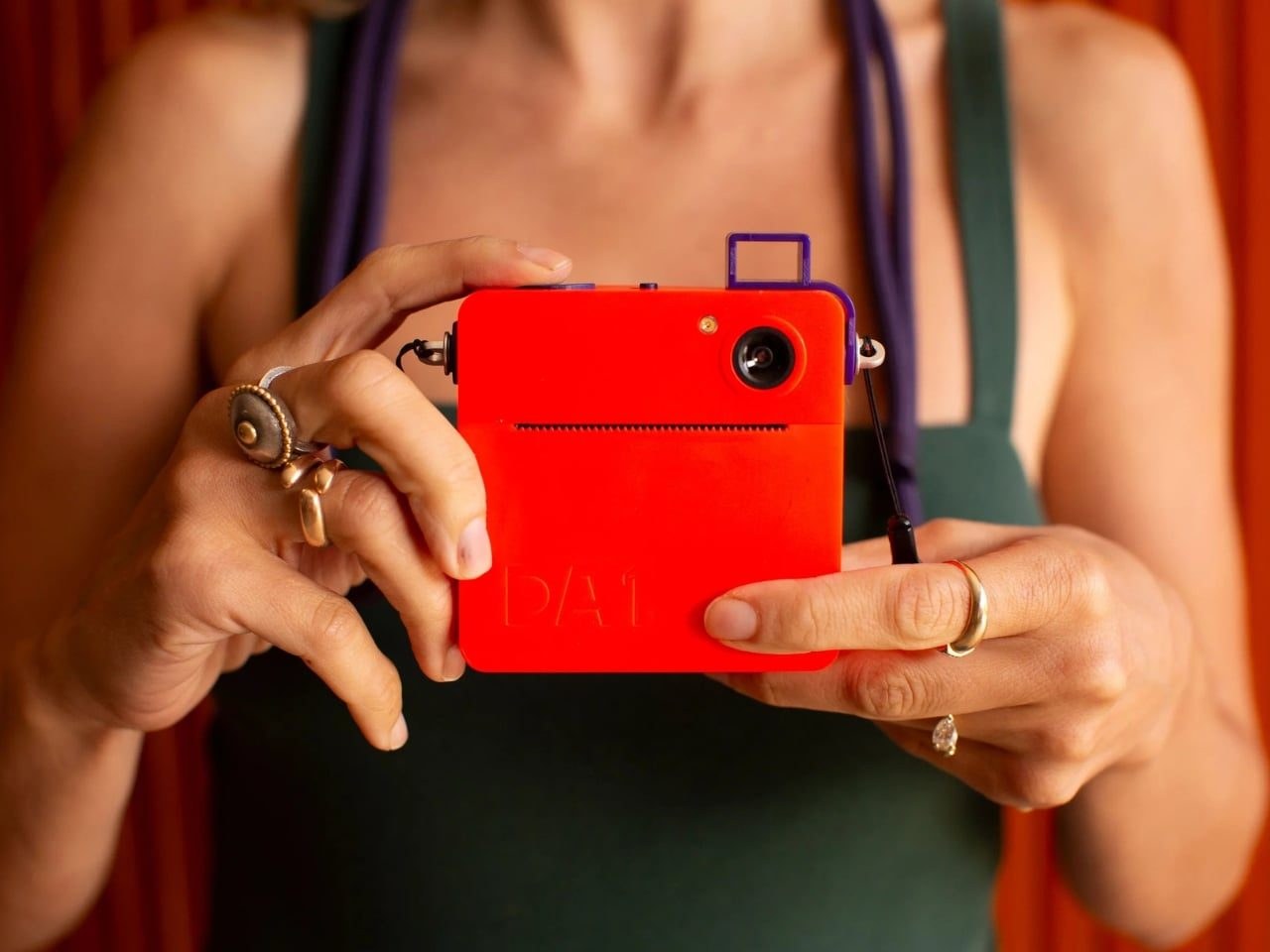
The included markers let you sign and color the black-and-white cards before handing them out to friends.
This format works great at get-togethers or family parties where handing a tangible piece of paper to someone is more valuable than hoarding gigabytes of files.
But there is a flip side to the coin: if you planned to keep a backup copy, lift shadows in an editor, or reprint a lost frame, this camera will drive you crazy. There is no cache inside, and no cloud synchronization either. You handed the paper receipt to a friend—and the shot vanished forever.
On the official website, Twogather asks $98 for the Neon version and $110 for the transparent Clear edition, excluding taxes and shipping. Meanwhile, pre-order deliveries in the US are only promised for November 2026. Dropping a hundred bucks on a camera that fundamentally remembers nothing is a bold move, especially considering the two-year wait for the dubious pleasure of losing your digital copies.
Why it matters
Why would anyone pay for an electronic camera that deliberately lacks both digital memory and a screen? Twogather relies on radical mechanical minimalism: skipping internal cache and companion apps turns every shot into an unrepeatable paper token printed on receipt paper. While combining basic sensors with 58-millimeter thermal printers CSN-A2 has been done in DIY setups, this commercial version charges around a hundred dollars for an intentionally constrained gadget. Buyers are essentially paying a hundred dollars for a digital device whose sole purpose is to ensure no digital trace survives.
Our stories: DIY Instant Camera Prints on Receipt Paper for Pennies (October 3).