
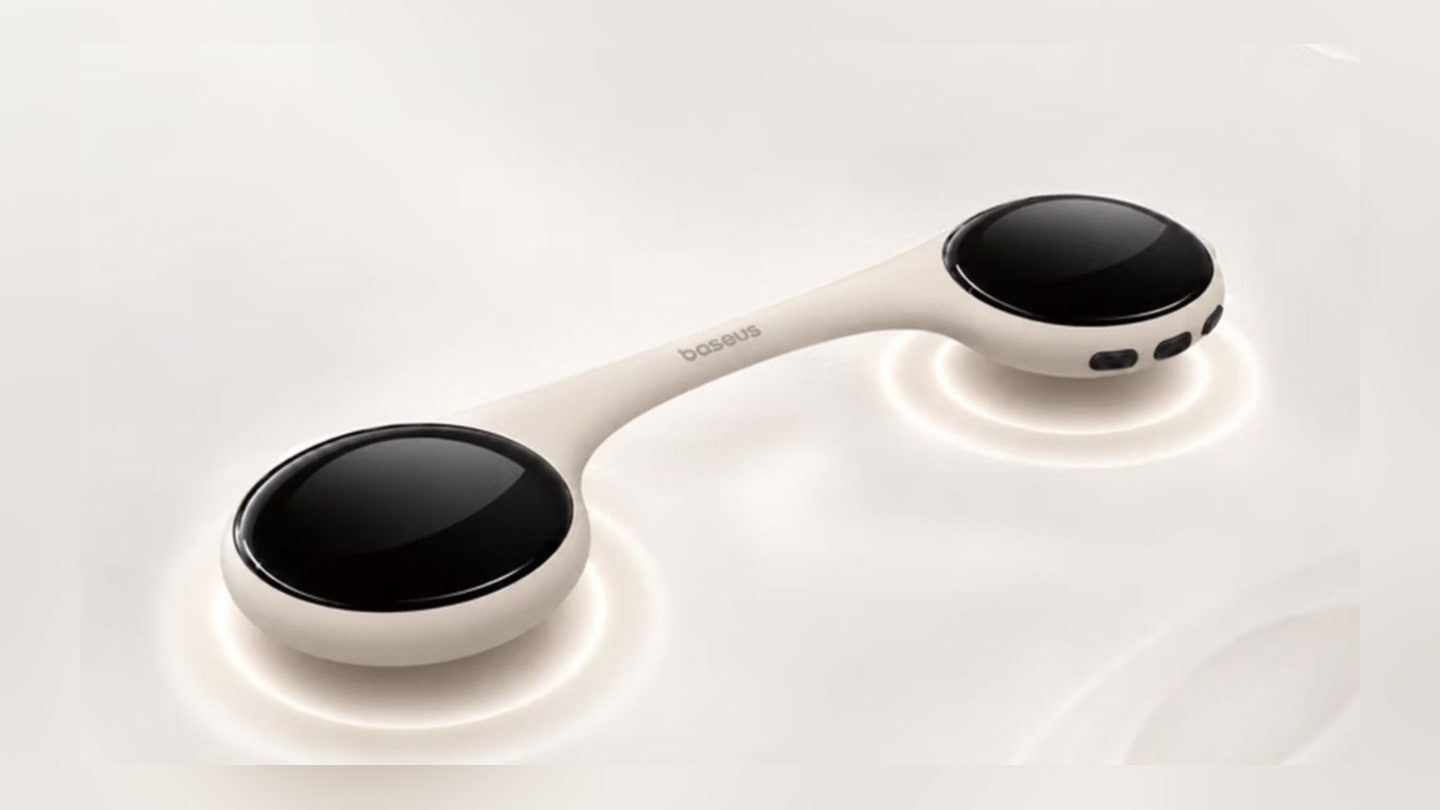
 he Baseus Sleep SK1 measures 16.5 by 4.5 by 1.4 cm and weighs 44 g, sliding directly beneath bedding to pipe audio straight to one ear without wedging plastic into your ear canal at 2 AM.
Falling asleep to a podcast while your partner demands dead silence usually ends in ear pain from side-sleeping on an earbud. An under-pillow speaker solves this mechanically by turning the fabric above it into an acoustic transmitter. In our view, paying $26 to eliminate morning ear soreness is an easy trade, provided your bedding actually allows it to work.
Vibrations Through the Cushion
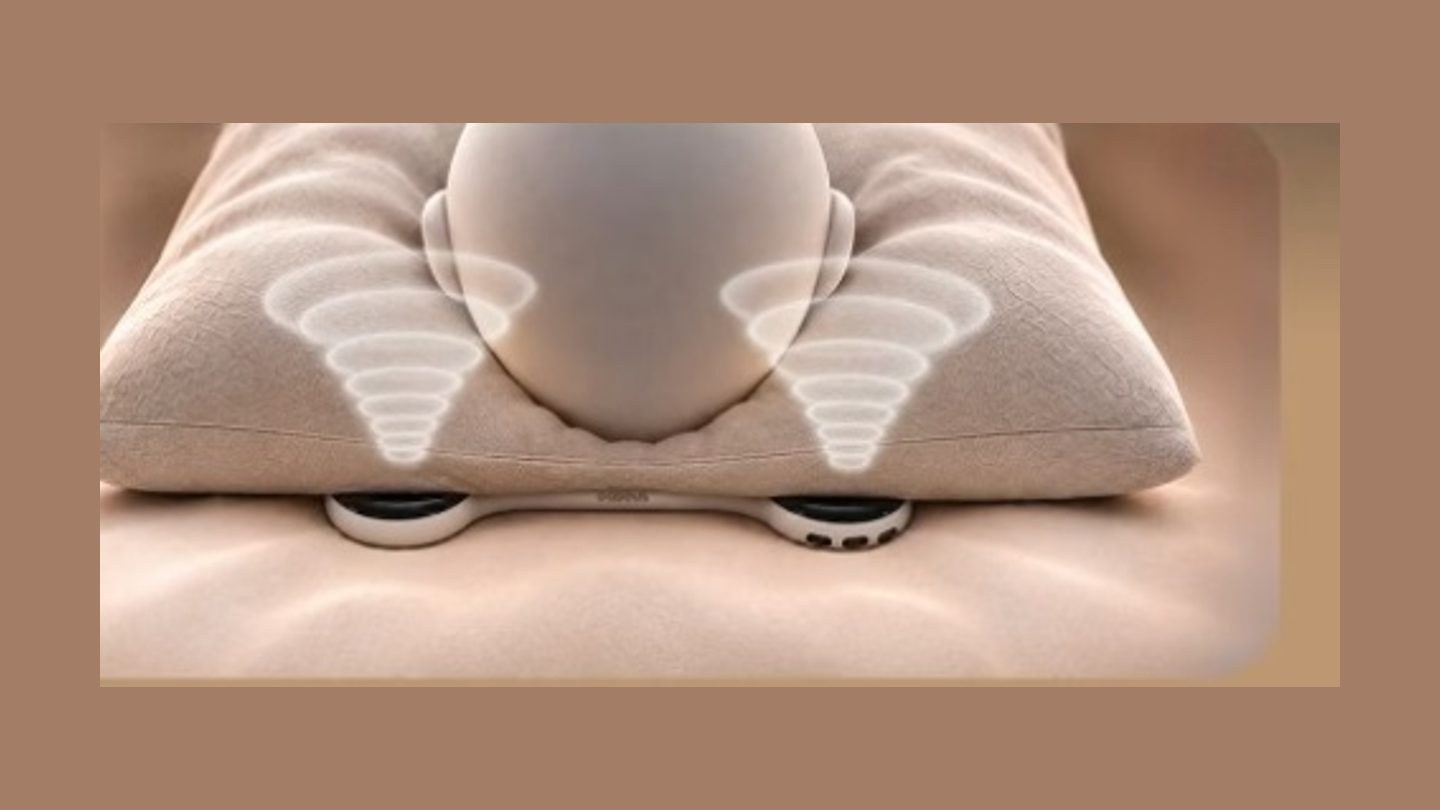
Instead of a conventional driver pushing air across the room, the SK1 relies on what Baseus calls micro-vibration conduction. Two symmetrical vibrator units project sound into the pillow material itself, which carries the audio vibrations the final few inches directly to your ear.
Two symmetrical vibrator units send the sound into the pillow itself, and the pillow carries it the last few inches to your ear.
Because the audio stays localized to the surface of the pillow, Baseus claims the volume drops off before reaching the other half of the mattress. Lifting your head away fades the sound out entirely, allowing a private wake-up alarm or sleep track without waking the room. How does that translate when your bedding is unusually thick?
The Eight-Centimeter Limit
Baseus notes that its micro-vibration setup is strictly capped at pillows up to about 8 cm thick, which is roughly 3 inches. Dense, heavy cushions absorb the vibration before it reaches the surface, forcing you to crank up the volume and defeating the private listening design.
Beyond the drivers, the SK1 features a fire-retardant shell with a matte coating designed to resist fingerprints. One round end houses a digital clock face displaying the time, active mode, and battery status beside physical buttons. Inside, a 300 mAh battery delivers over 10 hours of playback per charge according to Baseus, and it recharges over USB-C in about two hours. The companion app connects over Bluetooth to manage 10 separate alarm schedules and over 100 white-noise tracks, covering rain, ocean waves, birdsong, campfire, meditation music, and ASMR.
The Reality on Price
In China, the SK1 lists on JD.com for ¥184, which converts to roughly $26, with regional subsidies dropping it as low as ¥173.18 in select areas.
The Jabees PEACE Duo is a bone-conduction under-pillow speaker built on the same one-listener idea, at $54.99 on Amazon.
American buyers without access to import channels face a steeper markup: the Jabees PEACE Duo sells on Amazon for $54.99 with four hours of built-in offline audio. In our 9 September 2026 coverage, Anker's Soundcore Sleep Earbuds 4 Pro tackled bedtime pressure by shrinking each bud to a flat three-gram disc, but an under-pillow bar eliminates in-ear hardware entirely.
If you sleep on a slim pillow and share a bed, importing the SK1 for roughly $26 is a practical upgrade over jammed ear canals. Heavy memory foam sleepers should skip under-pillow drivers altogether, as thick foam inevitably muffles the conduction.
For comparison
A strict 8-centimeter pillow thickness limit highlights the mechanical trade-off of bedside micro-vibrational audio: the device completely frees the ear canal, but only if the bedding matches its acoustic requirements. While Anker tried to ease nighttime ear pressure by shrinking earbuds down to 3-gram discs, Baseus shifts the sound source out of the body entirely to keep audio localized just inches away. Priced around $26, this approach also undercuts bulkier alternatives like the $54.99 Jabees listed on global storefronts. The device essentially asks buyers to choose between the physical support of dense memory foam and the convenience of private bedtime listening.