
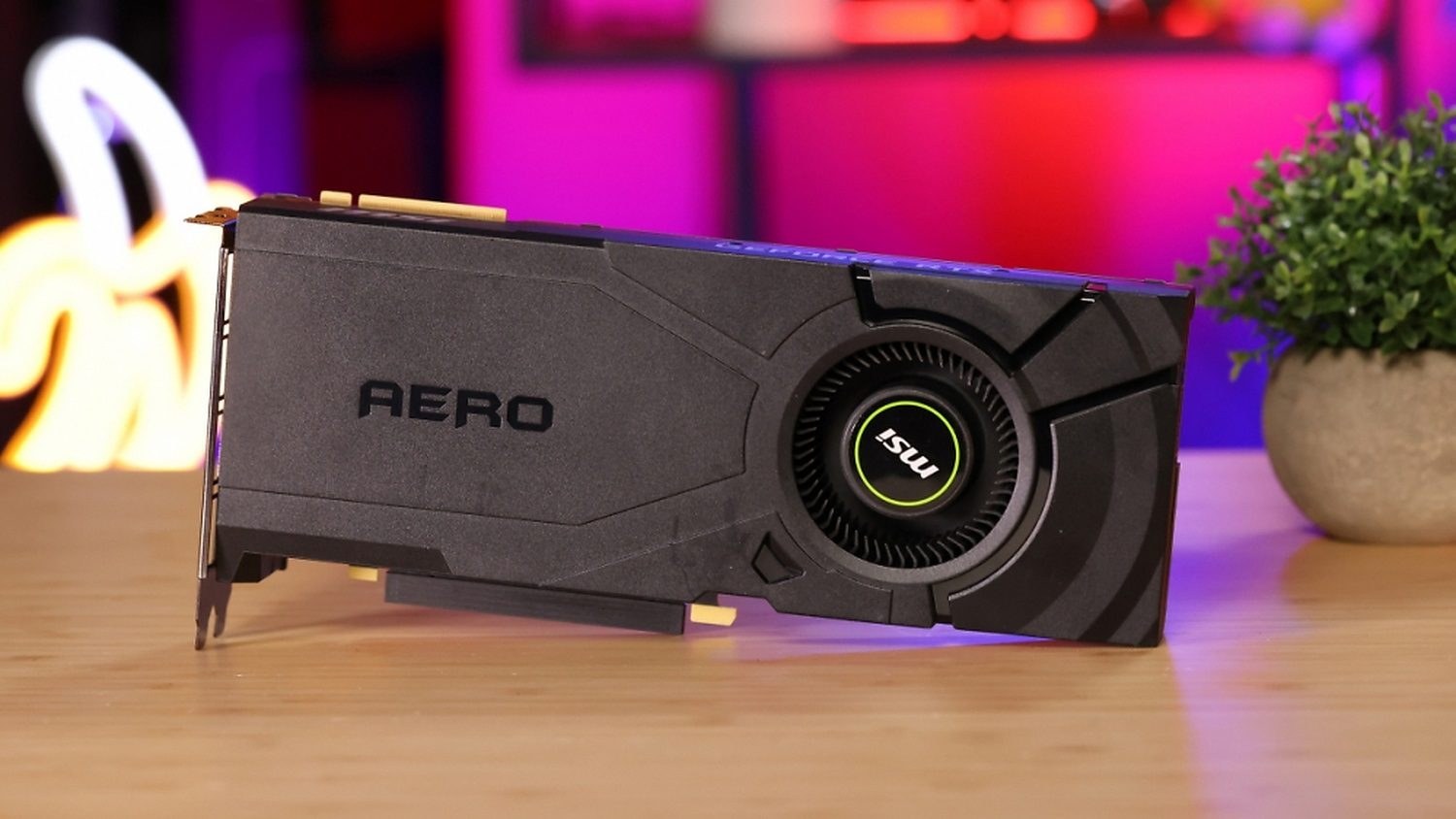
 uying a new graphics card is not the only way to cope with the growing appetites of modern games, as demonstrated by a recent experiment by German hardware testers. The publication PC Games Hardware recently purchased a modified GeForce RTX 2080 Ti from the Alibaba marketplace. This model is an eight-year-old graphics card from the Turing family and NVIDIA's first flagship product with ray tracing support. The original version of the device comes with 11 gigabytes of GDDR6 video memory.
This kind of modification allows one to evaluate how additional memory affects the capabilities of a previous-generation graphics chip. The authors of the modification replaced the standard 1GB memory modules with 2GB Samsung chips, pushing the total video memory of the modified card to a notable 22 gigabytes. While 11GB used to be plenty, modern demanding games consume substantially more video memory.
Testing at 1440p
In everyday scenarios with standard settings, the doubled memory behaves rather modestly. When testers checked the device at QHD or 1440p resolution with DLSS set to Quality, the modified GeForce RTX 2080 Ti with 22 gigabytes showed performance virtually indistinguishable from the standard 11-gigabyte version. In most tested games, the difference in performance proved imperceptible.
When tested at QHD or 1440p resolution with DLSS set to Quality, the RTX 2080 Ti 22 GB offered similar performance to the 11 GB variant, but there were some exceptions.
However, exceptions popped up in particularly heavy software titles. Flight Simulator 2024 showed a steady 29 percent performance improvement, including more stable minimum frame rates at 1440p. Another demanding project, Spider-Man 2, gave a clear preference to the modified variant with increased capacity, delivering nearly 22 percent higher average frames per second. Meanwhile, games like Assassin's Creed Black Flag Resynced, Cyberpunk 2077, and Gears of War: E-Day showed no noticeable boost at this resolution.
Massive Gains in 4K and New Horizons for Older Silicon
The situation changes drastically once you switch your monitor to ultra-high resolution. Moving to 4K immediately exposes the real importance of memory headroom in modern blockbusters, turning an aging flagship into an entirely different device.
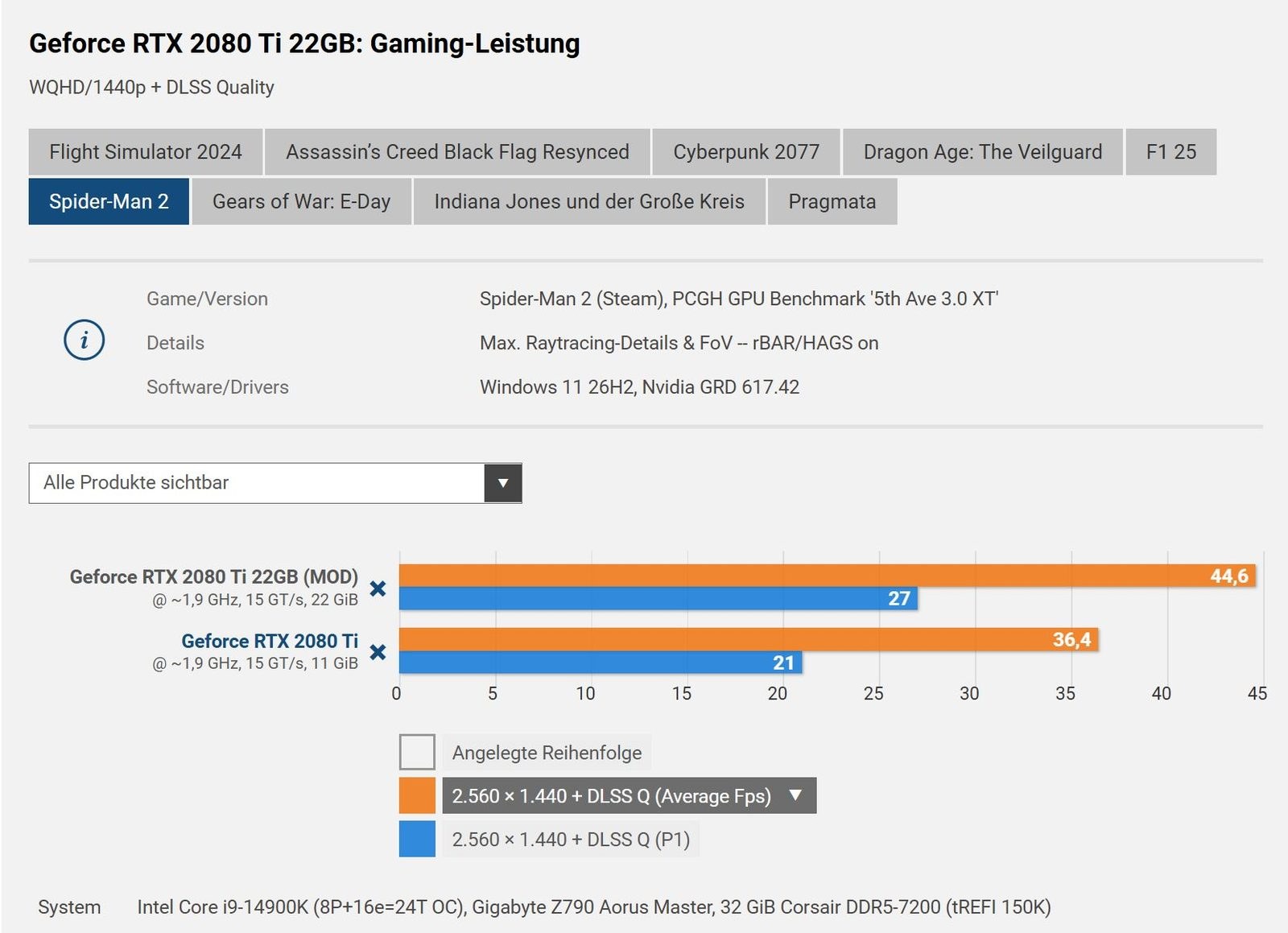
At 4K with the DLSS Performance mode active and FSR Frame Generation enabled, Flight Simulator 2024 delivered a performance boost of nearly 73 percent. At the same time, Spider-Man 2 crossed the 60 frames per second threshold, achieving a solid 64 percent speedup. Even games that previously refused to react to extra memory at lower resolutions started running significantly faster.
At 4K with DLSS set to Performance and FSR Frame Generation enabled, Flight Simulator 2024 showed nearly 73% higher performance
Beyond gaming workloads, professional tasks also benefited. According to data from PC Games Hardware, artificial intelligence tasks ran noticeably faster on the modified 22GB card compared to the standard 11GB edition. All measurement data was provided by the original source, PC Games Hardware.
What changed
At standard 1440p, the Turing processor shows practically zero reaction to the upgrade, yet extreme workloads finally eliminate the severe memory bottleneck. The Alibaba marketplace experiment essentially demonstrates that older silicon was held back by restrictive factory memory caps rather than its actual computing architecture. Will hardware resoldering remain a risky oddity on Alibaba, or can older flagship chips create a stable secondary market for modified hardware?