

 f you are tired of obvious hiding spots that anyone can compromise with a simple key or a crowbar, building a concealment box might cross your mind. Stephen Cass built a wooden lockbox that has no visible keyhole, keypad, or other obvious means of opening it. Cass wanted to add another layer of security by requiring a specific magnetic gesture rather than simply detecting the presence of a magnet.
How the Invisible Lock Works Under the Surface
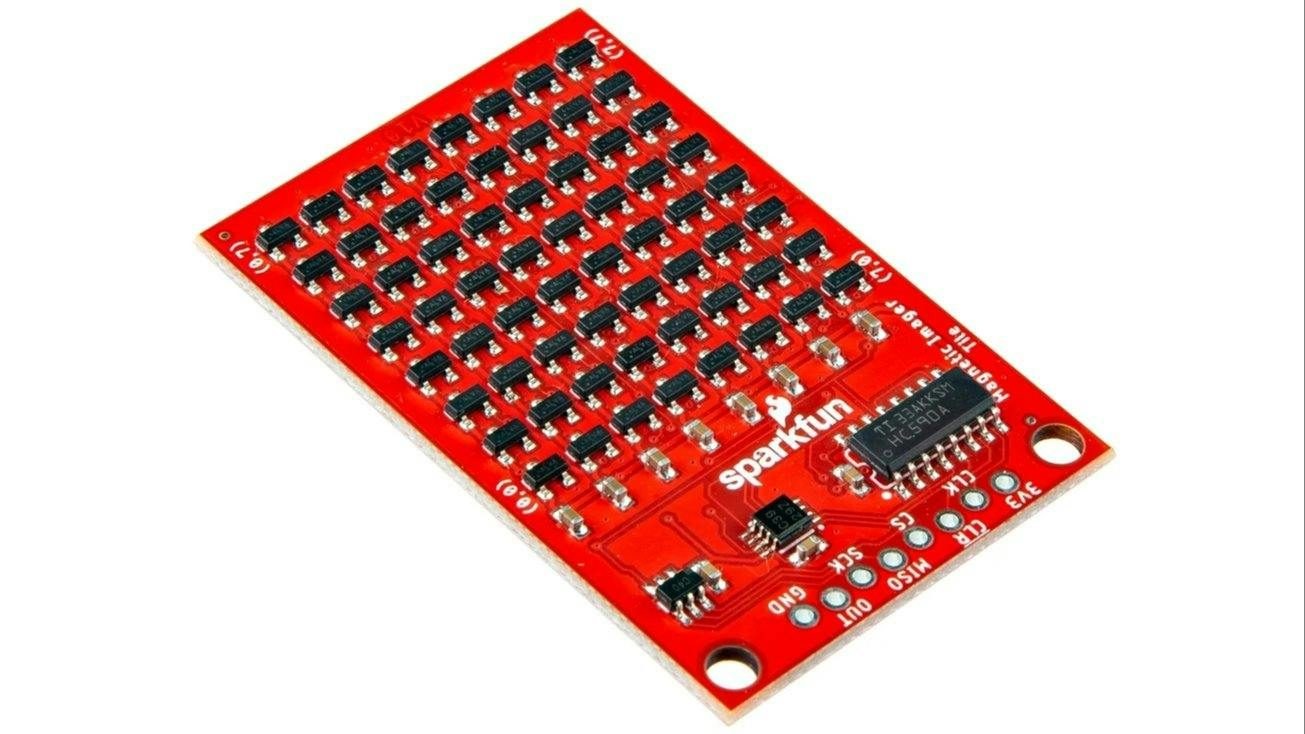
To track motion without punching a hole through your nice woodwork, you need hardware that feels less like carpentry and more like physics lab equipment. This board contains an 8x8 array of Hall-effect sensors capable of measuring the strength and polarity of magnetic fields. The board communicates over SPI and can produce readings hundreds or even thousands of times per second. Cass connected the Magnetic Imaging Tile to a Teensy 4.1 microcontroller, which comes equipped with a 600 MHz processor and 1 MB of RAM. He wrote the main control software himself, but used Claude to develop two supporting libraries.
One records gestures and saves them to nonvolatile storage, while the other compares new gestures against the stored pattern using an adjustable matching threshold.
To connect the brain of the operation to actual physical security, Cass modified a wooden craft box by removing its original latch and installing a servo-operated locking mechanism. A rotating beam engages with a notch attached to the lid, preventing it from opening until the correct gesture is detected. The electronics also include a battery pack, a button for entering gesture-recording mode, an indicator LED, and a pair of NPN transistors.
The Catch Behind the Magic
Building a lock without a keyhole sounds bulletproof until you actually try to use it in the dark or under pressure. One unexpected challenge was the Magnetic Imaging Tile's small sensing area, which measures just 3 centimeters square. Cass came up with a creative solution by decorating the box with a Celtic knotwork pattern. The design doubles as a disguised reference grid.
Cass suggests that adding a hidden inductive charging coil could solve this problem.
If you ignore these practical friction points, a dead battery would leave the box locked with no way to open it without breaking something. This project shows that while hiding your mechanisms behind smart sensors adds undeniable flair, it also turns everyday maintenance into a high-stakes puzzle. For most buyers looking to secure valuables at home, building a sensor array from scratch is a massive overkill that introduces more failure points than it prevents. If you decide to try it anyway, plan your power source and physical backup before gluing down any decorative woodwork.
Why it matters
Why turn an ordinary box into a computing hub with a 600 MHz processor? The builder pursued sheer invisibility — the board sits hidden under solid wood without cuts, while Celtic knotwork marks the three-by-three centimeter sensor area. Yet ditching visible controls comes at the expense of power safety: dead internal batteries leave the servo latch permanently sealed. A bespoke gesture-controlled vault turns into a striking lab showpiece whose electronic complexity actively undermines the baseline utility of a physical lock.