
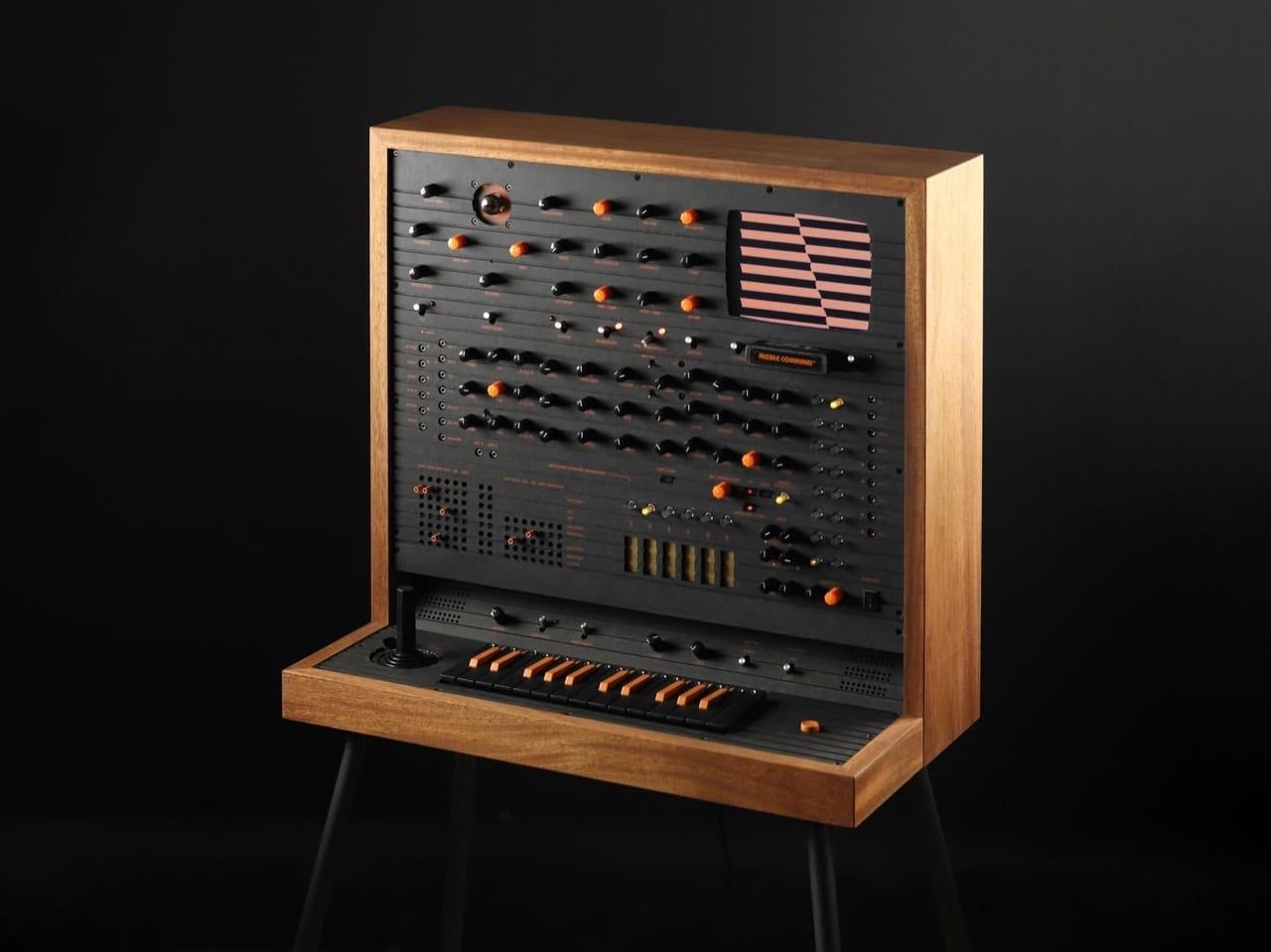
 hen you spend decades building a career on the abrasive crunch of analog gear and digital dirt, standard studio hardware starts to look suspiciously sterile. That is precisely why a custom workstation was built for Trent Reznor, embedding a working Atari console directly into the wooden chassis of an analog setup. The result looks like a heavy-duty monolith tailored for the Nine Inch Nails frontman, where classic sound-shaping circuits coexist with old-school video game nostalgia.
Swedish craftsman Love Hultén built this unique sound station by combining a top-tier analog synthesizer with an official Atari 2600+ working console. To anyone looking at modern studio gear, this thing looks less like a practical home studio purchase or a versatile tool and more like an expensive, custom-built museum piece that happens to make noise. Reznor grew up on the original 2600, learned to program on the Commodore 64, and later crafted the iconic industrial soundtrack for id Software's Quake in 1996, making hardware like this a personal artifact rather than a mass-market instrument.
Anatomy of a custom sound
Love Hultén has been combining woodwork and electronics since his design school days in 2010. The sonic heart of this custom station is the Analogue Solutions Ample synthesizer, which is hand-built in England for $2,499. Aside from the MIDI chip for digital control (a protocol for transmitting digital data between musical instruments and computers), all the internal guts here are entirely analog: three sound oscillators, a 24 dB low-pass filter, and circuit designs pulled straight from mid-1970s schematics. Instead of standard patch cables, the signal is routed through a physical pin-matrix board with varying electrical resistance.
Pins differ in resistance, so your choice determines how hard the signal hits its destination.
Next in the chain is the Zen Delay unit for spatial echo (stereo delay), built by Erica Synths in collaboration with London label Ninja Tune alongside Matt Black of Coldcut. That is followed by the Industrialectric RM-1N reverb pedal (an effect simulating acoustic room reflections) for extra depth, making the entire wooden instrument look more like a vintage mixing console than a modern music keyboard.
The built-in Atari era
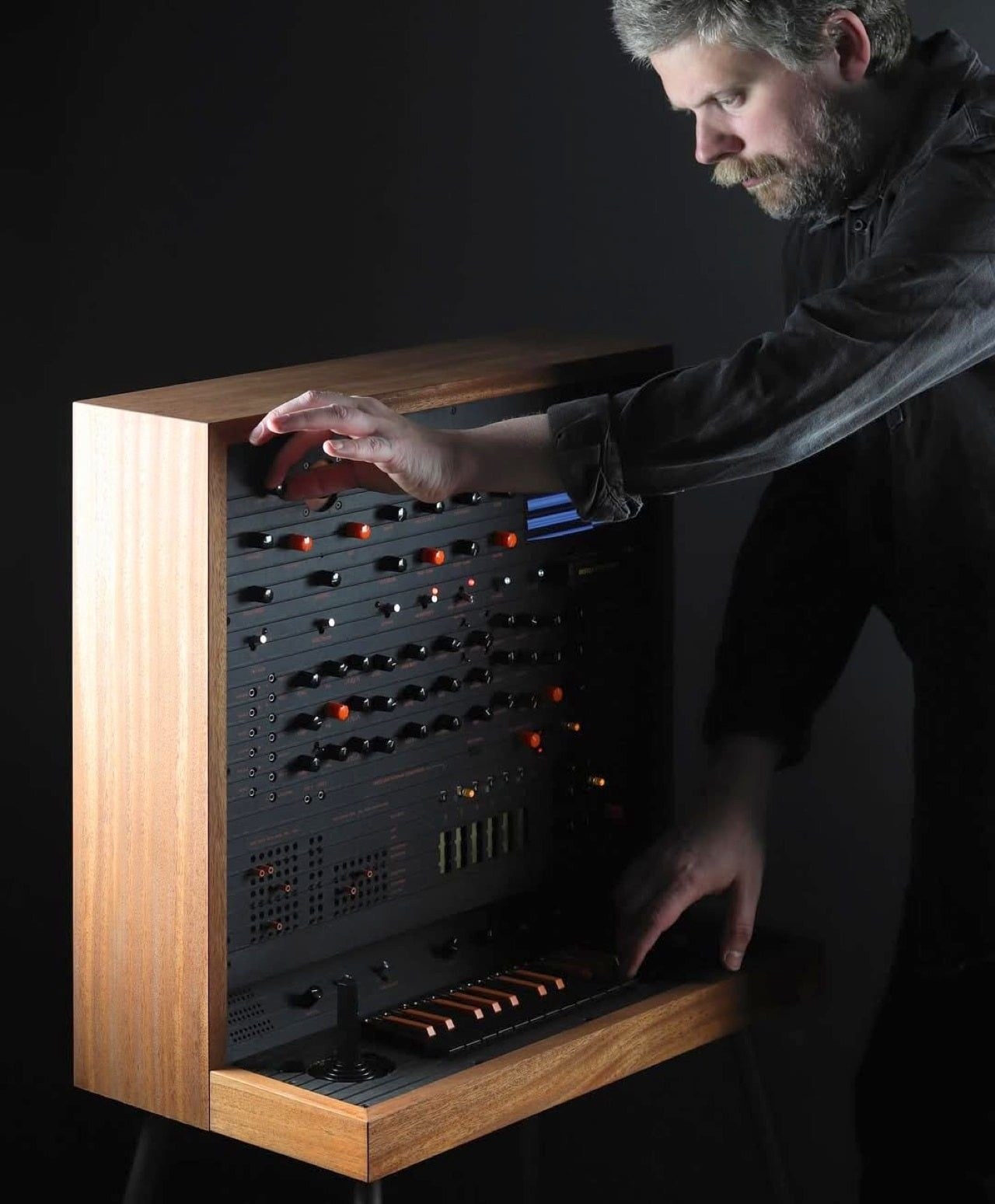
And then there is the Atari itself—specifically the official 2600+ version released by Atari and Plaion in 2023 for $129.99. This is an 80%-scale replica of the four-switch 1980 model featuring an HDMI port for modern TVs, an enlarged cartridge slot, and compatibility with original 2600 and 7800 game cartridges. Hultén relocated this slot directly onto the main wooden panel next to the power and TV-signal toggle switches, embedded a tiny monitor in the upper corner, and bolted a classic joystick straight to the synth control board.
Hultén previously built the NES-SY37 system in 2002 (sic: 2022), combining an NES console with a chiptune synthesizer (using sound chips from old game consoles). Because this machine is a one-off custom build commissioned by a musician, ordinary buyers cannot walk into a store and buy this exact rig, while the Ample, Zen Delay, and 2600+ remain entirely separate off-the-shelf products. This wild hybrid proves once again that physical ergonomics and personal nostalgia matter far more to working musicians than boring digital standardization in modern studios.
What it means
A physical pin matrix on the Analogue Solutions Ample replaces conventional patch cables with resistance pins, deliberately turning sound routing into a tactile hurdle. The whole appeal of Love Hultén’s one-off assembly rests on discarding screen menus in favor of heavy timber and four-switch console hardware from 1980. Off-the-shelf units like the Ample, the Zen Delay, and the Atari 2600+ remain separate retail items, yet here they merge purely to capture the tactile grit of vintage equipment.