
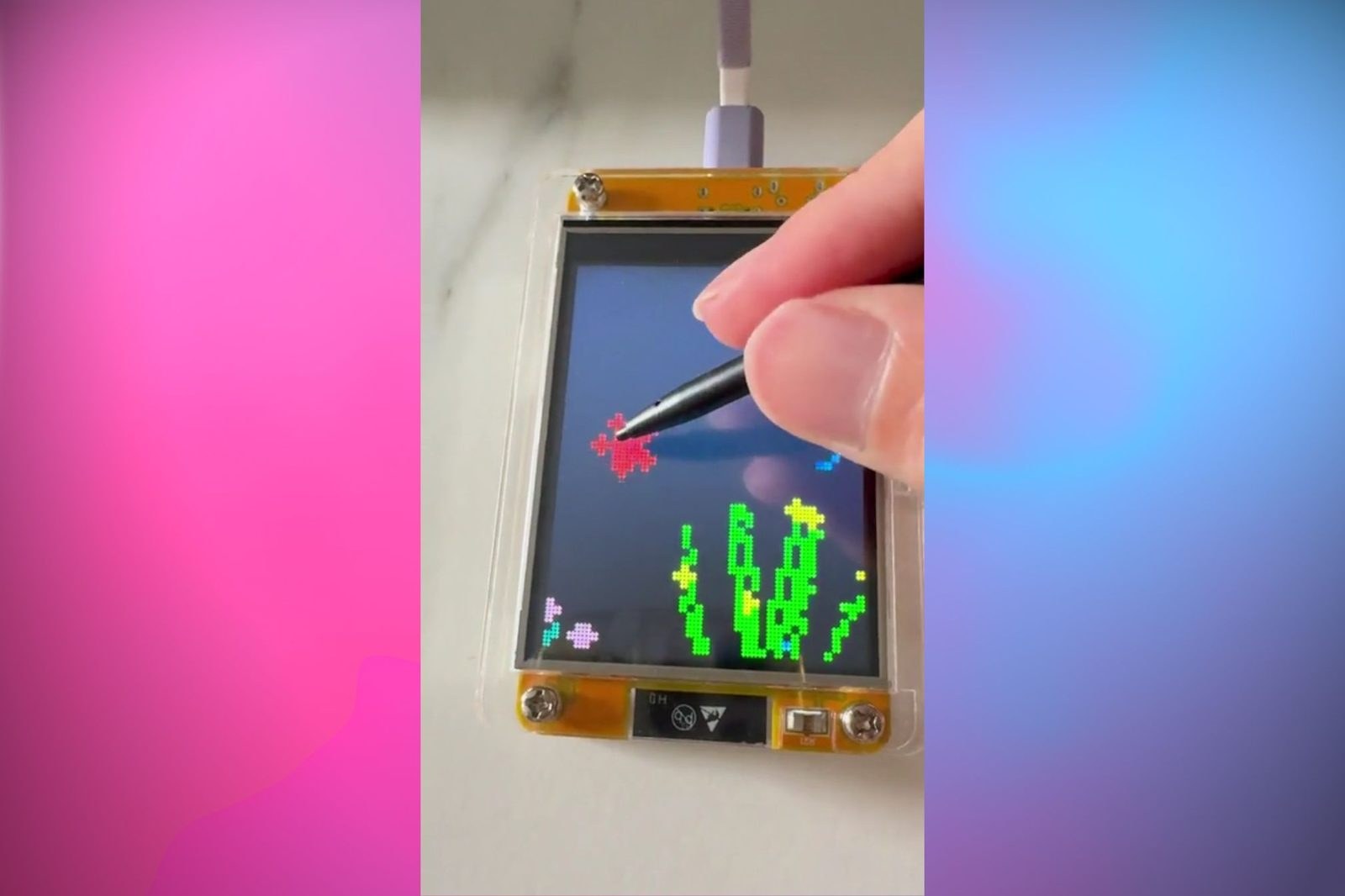
 e have all accumulated a drawer full of impulse buys, discarded development boards, and forgotten electronic parts that cost a few dollars and delivered zero long-term utility. Instead of letting that hardware gather dust until the next spring cleaning, an independent developer known on Reddit as PowerfulChart560 has figured out how to turn a generic five-dollar microcontroller board into something you might actually want to keep on your desk: a self-contained, pixel-art marine aquarium that requires no cloud accounts, no companion apps, and no internet connection once it boots up.
At the center of this project is the ESP32 CYD, shorthand for Cheap Yellow Display, which can be found across online marketplaces for roughly five dollars. As PowerfulChart560 detailed in the ESP32 community, the tiny board combines a microcontroller and a color touch screen into an all-in-one package that usually sits idle in maker workshops. The new software project transforms this cheap piece of silicon into a living reef simulator boasting around 100 species of marine life, weighted spawn rates, family silhouettes, and six distinct size classes. It even packs larger creatures like sharks, whale sharks, and manta rays alongside a movable tank camera and a built-in 12-hour clock, turning a bare circuit board into a functioning desk ornament.
Dive into the Pixel Tank
You do not need to clean filters, buy expensive salt mixes, or worry about ammonia spikes to keep this ecosystem running on your workspace. Users can simply tap a creature on the touch screen to follow it or zoom in, then tap again to zoom out using the integrated tank camera interface.
The ESP32 CYD Aquarium project features around 100 species of life.
Progress is tracked entirely on the device itself through a touchable reef guide that records all your discoveries to the onboard memory at `/field_guide.json` via LittleFS. Because the entire system operates locally, you never have to worry about a manufacturer shutting down servers, changing their API, or forcing a monthly subscription just to keep your desk toy functioning.
If you want to try it yourself, you can pull the repository from the ESP32 CYD Aquarium GitHub page and flash it onto your display in a matter of minutes. In our view, this is the exact kind of hardware repurposing the tech industry abandoned long ago in favor of sealed ecosystems and planned obsolescence. For the price of a cheap coffee, you get an endlessly running, distraction-free display that proves useful technology does not need a corporate cloud behind it.