
 s it worth dropping 89 bucks on a keychain server when regular cloud storage basically runs itself?
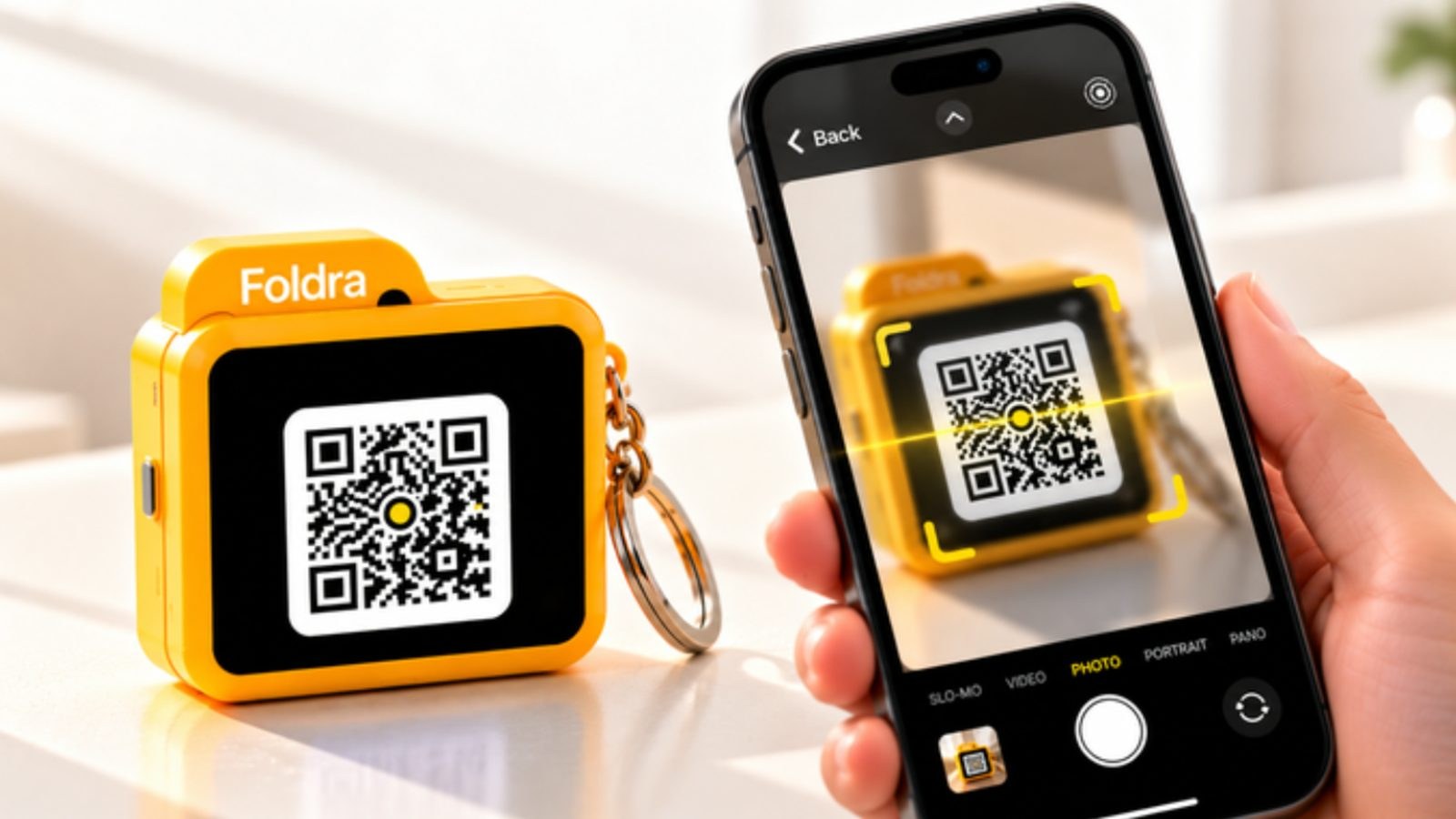
Trying to escape cloud subscriptions with an $89 pocket format looks pretty on paper, but in practice, you have to put up with the limits of local hardware. The fight for digital sovereignty goes right up against the convenience of everyday cloud services where everything is already set up for you. Foldra markets itself as the world's smallest wireless server for $89, packing support for microSD cards up to 1TB and a tiny touch-enabled OLED screen.
What is inside the device and how it works
The device spins up its own Wi-Fi network for local file sharing through a web browser, completely bypassing the internet and cloud subscriptions. You can fling files over the air or via USB-C, which lets the gadget moonlight as a regular old flash drive. Unplug the cable from your computer, and the hardware drops right back into wireless mode so you can tap into it from your phone or tablet anywhere you happen to be. The 480-by-480 pixel screen uses AMOLED tech to handle file management, check your free space, and tinker with settings. A microSD slot swallows up storage cards up to 1TB, while the built-in battery saves you from having to chain the thing to a wall outlet. Exactly how long that battery survives if you stream music or video all day is anyone's guess.
Foldra stores your files locally and shares them over its very own Wi-Fi network
An integrated speaker chirps or beeps when file transfers wrap up, new gadgets latch on, the system locks, or you trigger a find-my-keychain ping nearby. If those beeps get annoying, you can tweak the volume or silence them entirely in the menu.
Developer potential and actual usefulness
Open-source code and an ESP32-based guts layout will definitely tickle developers, but whether normal buyers will find it practical remains a big question mark. The software and hardware documentation are built so enthusiasts can bend the device to their will, poke at interfaces, and 3D print or mod custom cases. Beyond plain file storage, the device crams in more than 15 built-in programs for peeking at photos, playing WAV music files, running MJPEG video playback, jotting down notes, wrangling to-do lists, and keeping track of focus timers. You also get rudimentary games, an activity log, network controls, PIN-code locks, and a motion sensor security cutoff. The standard version costs $89, while the Maker Edition runs $139 and throws in extra modding tools. If you want to flex, there is a personalized Signature Edition for $179 and a three-device bundle sitting at $249.
Right now, the Kickstarter campaign dangles an early-bird $89 tier capped at 50 backers, a standard $99 option, and a fleeting 48-hour launch special for $79. According to the project roadmap, component sourcing kicks off in December 2026, manufacturing and quality control run through January and February 2027, and the first boxes should land on doorsteps in March. The project has already reeled in $47,970 from 347 backers, crushing its modest $5,000 goal with 12 days left on the clock.
Limits and buying outlook
How useful this pocket server actually is boils down entirely to your storage capacity, battery stamina, wireless reliability, and software speed. If you want to ditch mainstream cloud storage without dealing with cables, you will have to accept that a miniature gadget demands manual management and will never do the heavy lifting for you. Backing hardware projects on crowdfunding platforms always comes baked with the lovely risk of delays and missed delivery windows.
Should you buy an $89 pocket server just to flip the bird to big cloud providers? You decide, weighing the sluggish speed of a tiny processor against the actual necessity of dragging a personal file vault around on your keyring. Production starts early next year, and that is when we will find out if this enthusiast pipe dream turns into a daily carry win or sits quietly in a drawer.