
Can you actually check your emails on your sweater yet?
 ver tried to fish your phone out of your pocket while juggling groceries, a coffee, and an umbrella, wishing your jacket sleeve could just display the map for you? Researchers at the National University of Singapore have given that familiar piece of clothing a rather different purpose, threading a working touchscreen into its fabric. But before you throw away your smartphone and wait for your winter coat to load your playlist, let us look at what is actually sitting in that laboratory.
The short answer is that you cannot buy it, it will not replace your phone, and your current wardrobe is entirely safe from smart-fabric upgrades for the foreseeable future. This is a fascinating research prototype, but it is years away from any store shelf.
How the glowing sleeve actually works
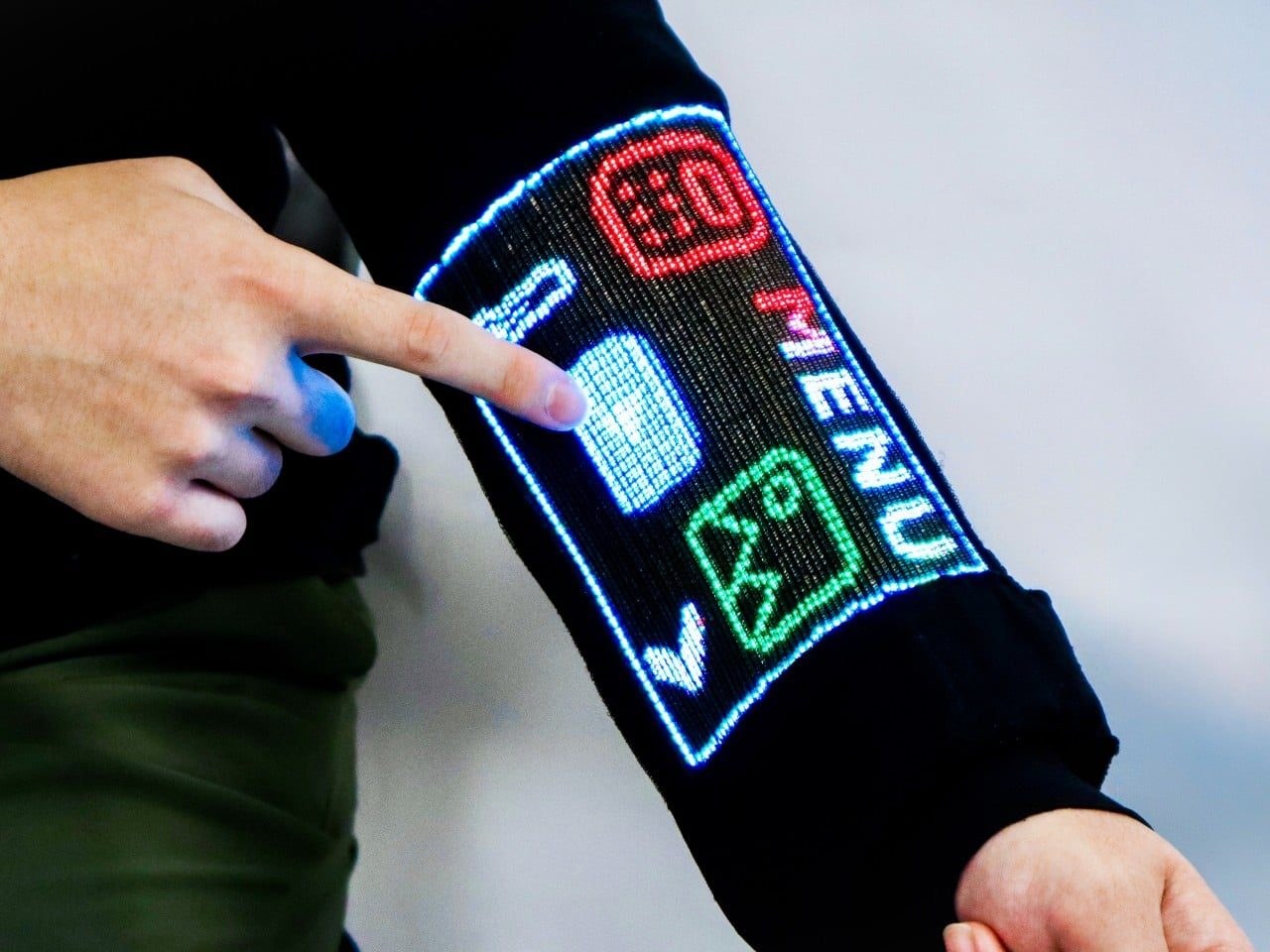
To understand why your next jacket will not double as a tablet tomorrow, you have to look at how engineers built a display out of yarn. Each electronic fiber carries a row of LEDs and a touch-sensitive layer beneath them, all within a thread about 0.04 inches thick. When you press the fiber, you close a circuit, allowing the system to locate your finger without you having to poke through fabric at a hidden glass screen.
The sleeve combines 54 of those fibers, each carrying 96 LEDs, into a display roughly 6.6 inches by 4.1 inches. Its 96-by-54-pixel resolution isn’t going to replace your phone’s display, although the prototype can show pictures and play video. The research team demonstrated a calculator, compass, photo viewer, and voice commands, along with Bluetooth image transfers. Video runs at 30 frames per second, dropping to 25 with synchronized audio.
The prototype display has a 96-by-54-pixel resolution and can show pictures and play video.
Other fibers carry a microphone, speaker, and sensors for movement, light, direction, and temperature. That lets the interface rotate with the arm and adjust its brightness automatically. A temperature-sensing fiber positioned under the arm can send a reading to the sleeve, suggesting how clothing might eventually make personal measurements easier to check. That doesn’t mean it’s ready to replace your thermometer, though.
Surviving the laundry and the hardware catch
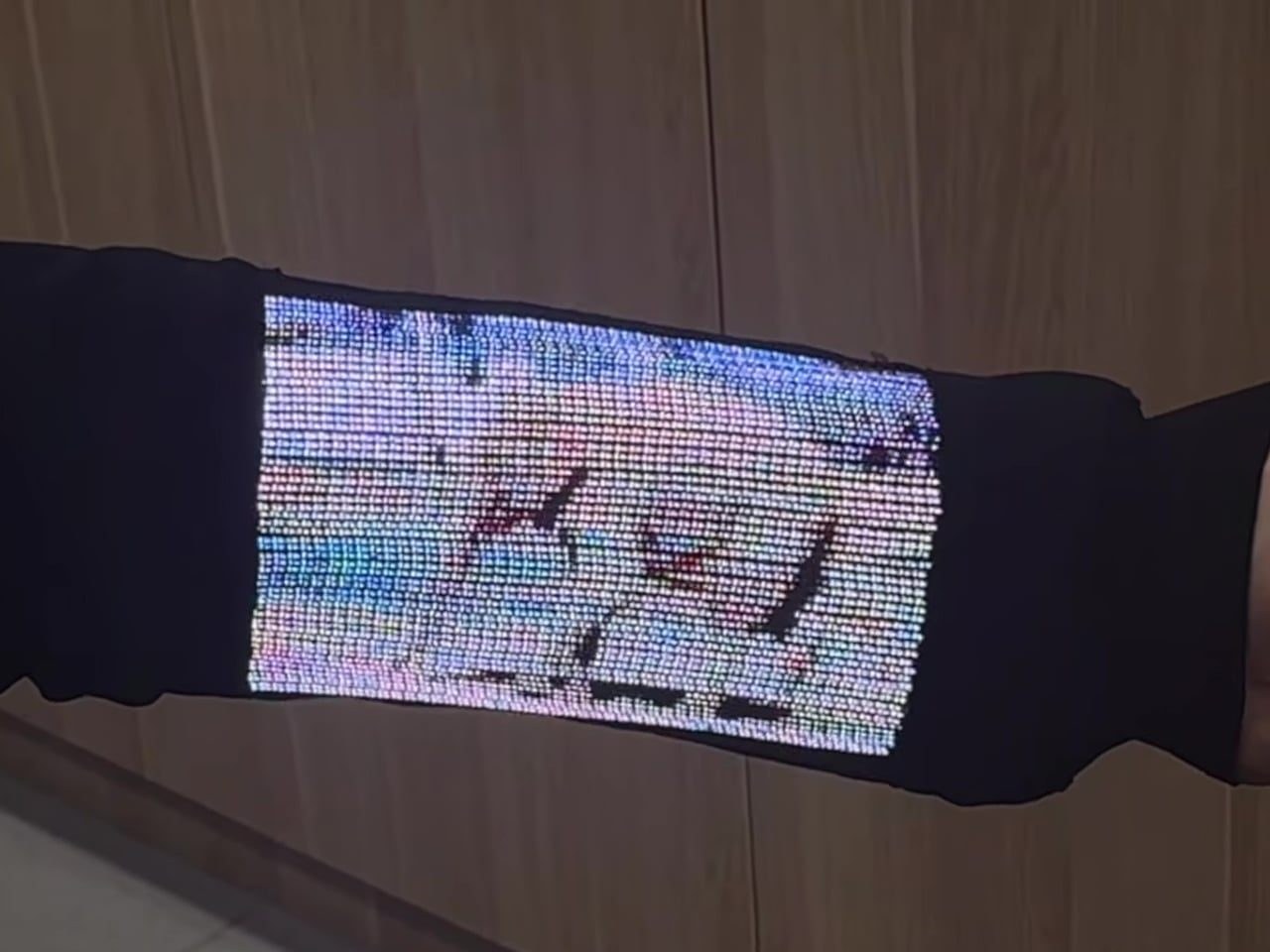
Of course, clothing has to survive more than a few demonstrations. According to the assessment of the National University of Singapore research team, light output and touch response barely changed after 50 detergent washes and 1,000 bends. The washing procedure used a laundry bag and a gentle cycle, rather than treating the electronics like gym socks. That’s encouraging, though a laundry test isn’t a promise of surviving years of careless washing.
There’s also a difference between making the display flexible and making the entire computer disappear. Separate controller circuits and battery packs still support this prototype, so the electronics haven’t all become yarn. As the researchers reported, breathability is comparable to common fabrics, including cotton and denim, but a wearable system also has to account for where its power supply and other hardware sit during use.
For now, this remains a laboratory garment, with no announced retail price or release date. Higher resolution and more integrated electronics are among the challenges ahead. If the interface lives in your clothes, charging, repairing, and eventually replacing it become wardrobe decisions, alongside the ordinary matter of choosing something that fits comfortably.
This technology remains an impressive academic exercise rather than a commercial product you can pick up at the mall. Until researchers figure out how to untether the battery packs and drop the production costs to the price of a normal sweater, your phone is staying firmly in your pocket.