
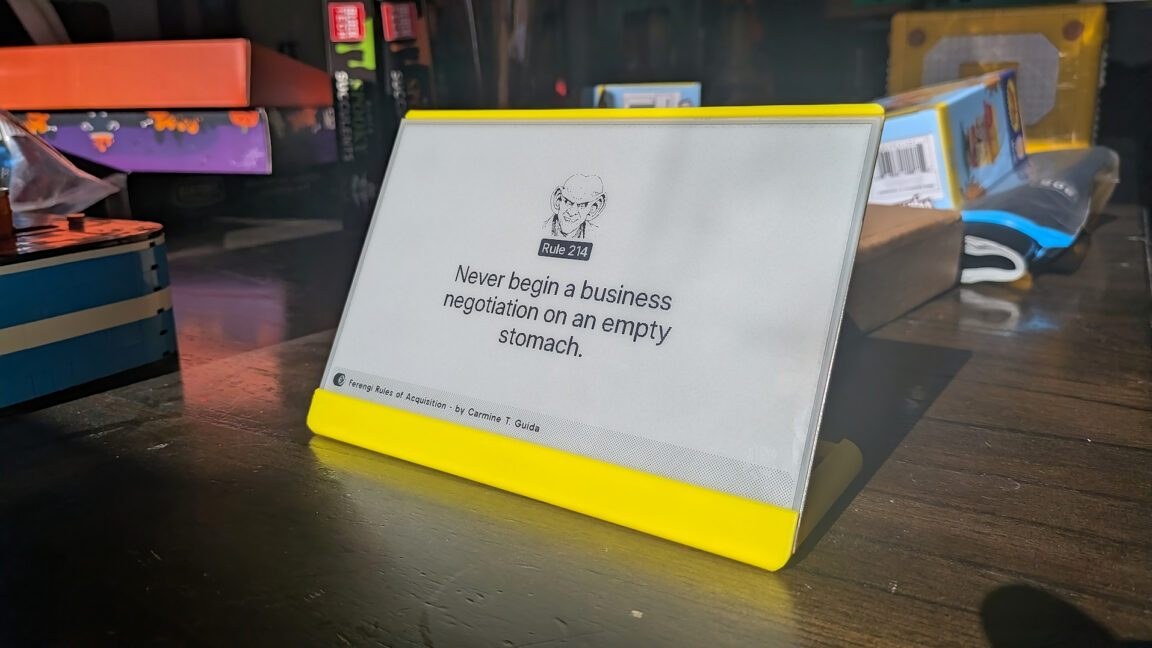
 ne of the most useful gadgets on a kitchen counter is now a screen that never asks for anything in return. I recently bought a $48 DIY display kit from Seeed Studio, developed in collaboration with TRMNL, that lets me put whatever information I want on my counter without demanding monthly fees. Instead of forcing you into another noisy ecosystem, this setup delivers a dead-simple screen that stays on and minds its own business.
Big tech brands insist your countertop needs an interactive command center, but I wanted something that avoids glowing notifications altogether. The question is whether an open hardware board can actually replace polished consumer hubs without turning into a frustrating technical project for someone who just wants things to work out of the box.
Escaping the Laggy Hardware Trap
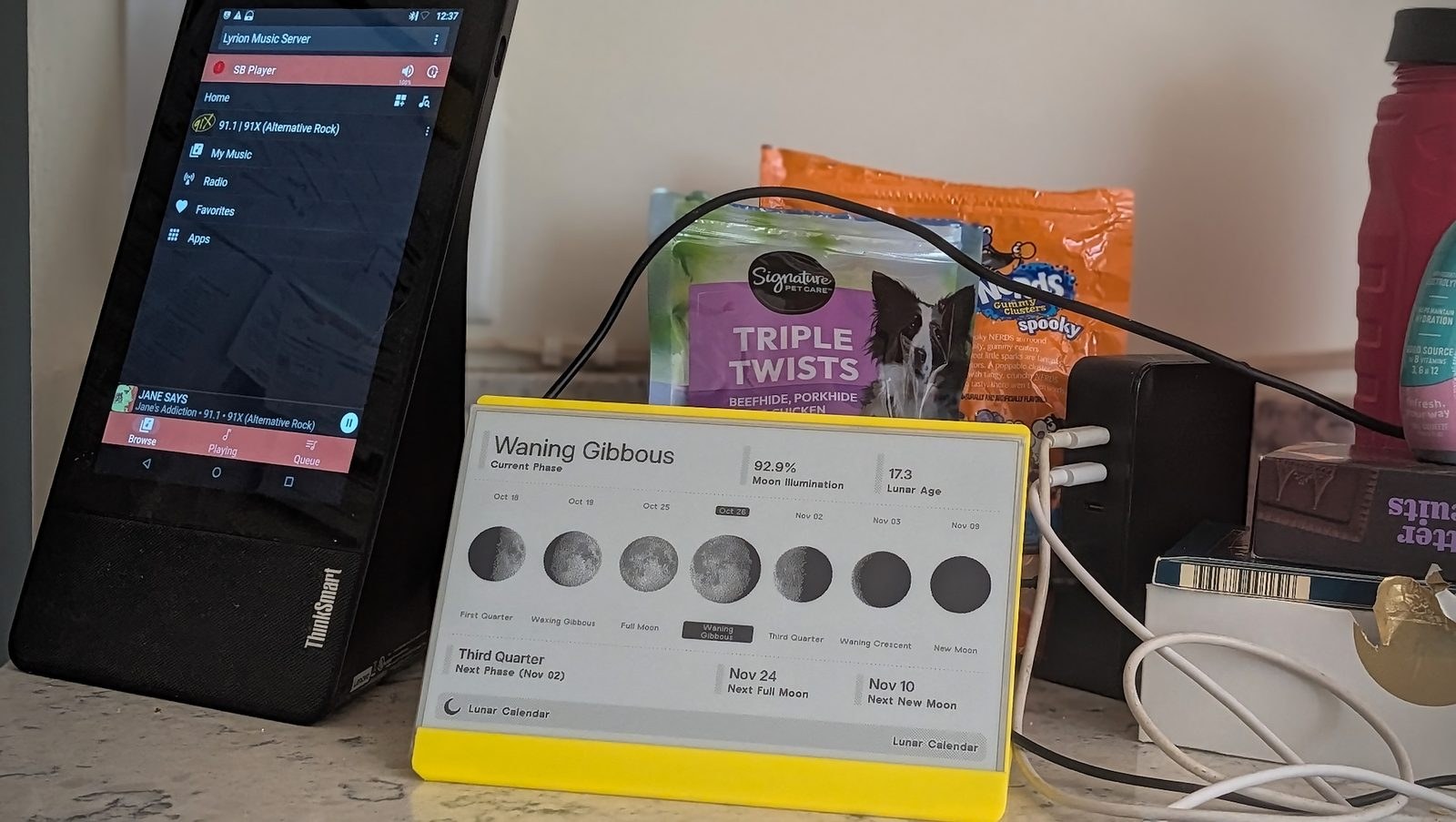
Before finding this kit, I tried to solve the kitchen display problem on the cheap. I previously built something similar by modding a Lenovo ThinkSmart View, which was selling for around $30 on eBay during a liquidation. That Lenovo device was only ever intended for business-to-business video, but it does a decent job of running a fork of LineageOS. Limited RAM makes that hardware sluggish to use in practice, which ruins the experience of a quick glance.
"I’d have an always-on display that shows me the information I want, with no subscription required."
Because the TRMNL e-paper screen populates automatically, you never have to wrestle with a slow interface or laggy touch panels. The hardware stays completely passive, cycling through calendars, weather, news, and community ideas on a desk or kitchen counter.
The Anti-Hub for Real Life
The Seeed Studio kit and TRMNL ecosystem are not trying to compete with products like the recently announced Apple HomeView, a $299 home hub designed to get the whole family interacting with it. The TRMNL kit acts as its exact opposite: instead of pulling you into constant taps and voice prompts, it provides ambient data you can absorb in two seconds while making coffee.
"The established Shenzhen open hardware company is best known for its XIAO microcontroller boards."
This balance comes directly from how the project started. TRMNL was founded by indie hardware enthusiast Ryan Kulp in 2023, and its first e-paper device launched via crowdfunding in 2024. Seeed Studio provides the hardware, bringing its manufacturing experience from Shenzhen into the mix.
If you want a voice assistant to control lights or manage video calls, this open kit will not replace a dedicated tablet. But if your goal is checking the morning forecast without paying $299 or renting features through recurring fees, a $48 passive e-paper panel gets the job done cleanly.
For comparison
Budget DIY dashboards previously meant repurposing sluggish Lenovo corporate terminals on custom Android, whereas the Seeed Studio and TRMNL kit provides a lag-free standalone display out of the box. The project deliberately avoids becoming an interactive command center with video calls or voice control. Instead of an intrusive ecosystem, the device silently rotates community widgets, calendars, and weather forecasts without distracting screen glare. The industry spent years pushing interactive command hubs with subscriptions, even though a $48 open-source board is all it takes to check the morning forecast.