
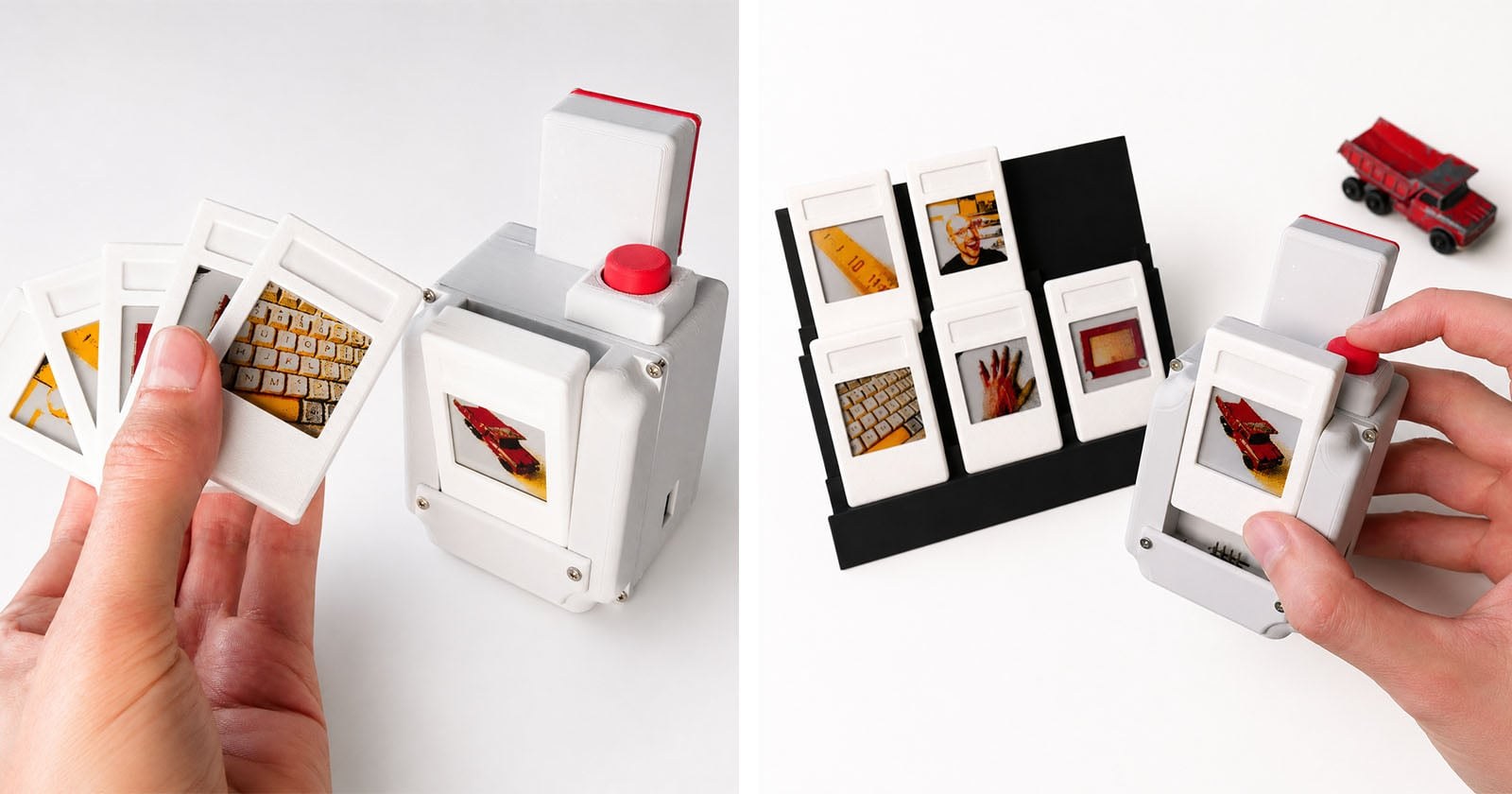
 nstant cameras remain delightfully tactile right up until you check the receipt for replacement film. Anyone shooting on Fujifilm Instax or Polaroid knows the grim reality: every single shutter click costs upwards of a dollar, quietly turning a casual party hobby into a metered luxury. Dutch maker Jens, the engineer behind the Strange Inventions Lab project, set out to break that consumable trap entirely. His workaround is a clever DIY instant camera that swaps chemically treated paper packs for infinitely rewritable color e-paper cartridges.
Digital Film Without Batteries
Instead of spitting out costly, single-use photographic prints, the camera flashes snapshots directly onto removable 1.54-inch e-paper panels. Because electronic ink is bi-stable—meaning it requires zero power once the microcapsules snap into place—these mini cartridges stay perpetually visible without a battery tucked inside. You pop the physical card out, hand it to a friend, or stick it on your fridge, and the frame stays frozen forever.
“I wanted something physical again without actually printing anything,” Strange Inventions explains.
That mechanical interaction preserves the charm of handling a physical snapshot without generating chemical waste or requiring a fresh ten-pack every weekend. The cards slide into a rear spring slot that feels suspiciously like inserting a Game Boy cartridge. When you tire of a desk photo, you simply slot the card back in and overwrite it with a new shot in seconds.
The Real-World Hardware and Limitations
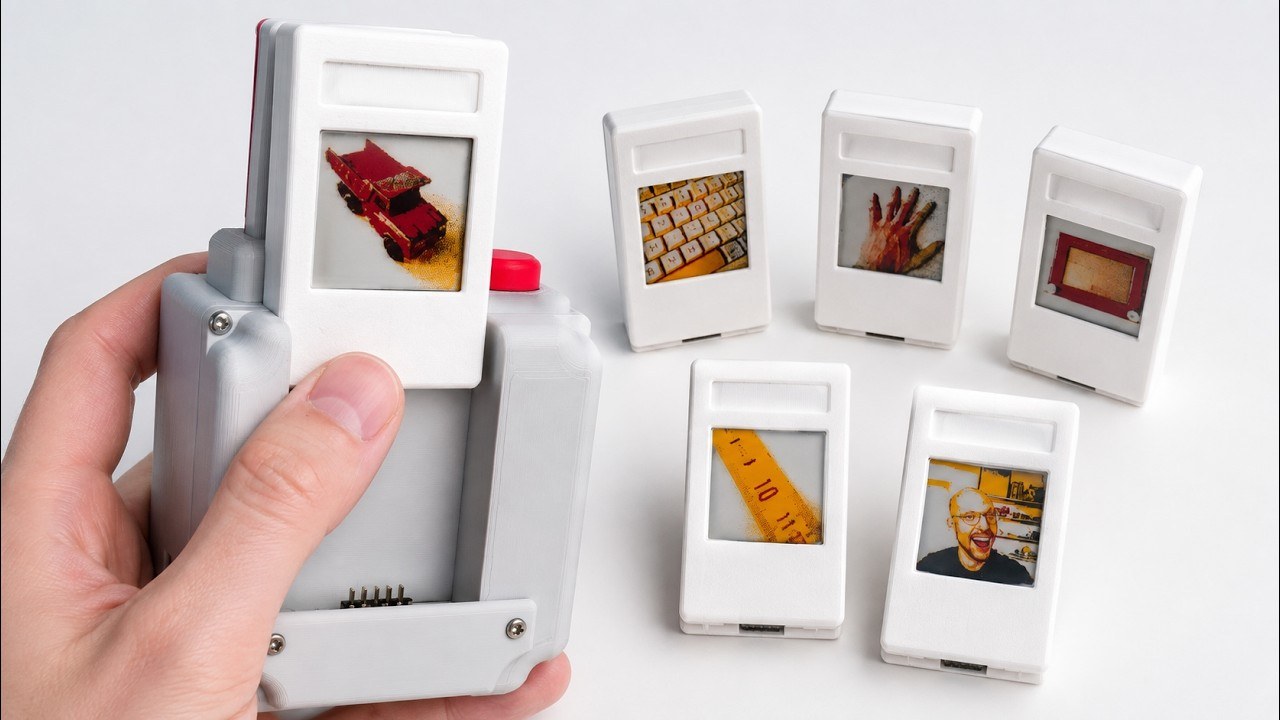
Make no mistake: this is a homebrew project built on accessible maker hardware, not a polished retail rival. The camera runs on a Raspberry Pi 3 A+ single-board computer paired with a basic 5-megapixel sensor module, all wrapped inside a custom 3D-printed chassis. Jens offers the digital blueprint and build documentation on his website for €24 (about $32), while sourcing the full hardware kit with six rewritable cartridges runs around €127.
There are real trade-offs in image fidelity. The tiny e-paper panels support only four physical colors: black, white, red, and yellow. To make everyday portraits recognizable, Jens engineered a custom dithering pipeline that translates raw sensor data into stylized micro-dots. The resulting snapshots will never compete with rich chemical glossies, but they carry a distinct lo-fi, retro-computing character that feels intentional.
Do not expect Fujifilm or Polaroid to bring an e-paper instant camera to mass retail anytime soon. The major brands make their highest margins selling continuous stacks of proprietary paper, not the plastic bodies holding them. For roughly €127 in components and a weekend of assembly, Jens's build exposes just how viable reusable, battery-free physical photo formats could be—if the industry weren't hooked on selling ink.