
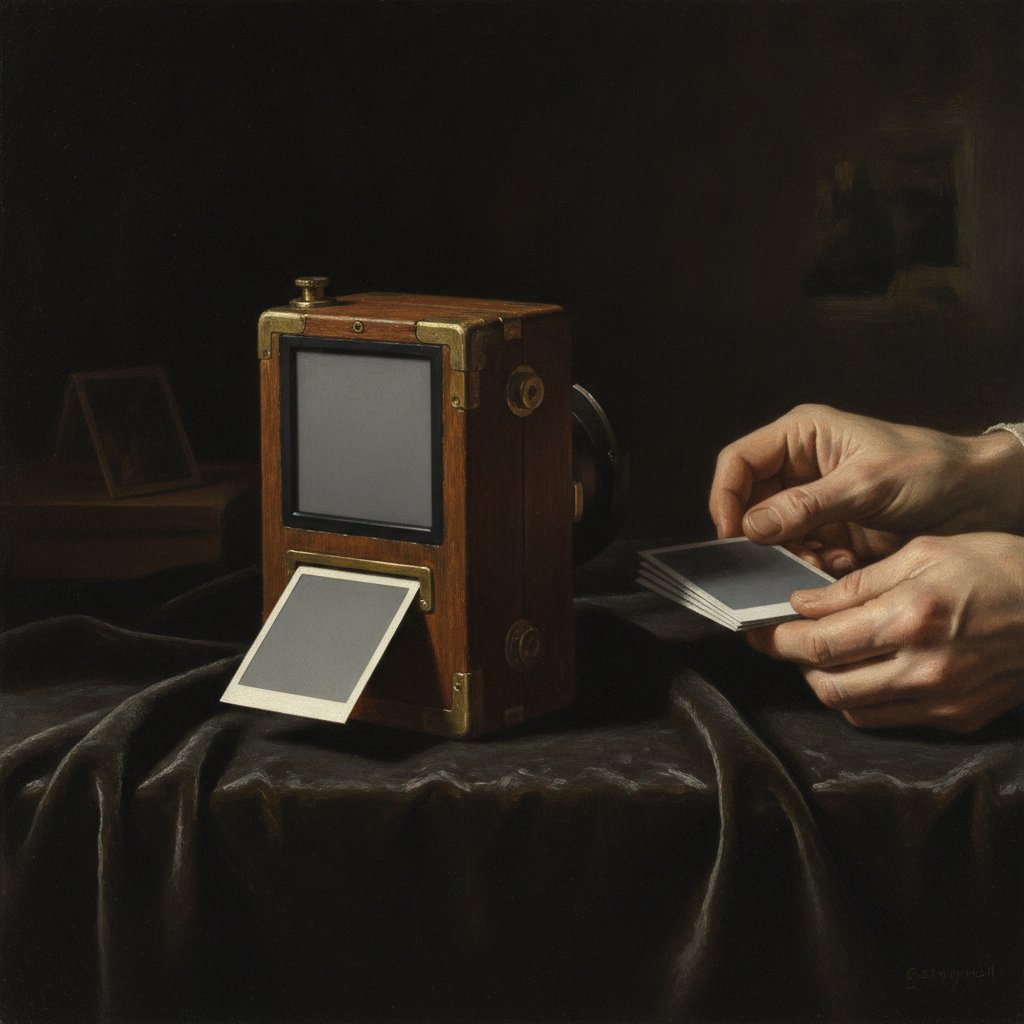
 nstant photography sells pure tactile joy, but holding a physical snapshot comes with a brutal recurring tax. Loading up a Fujifilm Instax or Polaroid means paying roughly a dollar every time you press the shutter, turning every blurry misfire or botched exposure into literal money down the drain. While the major brands rake in steady profits on single-use chemical refills, independent maker Strange Inventions engineered a clever way out: an instant camera that produces tangible, pocketable photos without burning through disposable film packs.
Digital Cartridges That Never Lose Power
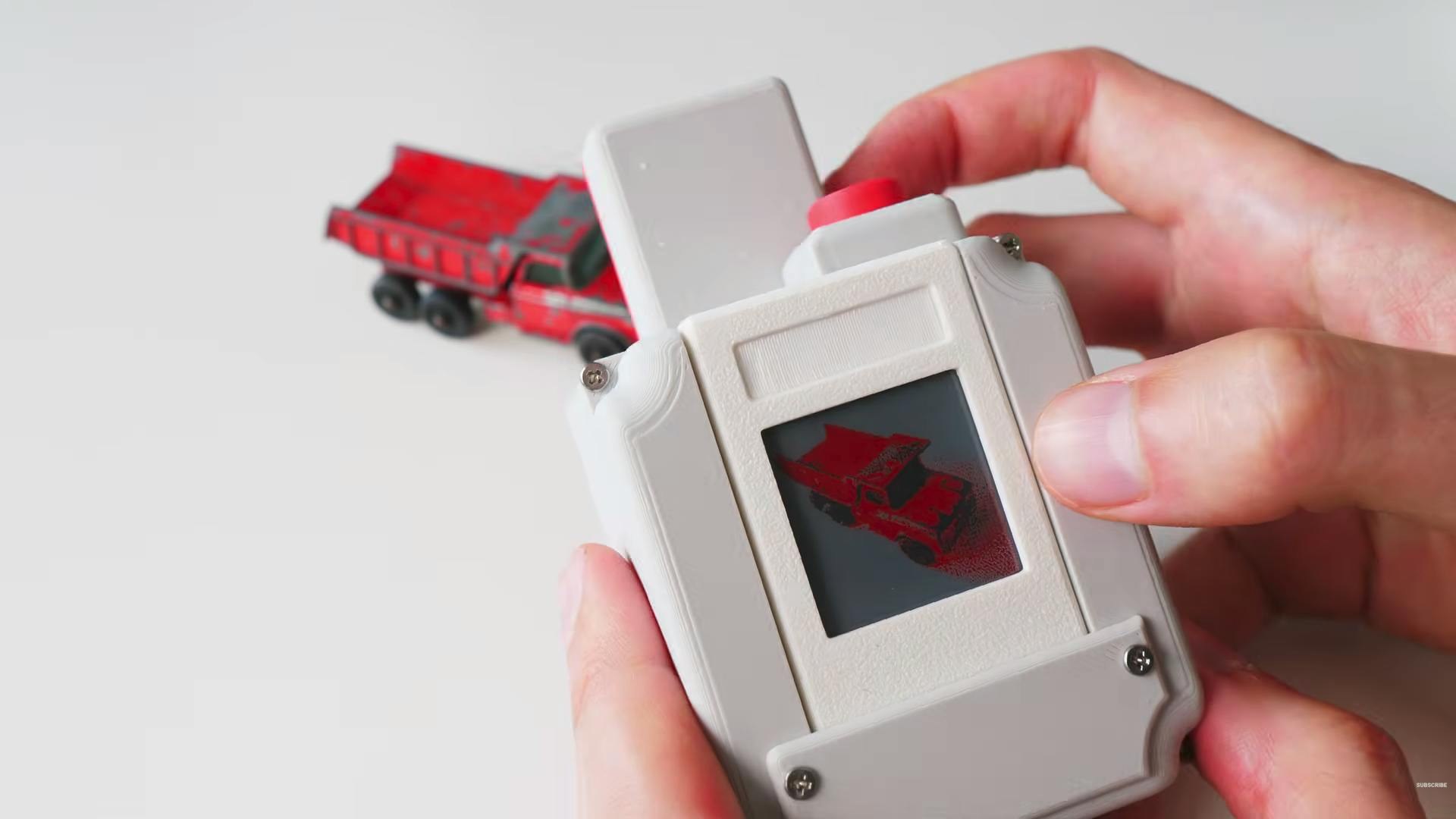
At the core of the build sits a Raspberry Pi 3 A+ wired to a 5-megapixel sensor module. Instead of exposing light-sensitive emulsion, the system prints the shot onto a detachable cartridge housing a 200×200 four-color E-Ink panel. Thanks to bistable electronic ink physics, the screen draws electricity strictly while rewriting pixels. Once you eject the card from the camera, the image stays frozen in place forever without sipping a single microamp of standby battery juice.
The custom-built instant camera uses removable E-Ink cartridges that permanently display an image without consuming any power.
To survive repeated physical swapping, Strange Inventions bypassed delicate ribbon cables and overpriced pogo pins in favor of standard, rugged pin headers that handle both data busing and mechanical alignment. The chassis and cartridges are entirely 3D-printed, featuring a clean snap-fit shell that ditches screws entirely and includes a nostalgic Game Boy-style thumb notch for quick ejection.
Low Cost Against Low Resolution
Squashing full-color camera captures onto a rudimentary four-color palette demands serious processing. The camera runs a dedicated Python pipeline that balances contrast, sharpness, and saturation before applying dithering algorithms to simulate tonal transitions and depth. The tradeoff in your hands is obvious: screen refresh speeds take several seconds, and a low-res four-color grid will never match glossy chemical paper fidelity.
Yet the math tells an entirely different story. Assembling the complete camera alongside six reusable cartridges runs around $150 in off-the-shelf components. Strange Inventions published the modified drivers, CAD models, and STL files under open-source licenses, offering a real blueprint for hobbyist crowdfunding. Mainstream camera makers will never touch reusable digital film because their razor-and-blades business model relies entirely on consumable paper, making DIY ingenuity the only real alternative to exorbitant per-shot penalties.