
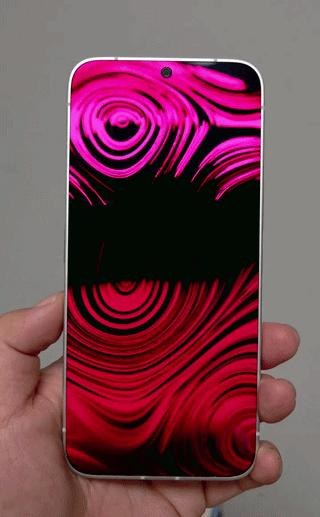
 nother tech trade show in Berlin, standard speeches about "leaping into the future," and yet another prototype promising to permanently banish black screen borders. Tecno brought a concept smartphone to IFA 2026 featuring a display that, at first glance, seems to have no borders at all. Insider Ice Universe rushed to post a hands-on video, excitedly claiming to hold a device from the future, while GSMArena published a detailed photo gallery. It looks striking, but marketers have yet to rewrite the laws of physics and optics.
How the optical trick works
Strip away the hype, and the display panel's inactive black border is still right there. The manufacturer didn't invent a fundamentally new screen technology; it simply masked the dead zone with a clever optical structure. Engineers used two-layer protective glass and overhauled the entire display module layout: the bottom curved layer acts as a lens, bending around the metal edge and visually concealing the dark margins of the matrix.
To pull off this trick, the engineering team had to re-engineer the entire assembly process, bonding the second layer of glass with a custom-formulated hot-melt adhesive.
"The display's inactive border hasn't actually gone anywhere — Tecno merely hid it under structural optical elements."
As a result, the image appears stretched right to the metal edge, producing a convincing illusion of an endless screen.
What it means in your hands
In everyday use, this compromise brings zero real benefits to the owner. For context, the iPhone 17 Pro Max keeps its bezels to a comfortable 1.36 mm. When the screen rolls directly over the edges, palms and fingers inevitably trigger the touch panel. Tecno's developers even had to rewrite accidental touch rejection algorithms on the fly and shift interface elements to tame constant false inputs.
Under the hood, the device is a standard show-floor demo: a 6.78-inch 1.5K AMOLED panel running at 144 Hz, built on the chassis of the previously shown Tecno Camon Slim. Under showroom spotlights it looks futuristic, but in daily life, thick edge-to-edge glass and zero chance of fitting a decent protective case turn the phone into a repair shop's nightmare the first time it meets pavement.
This is a flashy optical illusion, not a structural breakthrough. Brands love dragging such concepts to trade shows for easy headlines, but in an everyday pocket, this "aquarium" glass promises only phantom taps and steep repair bills.