
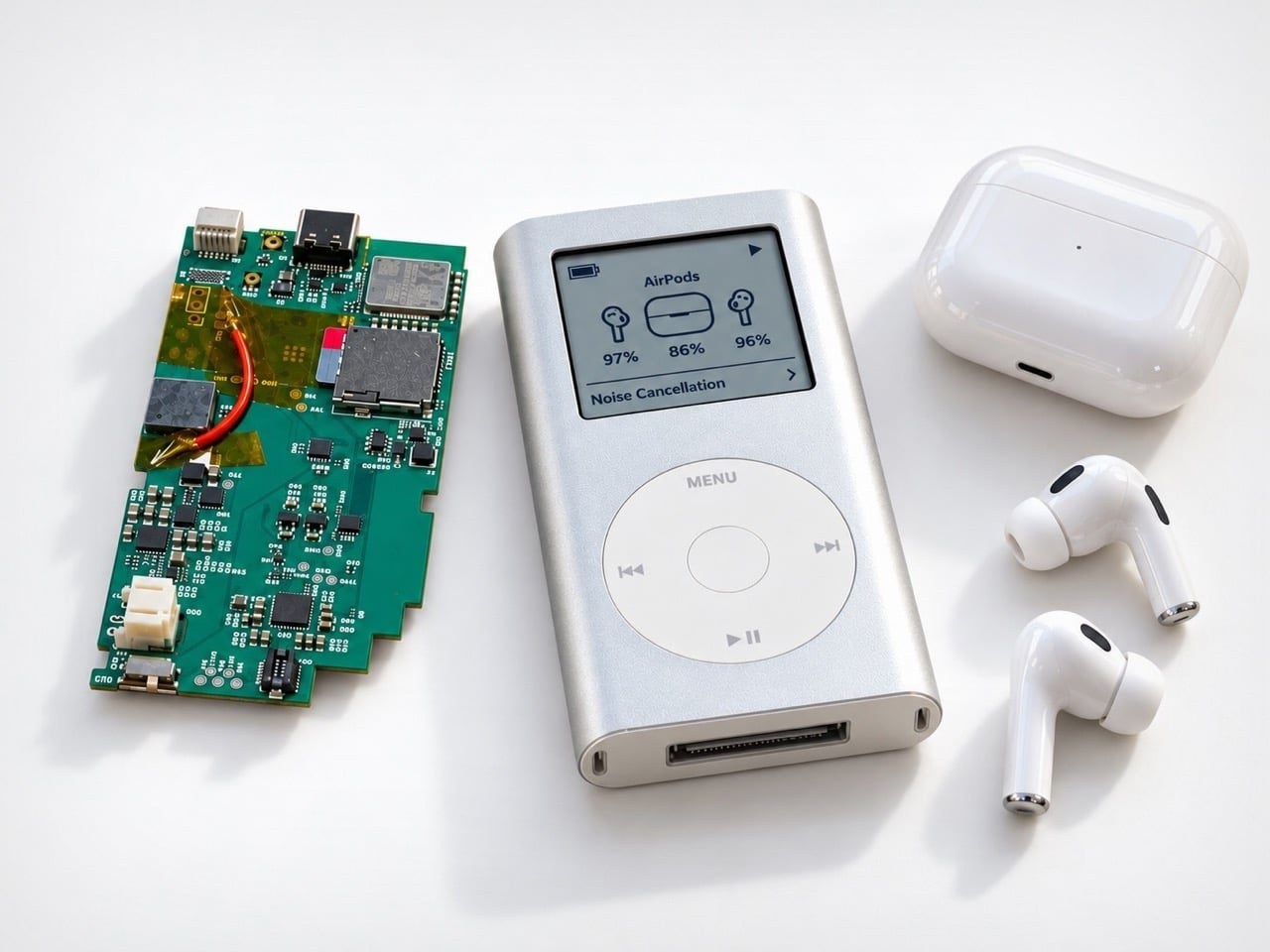
 igital detox has officially stopped being just a wellness buzzword and started looking like a hardware market. While pocket computers turn every spare minute into an endless feed of notifications, a segment of buyers is digging through drawers for plastic rectangles from the early 2000s. The problem is that finding a working iPod is only half the battle; getting it to talk to modern wireless earbuds is an entirely different engineering hurdle. London-based studio Certain Things has decided to bridge that twenty-year gap with a drop-in replacement motherboard called Sprout, designed specifically for the 3rd-generation, 4th-generation, and mini iPods.
Rather than forcing users to solder generic Bluetooth transmitters onto fragile vintage circuits or buy bulky modified aluminum shells, Certain Things takes the invisible route. The original monochrome screen, click wheel, and plastic case stay exactly as Apple shipped them, while the internals get a radical modern overhaul. According to the studio's technical specifications, the swap introduces USB-C charging, a microSD slot supporting up to 2TB of storage, and a proper Cirrus Logic DAC for the headphone jack alongside native wireless pairing.
Same Body, New Brain, Zero Soldering
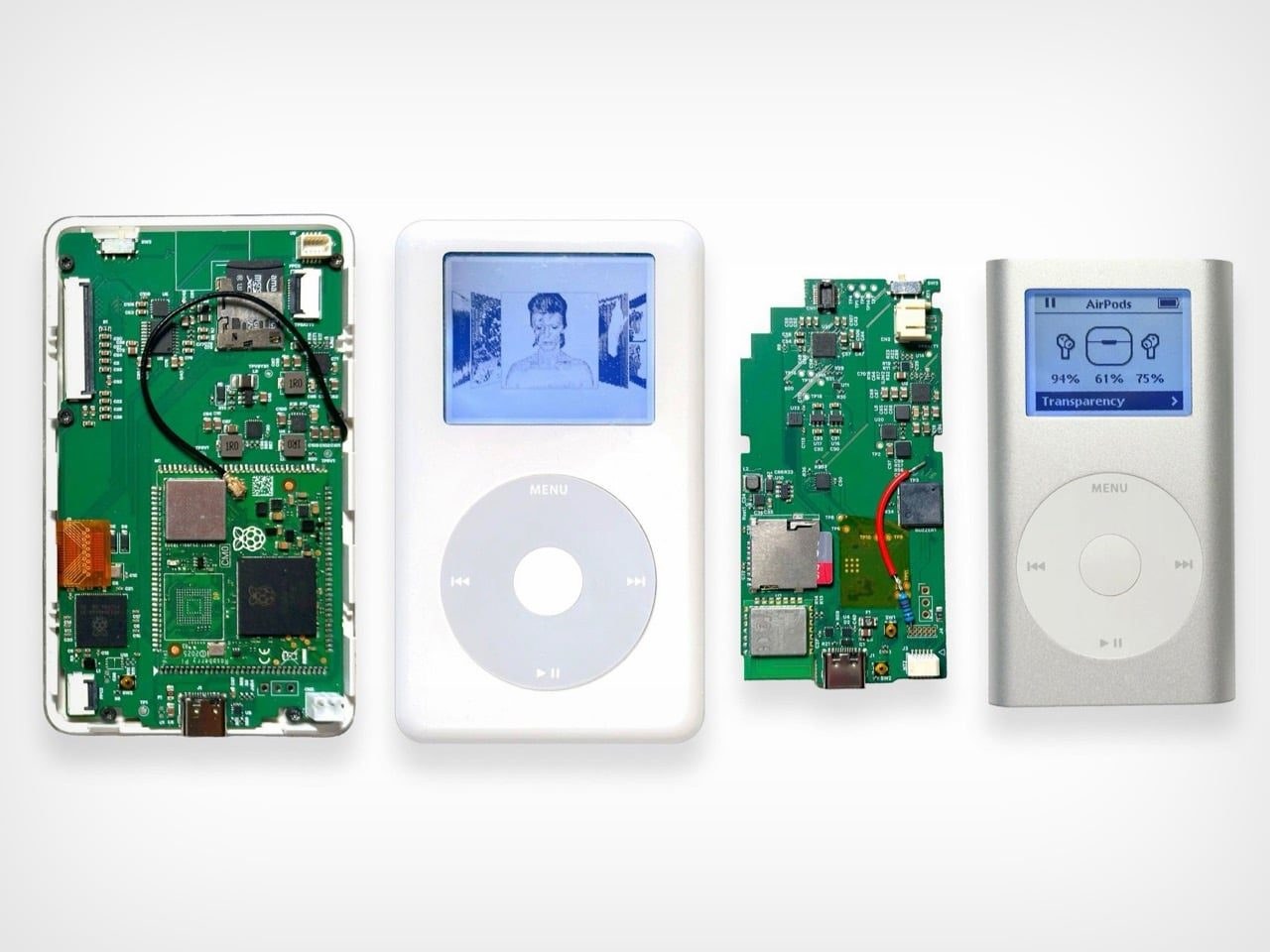
Sprout’s board is precisely machined to match Apple’s original layout, measuring 2.19 x 3.86 inches on the 3rd and 4th-generation models, with an even slimmer variant for the mini. The installation process requires only a standard screwdriver and a plastic pry tool to lift out the ageing components and reconnect the factory ribbon cables. Once assembled, the modded player actually weighs slightly less than it did straight out of the box in 2004.
Previous community projects tackled similar territory with varying degrees of friction. Zac Builds famously soldered a Bluetooth transmitter into an iPod Video, a modification that demands steady hands and immense patience with microscopic wiring. Meanwhile, Boxy Pixel offers a slick machined aluminum shell that preserves Apple’s original motherboard, but the finished device ends up noticeably chunkier than the classic design. Certain Things avoids that bulk entirely, keeping the nostalgia pristine for anyone who remembers the era of wired white earbuds.
The case, screen, and wheel stay exactly as Apple made them, while USB-C charging, Wi-Fi, and a microSD slot for up to 2TB join the party.
While other boutique makers focus on the later 5th through 7th-generation classics, the earlier monochrome models and the beloved mini finally get a comprehensive modernization path. Unlike dedicated modern retro-players that try to mimic the past with fresh software, Sprout breathes new life into hardware that is already gathering dust in desk drawers.
Bluetooth, a Proper DAC, and Two Flavors of Sprout
Wireless connectivity is the obvious headline, letting users pair AirPods and modern Bluetooth speakers with vintage hardware. For wired listeners, the inclusion of a CS43131-class DAC from Cirrus Logic ensures that the analog audio output fed into the 3.5mm jack remains crisp and clean. Music management ditches iTunes entirely, relying instead on drag-and-drop file transfers over USB-C supporting MP3, AAC, ALAC, FLAC, and Opus formats. Battery life sees a dramatic improvement as well, with the larger boards targeting up to 40 hours of continuous wireless playback on a 2,500mAh cell, while the mini aims for 20 hours.
Certain Things splits the hardware into two distinct variants depending on user needs. Sprout Pico runs on a Raspberry Pi RP2350 microcontroller for instant wake times and local library playback, while Sprout Pi packs a Compute Module Zero to enable Wi-Fi podcast downloads, AirPlay, and even custom apps. The studio notes that streaming features are currently functioning as proofs of concept, meaning final capabilities may shift by the time the Crowd Supply campaign launches. The custom firmware even introduces Cover Flow to monochrome screens alongside upgraded search and podcast menus.
For the tinkering community, the project goes open-source with schematics and board layouts slated for release under CERN-OHL-S v2, alongside firmware on MPL-2.0. This openness builds directly on earlier community experiments like Guy Dupont’s 2001 sPot, transforming a clever one-off DIY project into a repeatable, modular design.
Upgrading a vintage music player is not a rational economic decision in an era of ubiquitous streaming subscriptions. However, in our view, paying for a hardware upgrade makes total sense if it buys you a genuine distraction-free escape from smartphone fatigue without forcing you to abandon modern wireless convenience.