
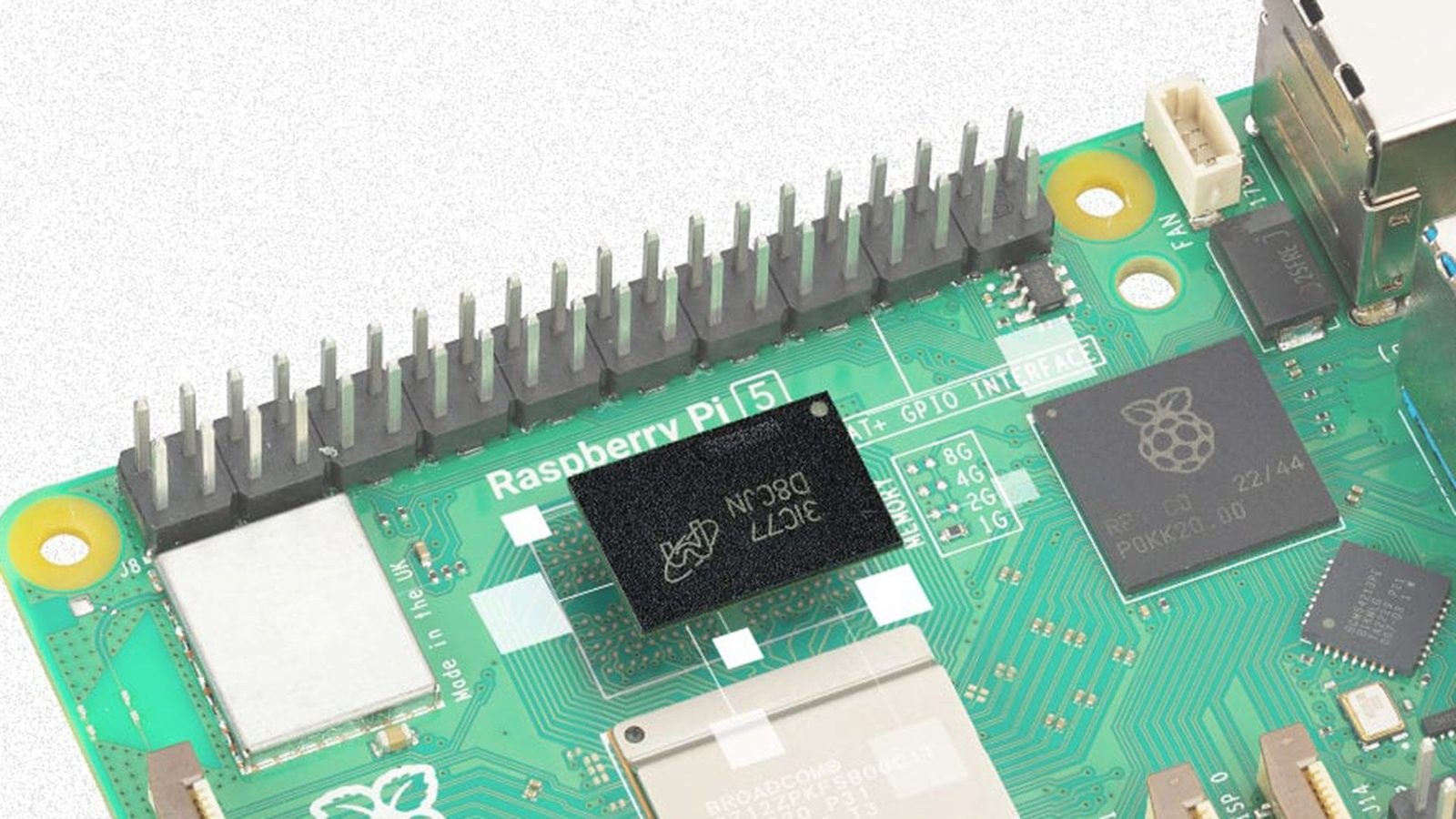
 bare circuit board that famously cost $25 to $35 for years has officially crossed into $385 territory. The 16GB Raspberry Pi 5 launched at a price of $120 in January 2025, but a fresh $80 hike took effect immediately, more than tripling what it originally cost at debut. For anyone looking to assemble a DIY media player, a home server, or an automation hub, this blows up the basic math of tinkerer computing.
Now buyers face a practical question: does it make any sense to pay $385 for a bare board when entry-level mini PCs sell for the same money? Raspberry Pi boss Eben Upton officially announced price rises across top-tier 16GB boards, and the fallout changes how you spend your cash on DIY projects.
The Memory Squeeze and the Pricing Shock
Raspberry Pi boss Eben Upton framed the decision as a forced move driven by hardware suppliers.
"the steep rises in the cost of memory over the past two years."
Upton pointed out that other computer makers have faced identical choices, insisting the brand worked to minimize the pain passed to consumers. Yet the numbers tell a brutal story: alongside the single-board computer, the 16GB Raspberry Pi Compute Module 5 went up by $40. Both devices had already seen earlier price adjustments since their respective launches at $120 and $135.
This is not the first blow to budget builders in recent weeks. A month ago, Eben Upton published a post about memory expenses on the official blog when the 2GB Raspberry Pi 4 and Raspberry Pi 5 models jumped by $12.50 to reach $67.50 and $77.50. Meanwhile, 1GB devices have not seen price rises recently. Yet while low-density boards experienced minor bumps, the flagship model took the full brunt of the memory crisis.
The Wedge Computer and Market Alternatives
The strange part of this pricing reshuffle involves the desktop wedge. While bare boards surged, there was no price increase for the Raspberry Pi 500+ 16GB all-in-one keyboard wedge computer. Upton held that price steady, though the machine was already expensive at $485.
One could argue that rising RAM prices across the global semiconductor industry leave manufacturers no choice, making Pi's adjustments standard market practice. But context matters: as Mark Tyson, a news editor at Tom's Hardware, observed, hobbyists and makers are already moving away from full-sized Pi and Compute Module products for DIY setups. At the bottom of the ladder, simple microcontrollers like Pico and ESP32 boards handle basic smart home chores for pocket change. At the high end, approaching $400 puts you in direct competition with mini PCs that offer stronger processors, dedicated graphics, expandability, and ready-to-run desktop operating systems.
Raspberry Pi built its entire brand on the promise of strict budget limits and a $35 computer that anyone could buy with pocket money. In reality, you are now asked to hand over $385 for an unshielded single board without a case, power supply, or storage — and at that price point, the smart money walks away to standard mini PCs.
What changed
When a bare circuit board without a case or power supply approaches the cost of a ready-made mini PC, DIY projects lose their practical foundation. Freezing the price tag on the Raspberry Pi 500+ keyboard PC only highlights how distorted the brand's standalone board pricing has become. The brand risks alienating its maker community if a bare board continues to sell at the price of a complete computer.