
 hecking into a hotel room, an Airbnb, or stepping into a fitting stall now comes with an unwanted ritual: squinting at smoke detectors and alarm clocks to make sure nobody is filming you. Traditional spy-camera detectors either force you to shell out for bulky standalone RF gear or expect you to visually catch microscopic glints through a cheap red filter. Researchers at the Korea Advanced Institute of Science and Technology (KAIST) built a prototype that eliminates both pain points by turning your smartphone into an automated optical scanner.
Lighting up hidden optics
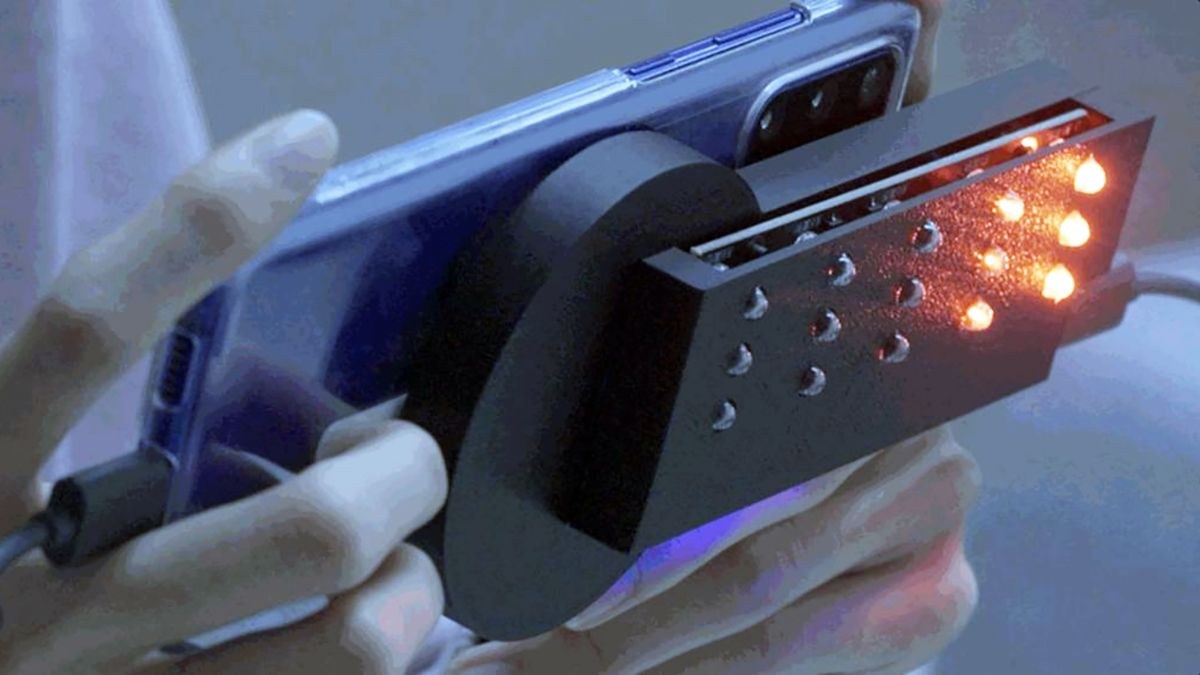
The device, named SweepLED, is a compact phone attachment that pairs a 15-LED light array with software-driven image analysis. You clip the accessory over your phone's rear camera lens and point it at a suspicious object. The ring rapidly cycles its 15 LEDs on and off, casting shifting directional light across the target surface.
Because optical glass bends and reflects dynamic light differently than plastic, painted screws, or standard glass, the software isolates a concealed lens almost immediately.
"Hidden cameras pose a serious threat to personal safety and privacy in everyday spaces," says Professor Jun Han, from the KAIST team.
As Professor Jun Han explained, the project blends basic hardware with mobile computer vision so ordinary travelers can run a scan without needing counter-surveillance training. In evaluations presented at the ACM MobiSys conference, the KAIST team tested SweepLED across 30 different everyday items, including clocks and mirrors. The setup flagged hidden camera lenses in five seconds per object, hitting a 94% detection rate without asking the user to manually interpret optical reflections.
Low-cost hardware meets mobile compute
The real breakthrough here is pure unit economics. Instead of cramming dedicated displays, optical sensors, and expensive processors into a standalone gadget, SweepLED offloads video capture and computational heavy lifting to the phone already sitting in your pocket. KAIST calculated the physical bill of materials for the accessory at roughly $7 (about £5 / AU$10).
Existing budget optical finders require you to eyeball illuminated dots, leaving plenty of room for false alarms, user fatigue, and missed lenses. Automating differential reflection analysis turns an unreliable guessing game into a predictable pass-or-fail readout on your screen.
SweepLED remains an academic prototype without a commercial release date, so you cannot drop one into your carry-on just yet. But demonstrating that a $7 clip and basic machine learning can deliver 94% detection accuracy proves that personal privacy tools do not need to cost hundreds of dollars or require radio engineering skills. Once a manufacturer licenses and packages this design, a five-second room sweep should become a standard, dirt-cheap step in every trip.