
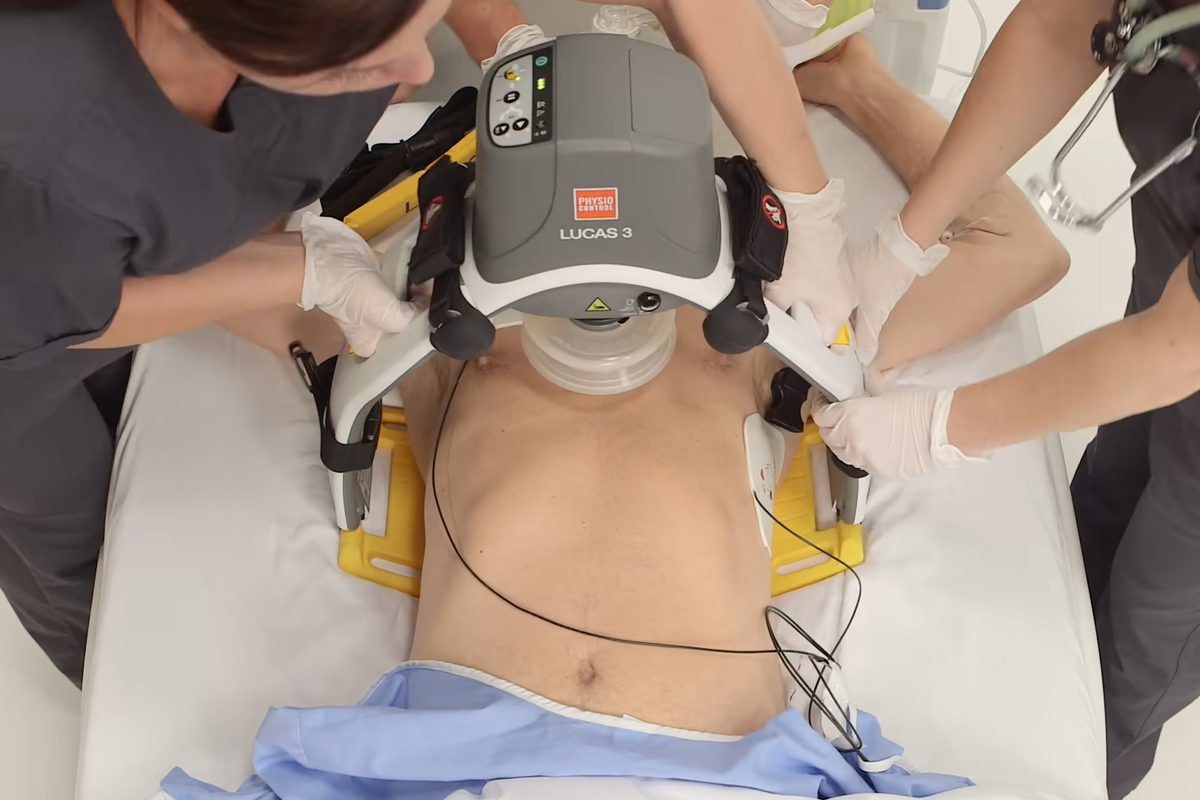
 elevision medical dramas love showing heroic rescuers pumping on a patient's chest for twenty uninterrupted minutes without breaking a sweat or losing rhythm. In the real world, human arms run out of steam in roughly 120 seconds. Delivering consistent, bone-creaking chest compressions to keep blood circulating through a stopped heart is brutal physical labor. Modern medical engineering stepped in with an unapologetically blunt mechanical solution: strap an automated press directly over the patient's sternum.
The Anatomy of a Piston
That mechanical rig is the LUCAS system (Lund University Cardiopulmonary Assist System), originally engineered in Sweden. Early versions from 2002 ran on pneumatic tanks, but modern revisions have swapped high-pressure gas for an onboard lithium battery, an electric motor, a timing belt, and a recirculating ball screw. This drivetrain drives a reciprocating piston fitted with a silicone suction cup against the patient's chest plate, actively pulling back on the upstroke to assist thoracic recoil.
Internally, the motor drives a belt and ball screw that moves the piston up and down.
The hardware operates strictly within clinical parameters: American Heart Association guidelines mandate 100 to 120 compressions per minute at a minimum depth of 50 mm. The LUCAS 3 delivers a factory-calibrated 102 beats per minute at roughly 53 mm of travel, providing relentless, unwavering mechanical repetition that no pair of human arms can replicate while bouncing around in the back of an ambulance.
The Clinical Reality Check
You might assume that replacing an exhausted first responder with an unyielding electric piston automatically skyrockets cardiac survival rates. The clinical trial data tells a far more grounded story. Large-scale randomized studies show automated CPR does not statistically beat skilled manual chest compressions in overall hospital discharge survival.
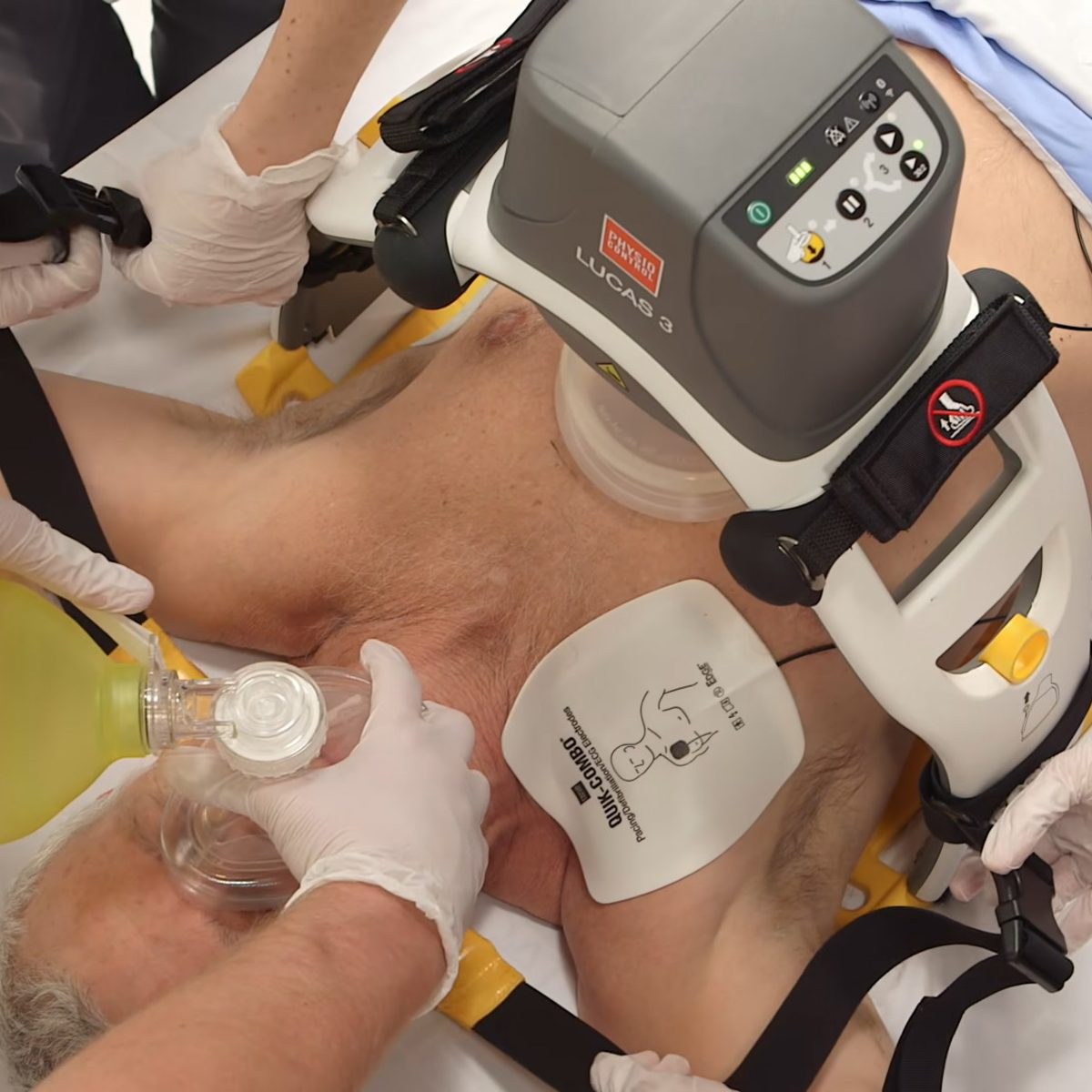
Yet writing off mechanical CPR misses the entire operational point: automation frees a two-person paramedic crew from pure mechanical labor. Instead of burning out their deltoids, medics can secure difficult airways, push adrenaline and antiarrhythmics, and manage defibrillation while the vehicle is in high-speed transit. The machine is not a silver-bullet cure for cardiac arrest—it is a dependable extra set of hands made of aluminum and silicone.