
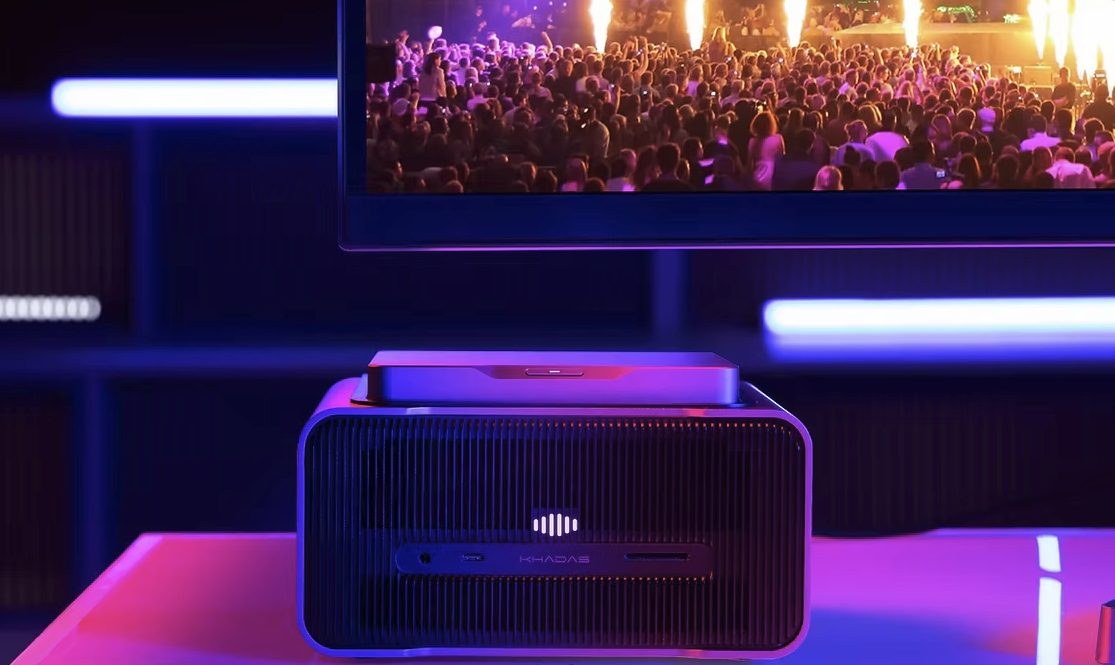
 e have always been suspicious of the idea of modular computers: usually, instead of a universal constructor, the buyer gets a pile of expensive adapters and endless compromises. But the concept of the Khadas Mind 2 looks intriguing on paper: for travel, you take a weightless box, and at home, you snap it onto a docking station with a powerful graphics card and play all the latest releases. True, for the full kit the manufacturer asks about 3,800 euros, although the reviewer managed to snatch it up on occasion for roughly 1,000 euros.
What is this little box and how does it work?
In the hands, the base unit feels more like a thick notebook or a pack of postcards: a body just 20 millimeters thick weighing 435 grams. Inside hides an Intel Core Ultra 7 155H processor from the Meteor Lake family with 16 cores and 22 threads, while the maximum power consumption of the device stays at around 45 W.
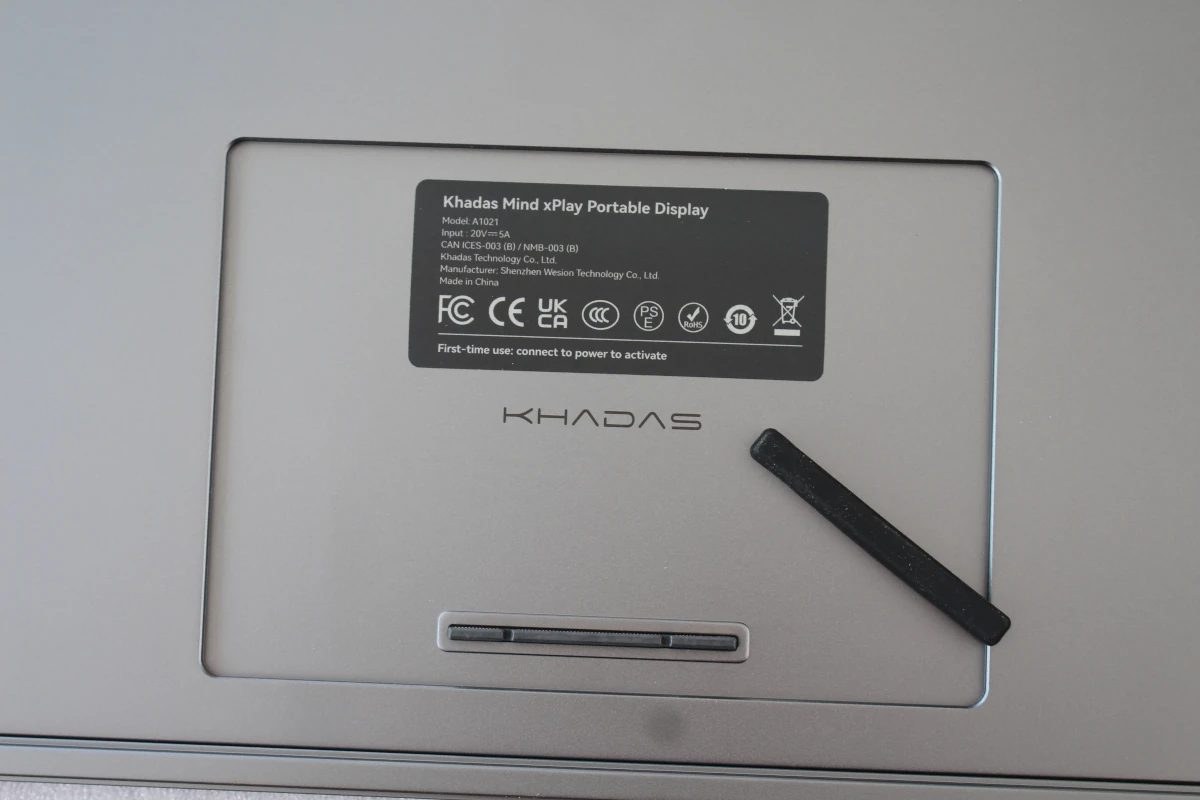
The main trick of the portable unit is the built-in 5.55 Wh battery. It is needed not at all for autonomous work in a cafe, but to safely disconnect the computer from the outlet in the office, carry it in sleep mode to home, and not close your working tabs.
In our Khadas Mind 2, an Intel Core Ultra 7 155H from the Meteor Lake family is installed. This is a chip with 16 cores and 22 threads
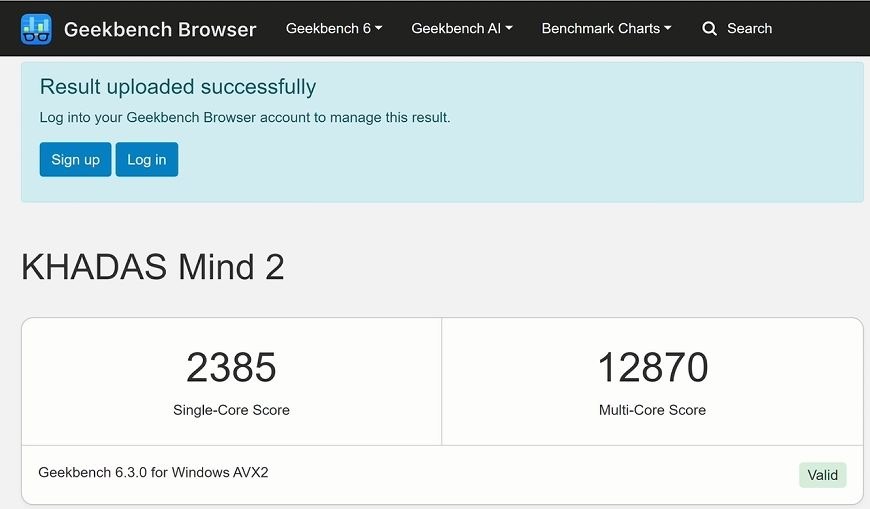
In everyday life, the built-in Intel Arc graphics are enough for basic tasks, but in the 3DMark Time Spy benchmark, it produces a modest 3,974 points. But the processor power is quite sufficient: in the Geekbench 6 test, the device scored 2,385 points in single-core mode and 12,870 in multi-core, and the read speed of the standard 2 TB SSD in CrystalDiskMark reached 5,225 MB/s with a write speed of 4,901 MB/s.
What happens when you plug in the graphics module?
Magic begins when you place the computer on top of the Mind Graphics 2 docking station: there is no need to pull any wires, contact happens through a special connector on the bottom of the case. Inside the unit sits a desktop graphics card, and the system immediately detects the external graphics.
The difference in numbers turns out to be colossal. When connecting a monitor directly to the Mind Graphics 2 graphics module, the result in 3DMark Time Spy grew to [removed], turning a compact office block into a full-fledged gaming station.
What is annoying about this modular math?
The main problem with all this beauty is the insane upgrade price. The manufacturer has already released a fresher module with an Intel Core Ultra X7 358H processor, but for this single block alone you will have to shell out 2,710 euros.
And now let's be honest: paying about 3,800 euros for a system on a previous-generation chip is a dubious pleasure. For that kind of money, an ordinary buyer can assemble a flagship home PC and buy a thin, lightweight ultrabook for trips on top of that.
Reference info
Release date: Not announced
Price: About 3,800 euros for the kit
Manufacturer website: https://khadas.com
Specifications:
- Processor — Intel Core Ultra 7 155H (16 cores, 22 threads)
- Integrated graphics — Intel Arc
- Graphics module — Mind Graphics 2
- Built-in battery — 5.55 Wh
- Storage — 2 TB SSD (read 5,225 MB/s, write 4,901 MB/s)
- Max power consumption — ~45 W
- Case thickness — 20 mm
- Weight — 435 grams
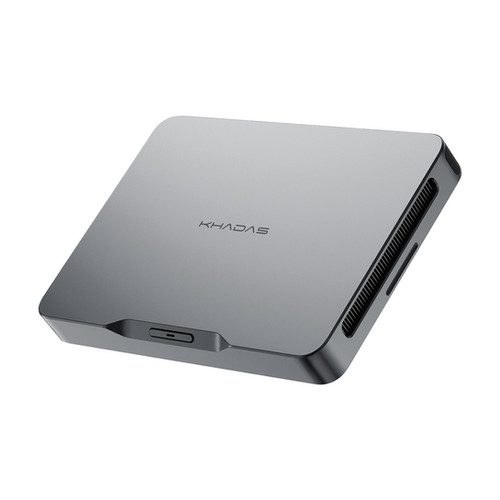
Key points: The Khadas Mind 2 proved the viability of seamless modular connection, but it remains a niche toy for enthusiasts. Buying such a kit at full price for 3,800 euros makes no sense while a bundle of a classical PC and a laptop gives more power for less money.