
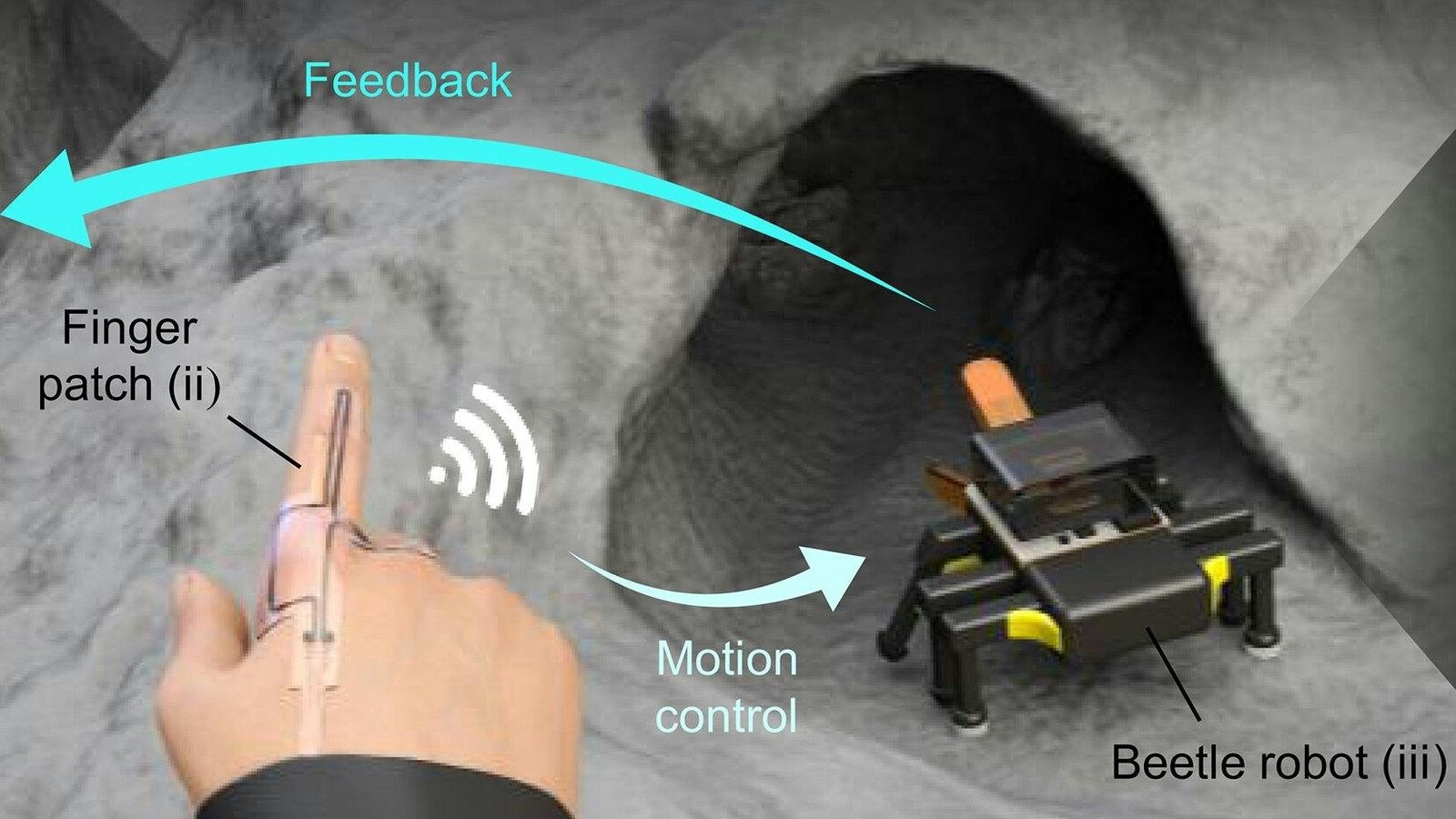
 f you were hoping a miniature mechanical assistant the size of a May bug would soon scamper across your desk, we have some bad news. While engineers race to build ever more sophisticated micro-robots, the practical value of these developments for your wallet sits squarely at zero. Meet BeetleBot, a marvel of laboratory thought that walks and grabs objects without a single internal motor.
Researchers at KAIST decided to bypass the physical dead-end of traditional motors and gearboxes, which at the micro-level become too heavy and power-hungry for tiny devices. Instead, they built a six-legged robot powered by artificial muscles made from a specialized material. It sounds like sci-fi ripped straight from an upcoming electronics catalog, but in practice, this technology will not leave university walls for years.
How It Works and Why It Won't Work in Your Living Room
The secret to BeetleBot's movement lies in a liquid crystal elastomer material that contracts when heated and returns to its original shape upon cooling. As detailed in the testing data published by KAIST, researchers 3D-printed artificial muscles from this compound, embedding flexible metallic heaters inside. When a three-volt current hits them, the muscles contract by roughly 45 percent of their original length.
In testing by KAIST, the artificial muscles contracted by roughly 45 percent of their original length when supplied with 3V.
The robot can even squeeze mandibles resembling a beetle's jaws and detect object shapes thanks to an integrated sensor. It is an impressive engineering exercise, but let us look at what this actually means for anyone outside a cleanroom.
The Catch Nobody Mentions in Press Releases
Before you start hunting for a pre-order button, look at the actual operational constraints of this toy. Add to this the alternate cycles of heating and cooling, which severely throttle the robot's movement speed to a sluggish crawl. Keeping a device on your desk or office floor that risks heating up upon accidental contact and creeps along slower than a garden snail is a thoroughly dubious entertainment purchase.
Artificial muscle technology faces a grueling road of trial and error before it morphs into anything more substantial than a flashy academic paper. There is quite literally nothing here for a regular buyer to purchase, and we are years of laboratory refinements away from seeing actual consumer gadgets running on these principles.