
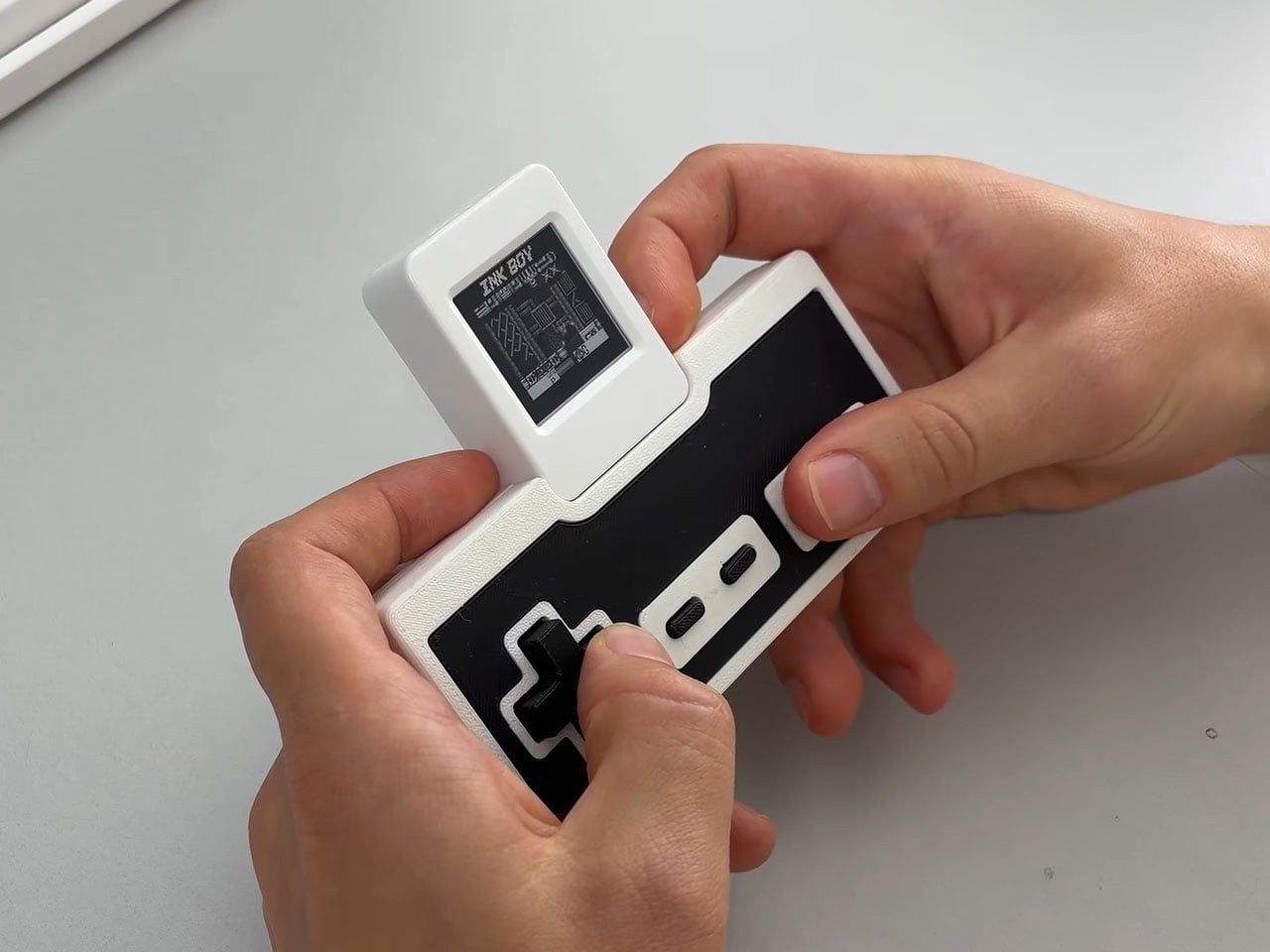
 lectronic paper screens are universally associated with leisurely book reading, where a sluggish page flash every now and then is simply part of the charm. The InkBoy project by independent developer Bo Made It shatters that assumption entirely, proving that these monochrome panels can actually pump out 30 frames per second in fast-paced games like Super Mario Land. This clever little contraption turns a display engineered strictly for static text into a surprisingly snappy retro console. For the everyday buyer, it serves as a glaring neon sign pointing toward a new wave of hyper-efficient, niche gadgets crawling out of independent workshops entirely away from the assembly lines of tech giants.
Beneath the cozy, eye-friendly comfort of electronic ink has always lurked its fatal flaw: a brutally slow response time. The hardware foundation of this handheld relies on an affordable ESP32 microcontroller paired directly with an electronic paper display. Normally, refreshing an e-paper image requires physically shifting microscopic pigment particles using electrical voltages, which results in that infamous stuttering blink and agonizing lag. The developer sidestepped this hardware bottleneck using a remarkably elegant software trick: as Bo Made It demonstrated, InkBoy cuts down this process by using much shorter pulses and updating individual pixels rather than repeatedly refreshing the entire screen.
What Holds This Wizardry Together
Every piece of the hardware is cobbled together from off-the-shelf components available to any garage tinkerer, all packed tightly into a 3D-printed enclosure. Control inputs run through an independent ESP32-C3 board hooked up to the display via USB-C, while games load up straight off a standard microSD card. The software handles game saves cleanly, letting players drop back into their session without losing progress, and there is even a built-in speaker alongside basic Bluetooth connectivity to round out the package.
InkBoy cuts down this process by using much shorter pulses and updating individual pixels rather than repeatedly refreshing the entire screen.
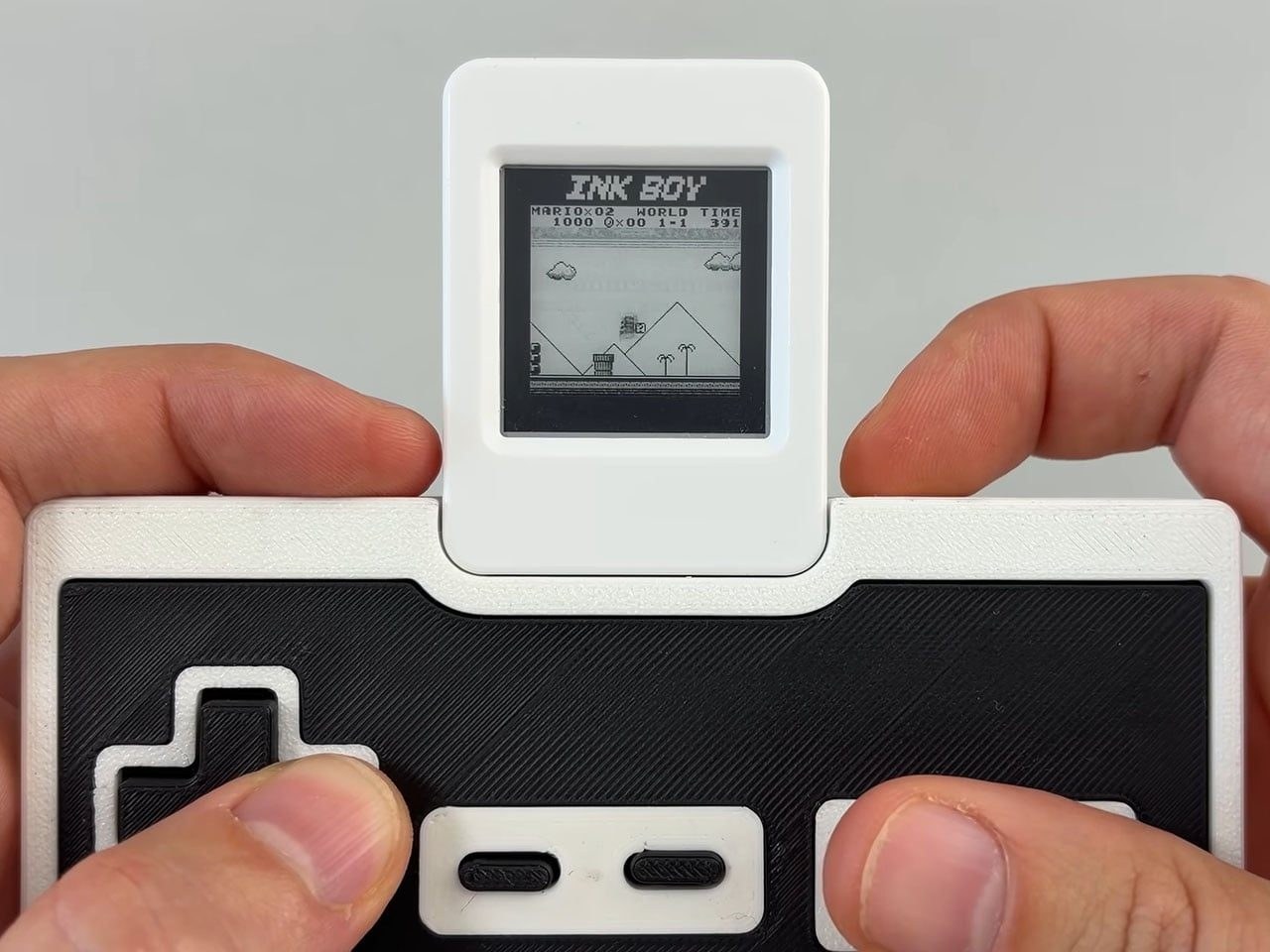
To keep fast-moving action from smearing into an illegible grey smear, the device deploys multiple graphics modes. The creator programmed precise pixel transition controls to pull off decent greyscale gradients, though fast motion inevitably leaves ghostly trailing shadows behind moving sprites. Alternatively, users can flip over to a faster pure black-and-white mode that relies on dithering—a speckling trick that fakes extra shades using dense dot patterns. It is an aggressive compromise, sacrificing visual fidelity entirely for raw response speed when the gameplay demands it.
Is It Actually Worth Hunting Down?
Before anointing this thing the ultimate pocket gadget, it is worth remembering that you are looking at a raw garage prototype packed with all the rough edges that imply. Certain demanding titles utterly choke on trying to maintain that target frame rate, and that clever partial-refresh trick leaves behind noticeable ghosting and burn-in shadows on the panel. Furthermore, nobody outside a laboratory knows how the fragile display panel will hold up after a year of being battered by aggressive, non-standard voltage spikes that essentially torture the electronic ink particles.
If you are holding out for a polished mass-market device backed by a warranty and sitting on a mainstream store shelf, walk away right now without a second thought. But for anyone who appreciates pure, unadulterated engineering mischief and does not mind dodging the occasional software bug in exchange for weeks of battery life and a genuinely unique tactile experience, devices like this establish an entirely eccentric new standard for pocket entertainment.
InkBoy demonstrates precisely how far independent enthusiasts can bend supposedly dead-end technologies purely through stubborn optimization. It is an amusing playground experiment for retro gaming obsessives that will not threaten mainstream smartphones or OLED tablets anytime soon, but it easily earns its keep as one of the sharpest custom hardware projects of the year.