
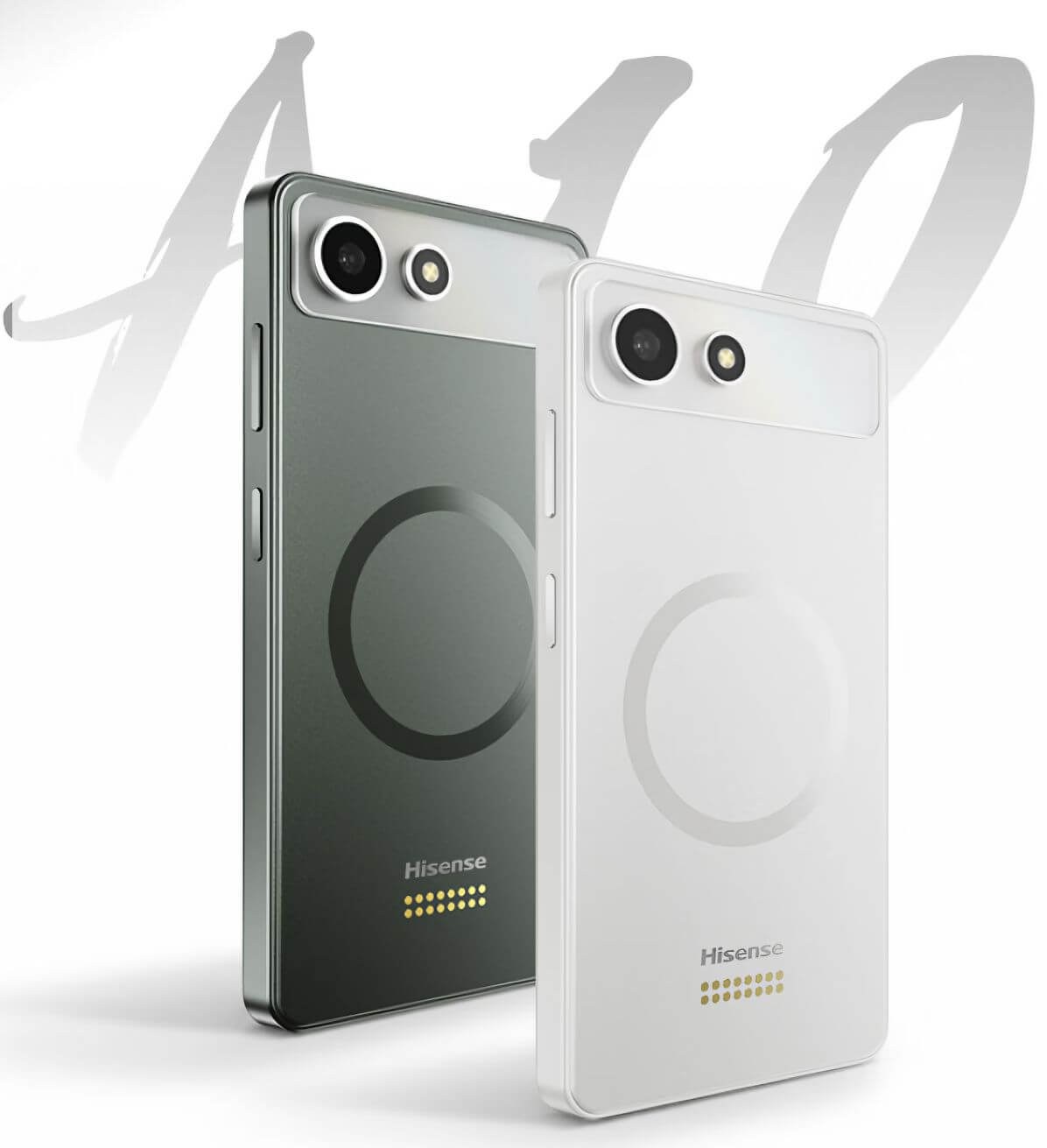
 pending nearly $500 to strip the color, speed, and dopamine out of your pocket computer sounds like intentional tech masochism, but that is precisely the pitch behind the new Hisense A10 lineup. As reported by Michael Kozlowski at Good e-Reader, Hisense has officially launched two distinct variants in China: the standard Hisense A10 priced at $476 for an 8GB RAM and 128GB storage configuration, and the higher-tier A10 Ultra at $576, which bumps internal capacity to 256GB. If you are thoroughly exhausted by glowing OLED slabs designed to hijack your attention span, Hisense wants to sell you electronic paper wrapped around a modern cellular frame.
Both handsets share the exact same hardware foundation: a 6.13-inch monochrome Carta 1300 electronic ink display sporting a sharp 300 PPI density and a 1648 x 824 resolution. Because this is dedicated black-and-white e-paper with 256 levels of grayscale, you get crisp, paper-like clarity under direct sunlight without an aggressive backlight frying your retinas. To handle dark rooms, Hisense built in an adjustable front-lit system offering 36 fine-grained levels of warm and cool illumination.
A Magnetic Fix for E-Ink Limitations
The real identity crisis hits with the $576 A10 Ultra, which packages an unusual engineering workaround directly in the box. Electronic ink remains notoriously sluggish at refreshing, turning fast-moving web feeds, banking apps, and video clips into a smeared grayscale slideshow. To patch this inherent bottleneck, Hisense engineered a detachable 4.96-inch color LCD panel that snaps directly onto the back of the chassis via a magnetic ring and physical pogo-pin contacts.
With the color screen attached, the A10 can be used more like a regular smartphone.
This secondary display lets you browse color comics, check navigation maps, scroll social feeds, or review charts without the visual lag of e-paper, and you can pull it off whenever you want to return to undistracted, eye-friendly reading. Yet having to physically snap a second LCD screen onto your handset just to parse a basic color interface proves that pure e-ink remains a severe usability compromise for day-to-day smartphone duty.
Modern Silicon Meets Barebones Software
Under the hood, Hisense avoided bargain-bin processors and equipped the A10 family with Qualcomm's QCM6690 octa-core chip, built on an efficient 4nm process. The platform brings native 5G connectivity, Bluetooth 5.1, dual-band Wi-Fi, and a standard USB-C port. According to Hisense, the silicon dynamically throttles clock speeds during static reading sessions to conserve juice from the 4,000mAh battery, while ramping up throughput during navigation to tame UI stutter. You also get a 48MP primary rear shooter and an 8MP front-facing sensor for basic snapshots and video calls.
The real operational headache lies in the operating environment. While the devices run modern Android 16, they ship with Chinese firmware completely devoid of Google Play Services. Hisense bundles native regional utilities like WeChat Reading out of the box, meaning you must manually sideload APK packages to install essential readers like Amazon Kindle, Kobo, or OverDrive Libby.
Treat this hardware as a dedicated, sunlight-friendly pocket e-reader with an emergency cellular backup rather than a viable replacement for your everyday smartphone. Unless you are fully prepared to juggle manual app sideloading and the physical chore of a magnetic secondary screen, dropping $500 to escape your screen addiction will likely trade digital fatigue for software frustration.