
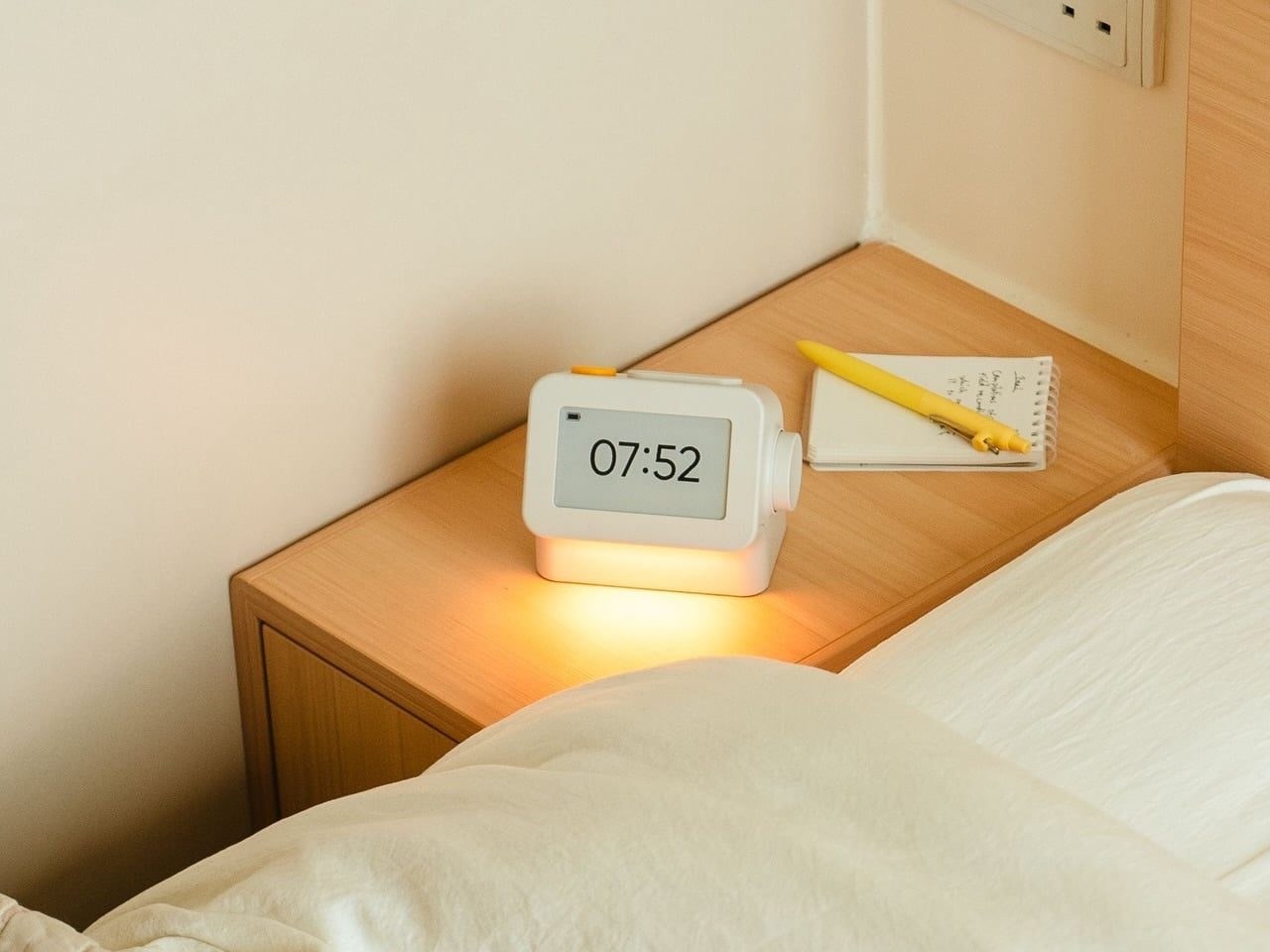
 our smartphone has become a remarkably good parasite that successfully convinces you it belongs right beside your pillow. The excuse is simple: you need an alarm clock to wake up for work. The reality, however, is that this puts every single source of digital distraction within arm's reach the moment you open your eyes in the morning. When your alarm goes off, your hand instinctively reaches for the screen, and before your brain even registers the time, you are already scrolling through notifications and torching your morning attention span on glowing blue light. Peter Arvad and Jesper Westendahl designed Habity’s E-Paper Bedside Clock precisely to break this exhausting cycle and give your phone fewer reasons to stay on the nightstand.
This device is a dedicated bedside companion that takes over the alarm, sleep sounds, and nightlight duties with physical controls and a display that doesn't blind you at three in the morning. As Arvad and Westendahl designed it, its 3.7-inch e-paper display reflects ambient room light rather than relying on continuous illumination. When you need to check the time in pitch darkness, interacting with the clock activates a warm frontlight for 10 seconds—just enough for a quick glance without turning your nightstand into a lighthouse. It is a refreshing piece of hardware built around a simple premise: a clock should tell time and help you sleep, not act as a portal to endless work emails.
Controls and sounds that keep your phone in another room
The most practical part of Habity’s E-Paper Bedside Clock is how its physical controls prevent you from messing things up when you are half asleep. A large side dial handles settings and volume through turning and pressing, while a yellow stop button sits right beside a broad snooze key on top. These different shapes separate two decisions you probably don’t want to confuse when you wake up thoroughly disoriented.
There’s also a built-in speaker for sleep sounds, which don’t need an app or subscription.
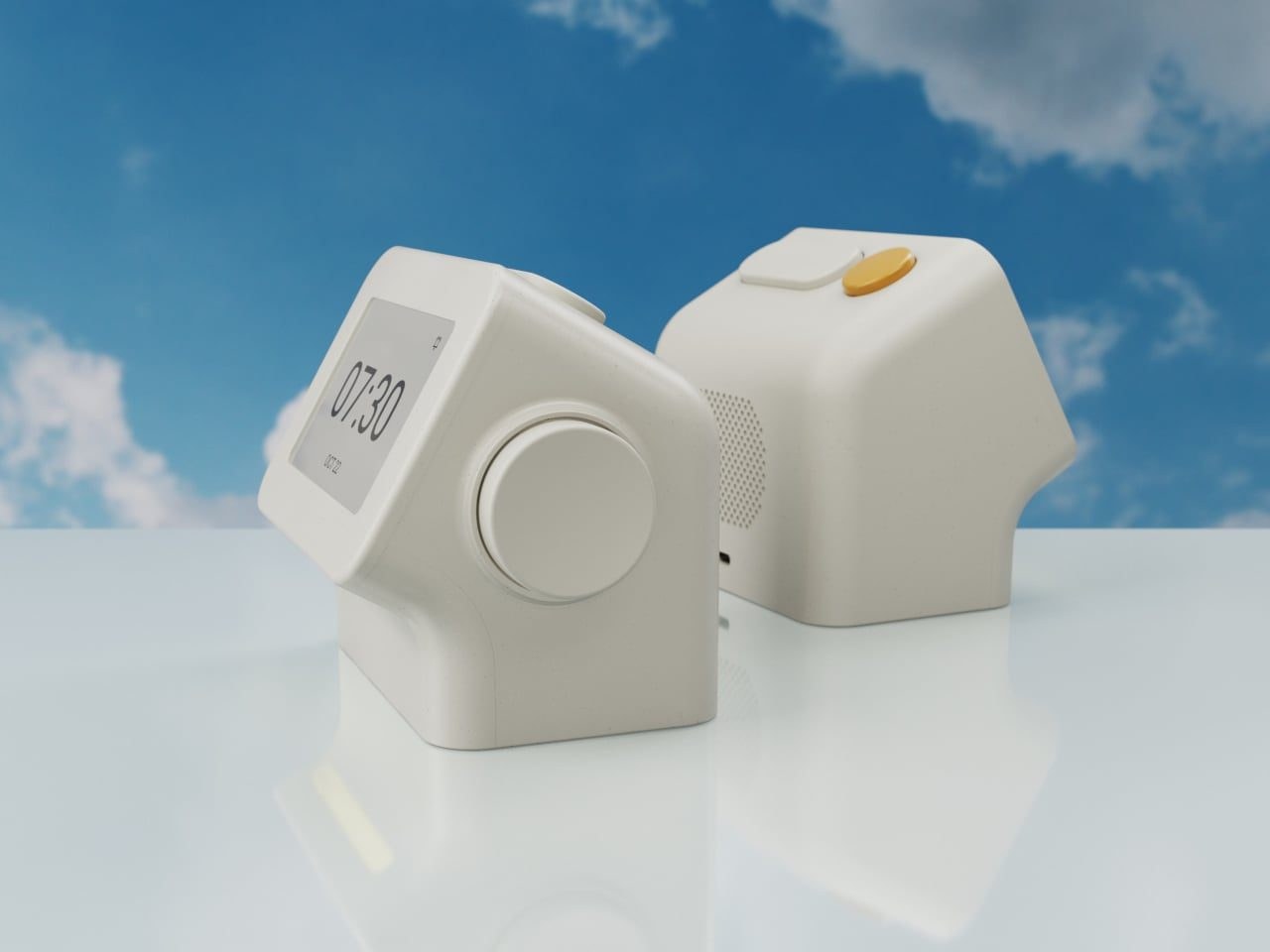
Habity’s E-Paper Bedside Clock features a built-in speaker for sleep sounds that do not require an app or monthly subscription. You get familiar ambient tracks like rain and ocean waves, alongside surprisingly domestic touches like a sleeping dog and a dishwasher. Sessions can last up to eight hours, meaning you do not have to borrow your phone to stream a white noise soundtrack for the night. Mornings get extra flexibility with weekday schedules or individual wake-up times, and the built-in light can gradually brighten up to 30 minutes beforehand to wake you up more naturally. Once the alarm sounds, pressing that broad snooze button grants another five minutes, as many times as you care to negotiate. After 10 minutes of inactivity, an optional idle screen introduces an illustrated face and shrinks the time so you are not constantly reminded of how late it is.
Battery realities and connected features
For all its offline charm, Habity hasn't completely shut the door on smart home integrations. Optional Wi-Fi provides automatic time setting and integrations with Philips Hue Bridge, Home Assistant, and Homey, though that specific setup requires USB-C power. Getting this device won't physically force your phone into another room, of course, so you still have to make the conscious decision of where your phone spends the night. But for anyone trying to reclaim their morning focus from the tyranny of the glowing glass slab, investing in a dedicated physical clock is a surprisingly sane way to start the day without buying into another subscription trap.