
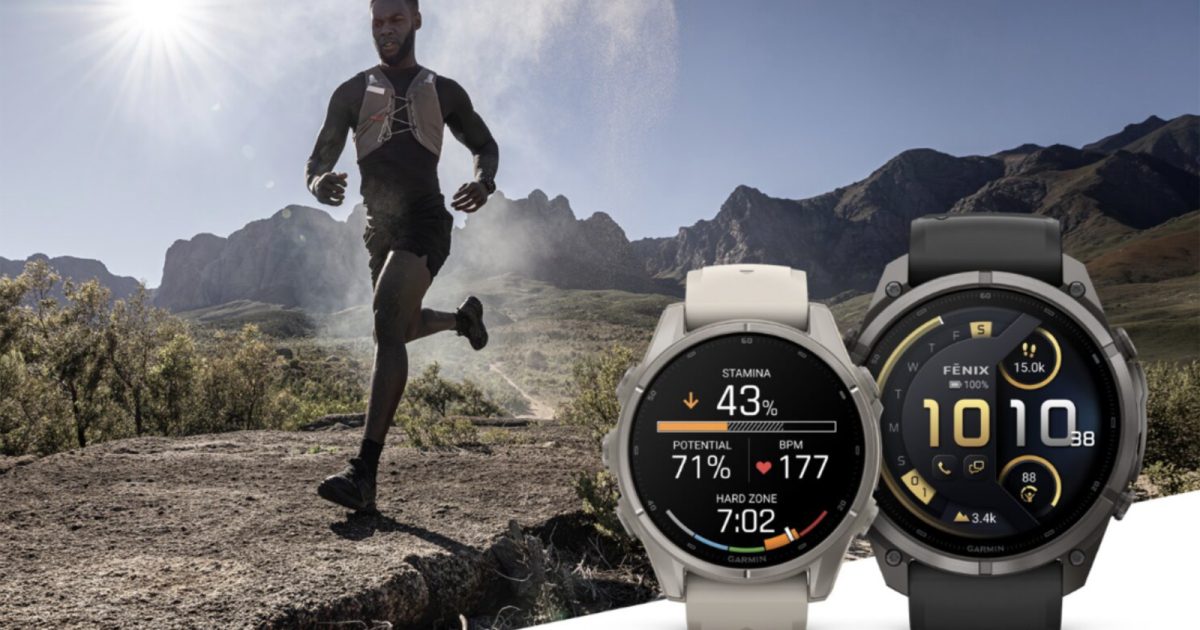
 armin kept the starting price at $1,000 while delivering its most important real-world upgrade: an OLED display under sapphire glass that hits 3,000 nits. Put simply, the screen is twice as bright as the previous generation. In practice, you no longer have to squint at your wrist under direct midday sun during a run or an intense mountain ascent.
Under the hood, Garmin skipped radical engineering overhauls and focused on removing bottlenecks. The smartwatch features 64 GB of onboard storage, 50% more RAM for smooth topographic map rendering, and 30% faster navigation processing. The Garmin Epic software suite adds stamina tracking and backpack load calculation for specialized training sessions, while the larger 51mm model delivers up to 29 days of battery life on a single charge.
Fenix 8 owners can comfortably skip this release: upgrading last year's flagship solely for faster map rendering and new software graphs makes little practical sense. However, for those moving from older models with dim transflective displays, the premium for the Fenix 9 pays off entirely thanks to uncompromising readability in actual field conditions.