
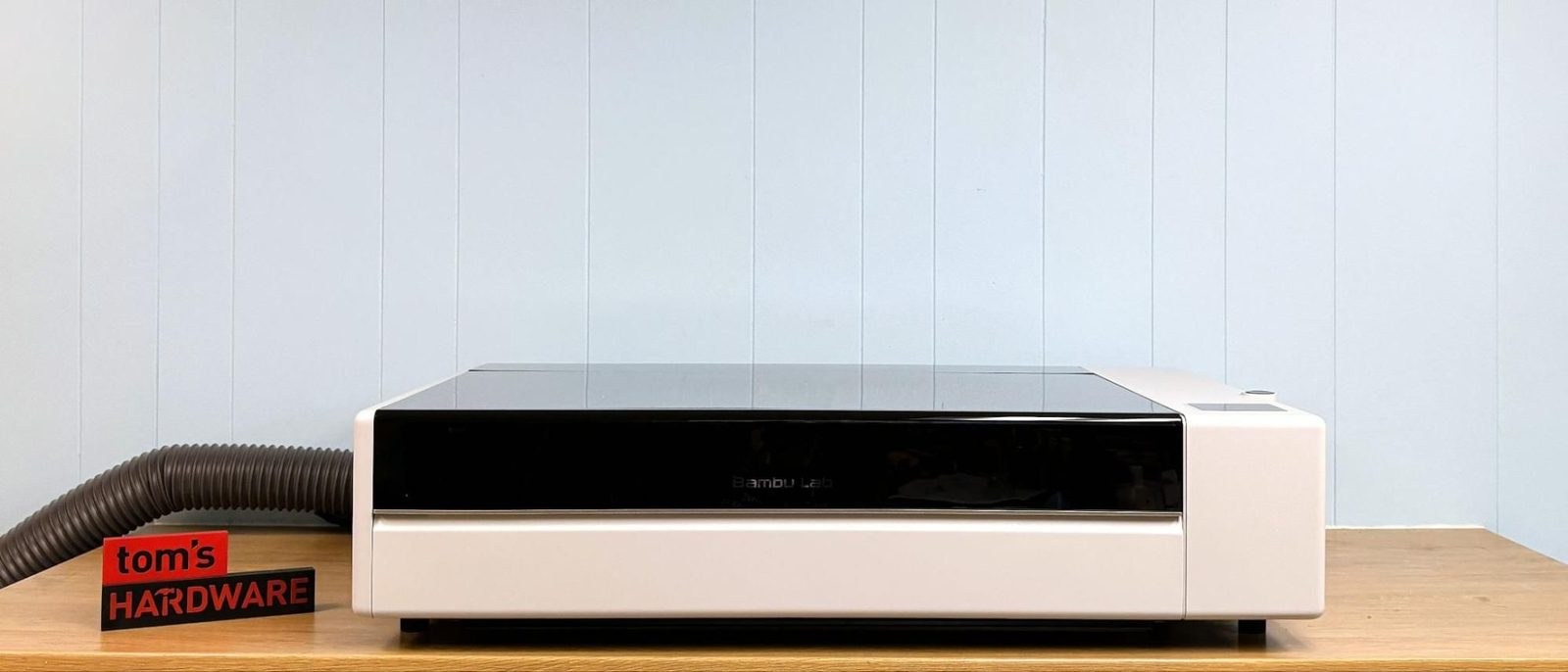
 he Bambu Lab R1 arrives fully assembled with its accessory pack tucked safely inside the enclosure. Priced at $2,499, this machine packs a 55W CO2 laser system with a sensible 600 x 300 mm work area that hits the sweet spot for small shop owners. You will immediately feel the heft during installation because the unit weighs over 70 pounds and demands a stout work table that will not wobble under heavy operation.
Setting up the liquid-cooling loop is straightforward enough, though you will need to supply 1,500 ml of distilled water to dilute the included antifreeze before powering it on. The physical controls keep everyday operations accessible, placing the color touchscreen and start button directly on top of the machine where you can actually reach them. Bambu Lab wisely installed the emergency stop button on the right side of the laser enclosure, giving you a quick physical panic button when a cut starts going sideways.
Cutting Power and Positioning Optics
The default bed provides plenty of elbow room for standard projects, but the working envelope expands nicely when you need to feed larger stock through.
The Bambu Lab R1 is rated to cleanly slice through wood and acrylic without breaking a sweat.
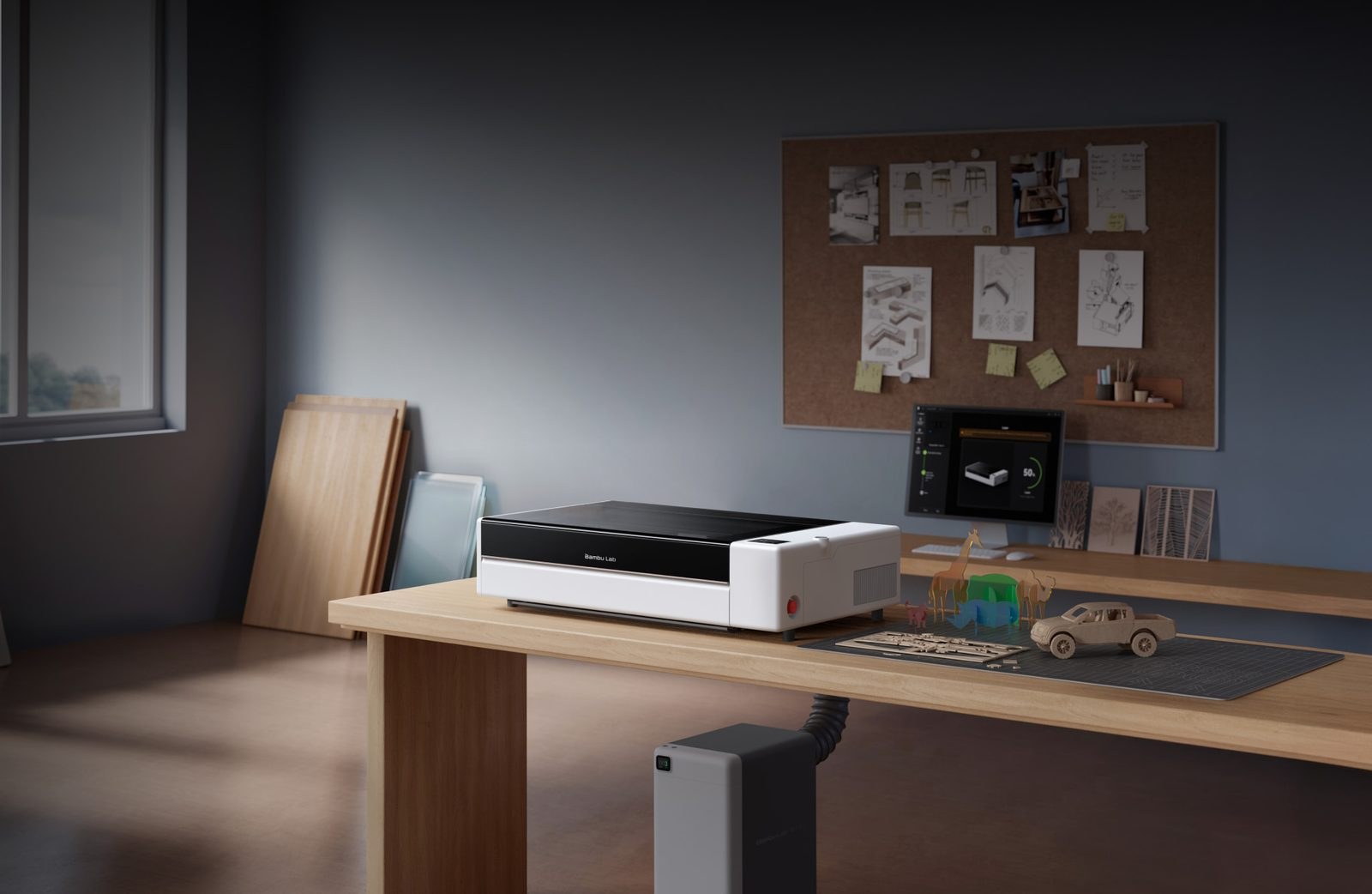
Material handling tackles serious workshop tasks right out of the gate, and lining up your projects is aided immensely by the overhead camera mounted on the lid. That bird's-eye camera delivers precise positioning accuracy, letting you drop your vector files directly onto your material through the Bambu Suite software without resorting to manual guesswork or laser-pointer alignment.
What Frustrates in Daily Use
The machine is not without mechanical friction when you start moving between vastly different material thicknesses. Swapping out focus lenses to cut thicker stock requires pulling six separate screws, turning a routine optical adjustment into a tedious workshop chore. Operating noise is another factor you must plan around, as the loud exhaust and cooling fans run aggressively during active jobs while you navigate the currently limited material presets built into the software.
Clear a dedicated heavy-duty bench and have 1,500 ml of distilled water ready before delivery so you can run the coolant setup and bed calibration immediately upon unboxing, rather than staring at a 70-pound paperweight while you wait for a trip to the grocery store.