
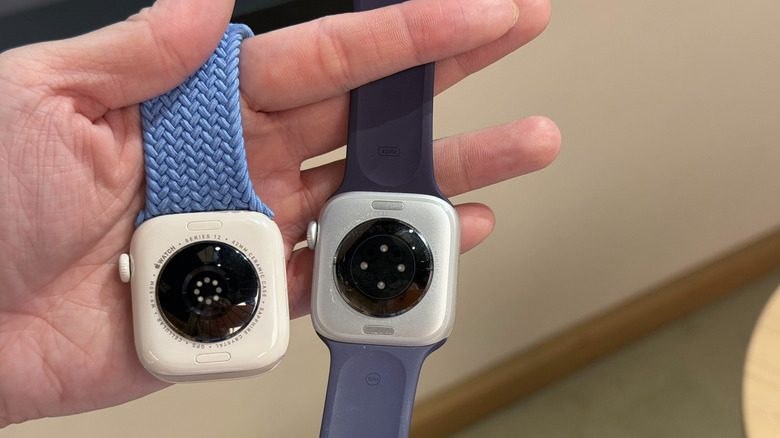
 lip the Apple Watch Series 12 over, and you will spot the actual physical overhaul: a circular ring of 12 lights replaces the four diamond-shaped LEDs from the Series 11, paired with re-engineered diodes and electrodes to maintain tighter skin contact. The casing keeps its familiar profile on your wrist, but underneath, the optical cluster works overtime. Instead of taking sporadic heart rate variability snapshots every two to four hours, the watch now measures your pulse every five minutes.
Daily Scores and Audio Intelligence
All that background polling feeds into the new Readiness score, a straightforward 0-to-10 gauge that translates complex sleep and recovery metrics into plain English. It tells you whether to push hard at the gym or take an easy walk, though you must wear the watch for a full seven-day baseline before the number appears.
The new Readiness app calculates a daily score on a scale of 0 to 10 based on user activity, sleep, and vitals.
On the software side, Apple leans heavily on Audio Intelligence features like Siri Recap and Live Rewind to catch background conversational context. In practice, having your watch quietly summarize spoken notes or catch missed details during a meeting is undeniably clever, but the heavy sensor polling and acoustic processing carry a familiar penalty: battery life remains firmly stuck at a single day.
The Upgrade Equation
If you already wear a Series 9, 10, or 11, the practical calculation is simple. You gain tighter biometric tracking, a helpful daily recovery index, and nifty background audio recaps, but you will still drop the watch on a magnetic puck every single night. Unless your current battery is completely degraded or you desperately want a simplified readiness metric, there is little reason to rush out and replace last year's hardware.