
 nyone who has held a flagship smartphone during an intense gaming session or a 4K video recording knows the unpleasant sensation: the glass back panel turns scorching hot, the screen dims unexpectedly, and the once-smooth interface begins to stutter. The consumer tech industry has hit a thermal wall: computing and AI workloads are growing faster than engineers can squeeze larger vapor chambers into ultra-slim devices.
The Dead End of Conventional Heatsinks
Modern processors have become multi-layered 3D stacks, but external cooling solutions can only pull heat from the outer layer. A traditional copper plate, thermal paste, or tiny chassis fan simply cannot draw heat out from the deepest layers of the silicon architecture.
While hardware makers rely on stopgap solutions—like Phanteks rolling out its EX5 cases with compartmentalized chambers to isolate GPU and motherboard airflow—semiconductor foundries are tackling the crisis from within.
Cooling multi-layer chips from the outside has hit diminishing returns: silicon must be cooled from the inside out.
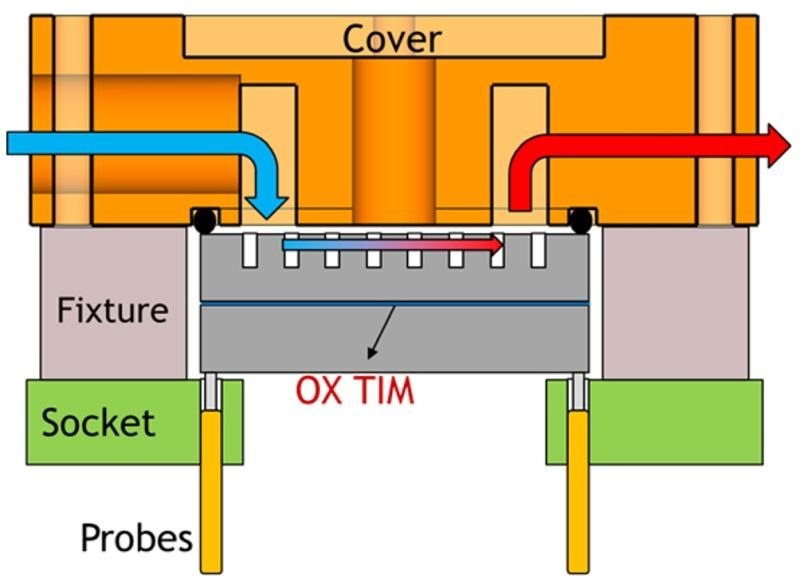
Engineering micro-fluidics directly into the chip packaging sounds straightforward in concept, but is vastly complex on the production line. Instead of bolting on bulky external heatsinks, microscopic coolant channels are etched straight into the silicon crystal.
When It Will Reach Consumer Pockets
This architecture eliminates leaks in the traditional sense: coolant circulates through hermetically sealed nanoscale channels, pulling heat directly from active transistors at their peak thermal hotspots. You will not find flexible tubing or mechanical PC pumps here.
Smartphones will not be the first to adopt this technology. The enterprise server market is currently suffocating under AI thermal loads: Arm recently unveiled its Neoverse CSS N4 platform for 128-core data center chips, while Qualcomm is prepping dedicated inference accelerators for Amazon's cloud infrastructure. Hyperscalers will fund the costly manufacturing ramp-up, after which the tech will trickle down to consumer hardware.
Direct in-silicon micro-channel cooling is expected to land in smartphones within two to three hardware generations. Once integrated, flagship phones will no longer throttle battery life under load, dim displays in direct sunlight, or burn the hands of their users.