
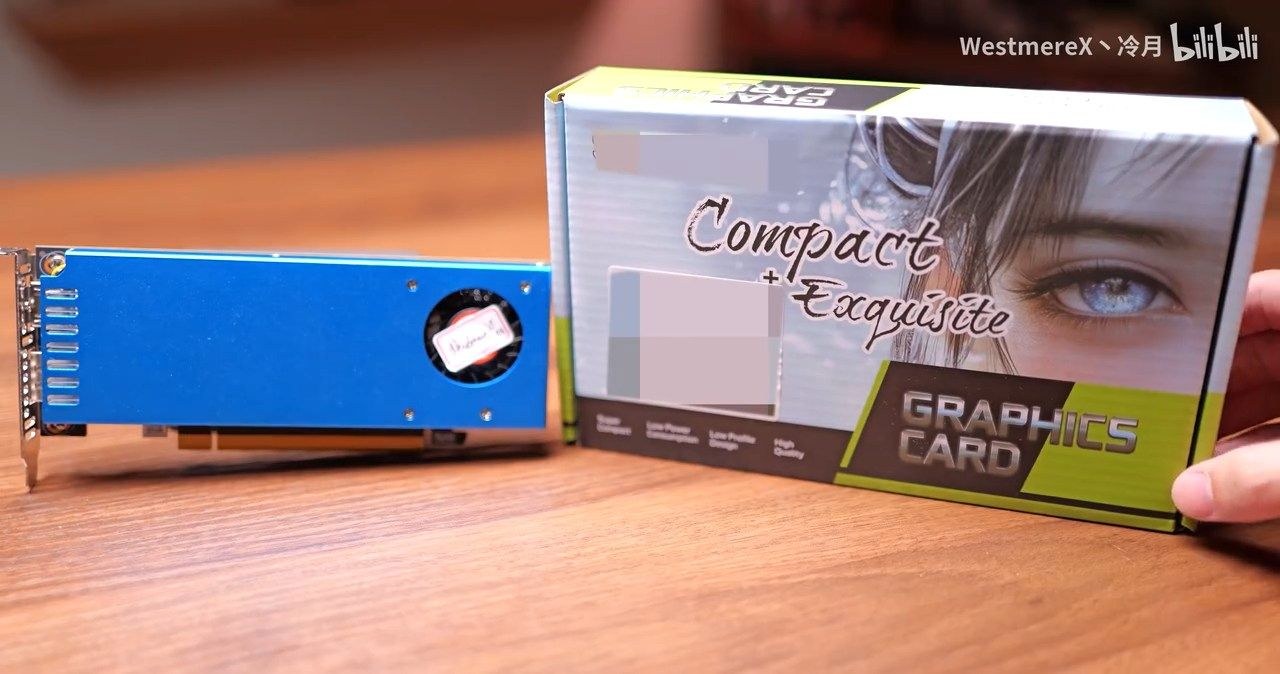
 tuffing a full desktop graphics card into a shoebox-sized PC usually hits a physical wall: thick power cables and massive heatsinks take up too much room. A custom Chinese modification attempted to break that rule by turning Nvidia's GeForce RTX 3060 12GB into a single-slot, low-profile card roughly the size of a modern smartphone. While Nvidia originally launched the RTX 3060 with a 170W TDP, this Frankenstein mod eliminates external 6- or 8-pin power connectors entirely, pulling all its energy directly through the motherboard's 75W PCIe slot.
On paper, getting an Ampere GPU with DisplayPort and HDMI outputs into impossible form factors sounds like a DIY triumph. In reality, it is a masterclass in thermal self-sabotage.
Cutting Power and Cooling Corners
To hit that 75W ceiling without external plugs, the board slashes power to the silicon. But the hardware compromises go much deeper than firmware throttles. A teardown on Bilibili revealed that the VRAM chips lack thermal pads or paste entirely.
The metal shroud just touches the core directly to keep the entire thing cool.
A tiny blower fan attempts to shove heat across a bare metal shroud without a proper fin stack or backplate. Predictably, that setup fails under load. During Time Spy benchmarks, hotspot temperatures surged past 90°C, forcing the silicon into aggressive thermal throttling on top of its halved power budget.
The Cost of Halving the Watts
The benchmark numbers strip away any lingering fantasy of a stealth upgrade. Starved of both power and cooling, core clocks barely touched 900 MHz during testing, crumbling against the chip's factory 1,770 MHz boost rating. The card posted a paltry 4,821 points in Time Spy—barely half the 9,000+ points delivered by a stock RTX 3060, and trailing ancient budget silicon like AMD's RX 580 and Nvidia's GTX 1060.
While software undervolting a standard card down to 100W remains a viable, efficient tweak for small-form-factor builds, buying a hacked 75W board is a trap. Instead of squeezing desktop punch into a micro rig, buyers end up paying desktop prices for performance that struggles to outpace basic integrated graphics.