

 assing a smartphone back and forth across a dinner table or shoving a screen into a client's face during a business negotiation is awkward, unnatural, and kills conversational momentum. While general-purpose mobile translation apps handle street signs and dinner menus reasonably well, they choke on rapid, real-time dialogue and leave awkward multi-second silences. Timekettle tackled this specific friction at IFA 2026 with the W4 Plus AI interpreter earbuds, betting that dedicated hardware can turn disjointed, turn-by-turn translation into fluid, hands-free conversation.
Natural Two-Way Dialogue
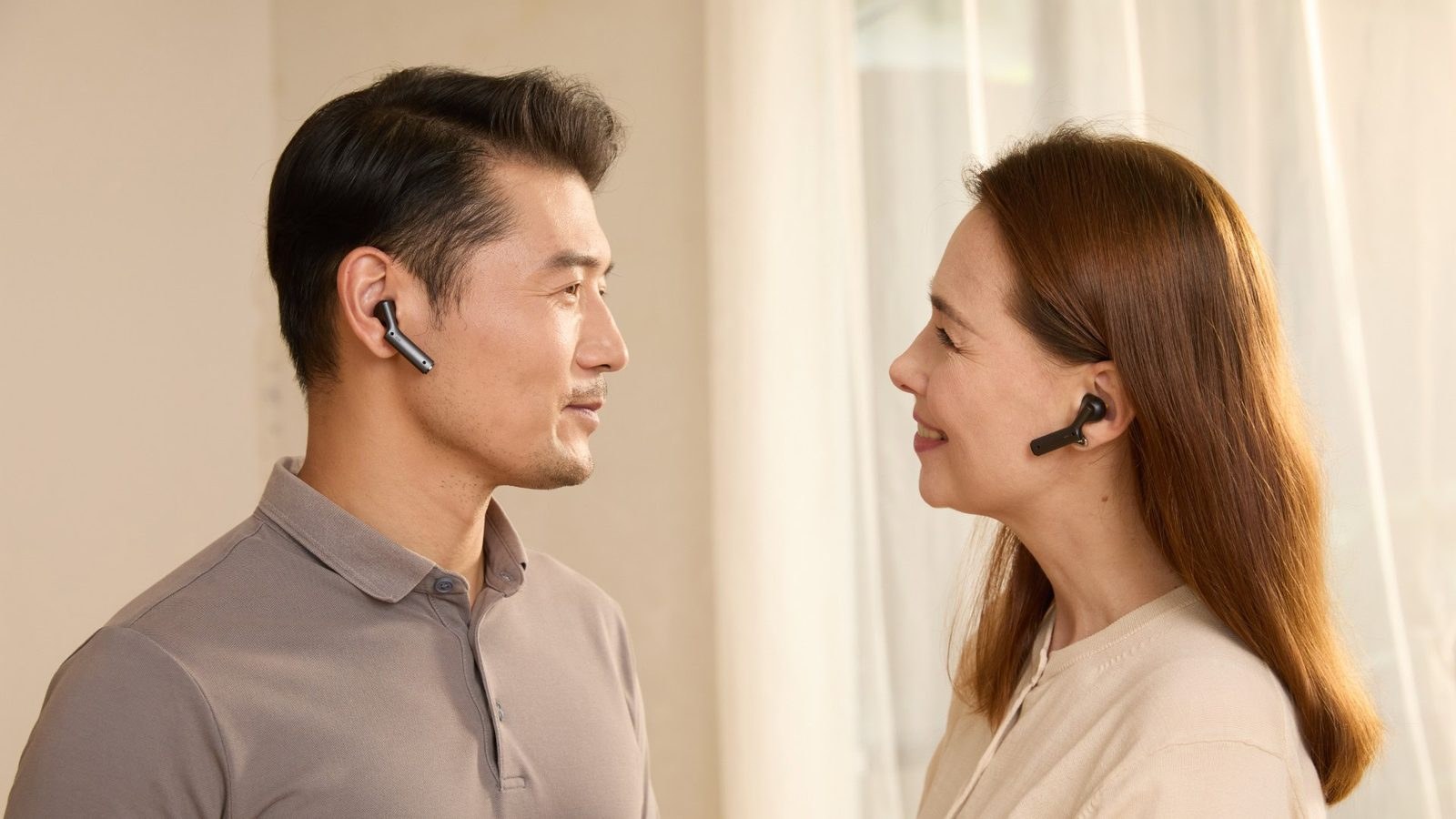
The premise hinges entirely on physical sharing: two people each put in one earbud and talk normally. Operating in its primary One-on-One mode, one speaker talks while the other hears synthesized speech in their ear almost instantly, with adjustable output speed and selectable voice profiles.
The W4 Plus’ big selling point is One-on-One mode.
By moving the interaction away from a glowing glass slab, both participants can maintain eye contact instead of staring down at real-time transcriptions. To prevent complex conversations from unraveling midway, the system relies on Translation Refinement and Conversation Memory features. These analyze preceding sentences to keep recurring industry terminology and narrative context coherent over long exchanges, rather than translating isolated fragments in a vacuum.
Industrial Domains and Speech Isolation
The standout software leap on the W4 Plus is AI Specialized Translation powered by Babel OS 3.0. Instead of forcing a generic translation engine to stumble over technical jargon, the system lets users select from five distinct industry models before starting: General, Tech & Internet, Manufacturing & Industry, New Energy & Green Tech, and Biotech & Pharma.
Carrying dedicated interpreter hardware only makes financial and practical sense if you regularly conduct multilingual negotiations where a misunderstood technical term carries costly consequences. For tourists ordering coffee, free smartphone apps remain entirely adequate; for cross-border operators navigating specialized manufacturing or biotech contracts, having domain-specific vocabulary and low-latency audio processing in your ears easily justifies the specialized hardware tax.