
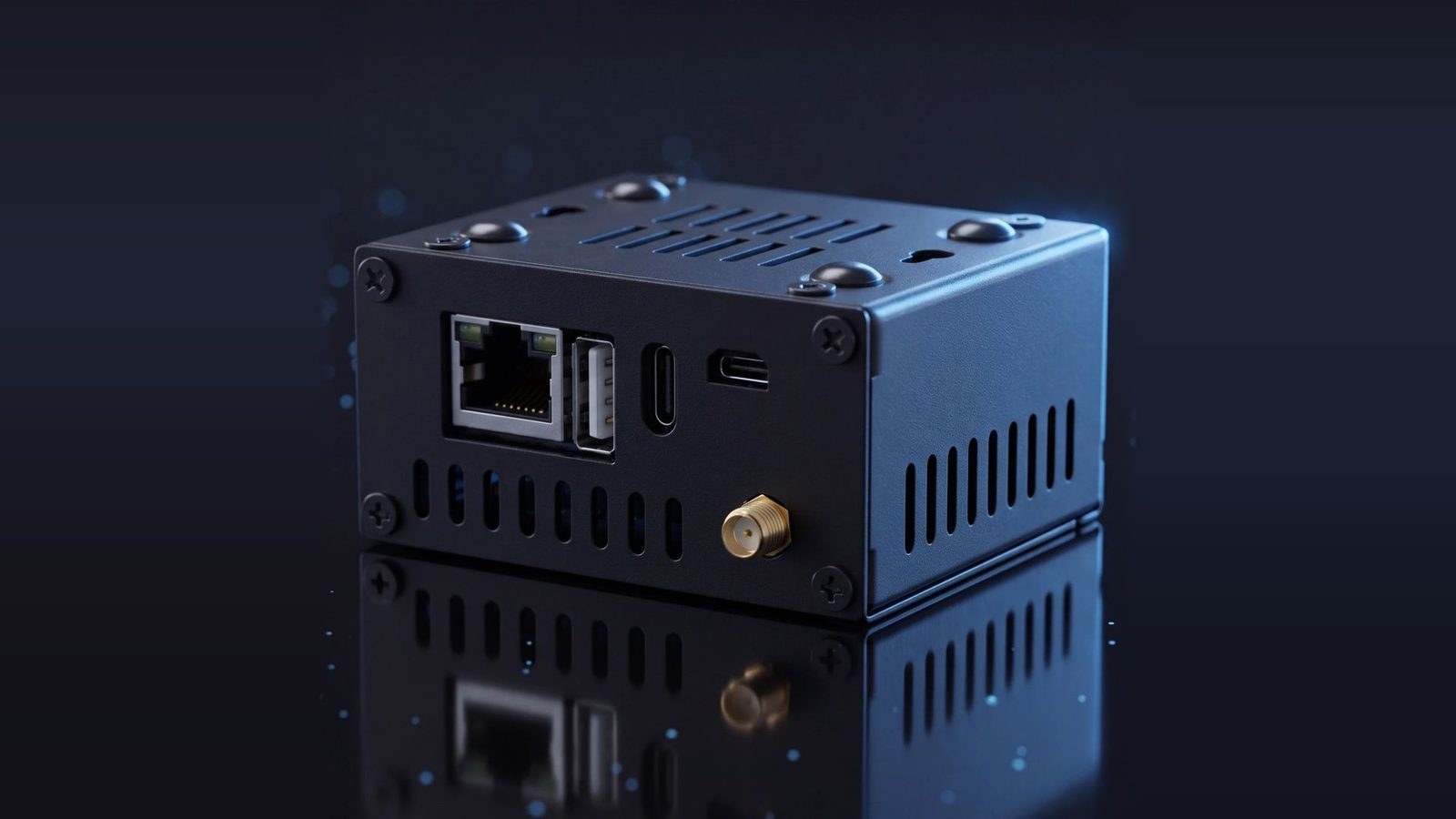
 hen computer memory cost sensible money, nobody tried to make an old tablet and an office desktop pool their RAM together just to chase local artificial intelligence. Today, as component prices have skyrocketed, devices hit the market that sell users for actual cash what creators of free software have been giving away for years.
Buyers are offered a neat little box, but beneath the slick marketing wrap hides a well-known tool: the RPC backend from llama.cpp, which anyone can download and configure completely for free.
Gold RAM and the illusion of innovation
The hardware market has turned into a financial nightmare for anyone trying to build or upgrade a home desktop. According to German retail data from 3DCenter, by mid-August DDR5 memory prices surged to 486% of their July 2025 baseline. Nobody offers a quick fix: Samsung representatives warned analysts that the shortage will drag on at least until 2028, and the chairman of SK Group even conceded that the chip crunch might last until 2030.
Yet the creators honestly admit in their documentation that if you know your way around a command line, free open-source software remains the ideal choice.
What hides inside the black box
The technical guts of the box turn out far simpler than the marketers' loud claims. No magical physical memory merging takes place: the model is simply split into layers across different computers, and the home network merely shuttles intermediate calculation results back and forth as each new token generates.
TradeMAV's public GitHub repository is candid about the plumbing involved: The node agent starts llama.cpp's ggml RPC server on each contributing device; the README says any compatible coordinator can drive it over the standard llama.cpp RPC protocol, and the suggested way to confirm it works is a stock llama-cli command.
Yet the official product pages omit basic specifications like the processor, memory capacity, port selection, and power consumption. Furthermore, equivalent functions for automatic device discovery and universal APIs have long existed in the open domain—for instance, the open exo project from Exo Labs has worked with computers, phones, and single-board machines since at least early 2025, while in the premium segment Apple's new Mac Studio supports Thunderbolt 5 clustering via RDMA technology, where Apple claims a threefold speed boost when combining four machines.
Speed at a snail's pace
The main catch of such pooling lies in performance, which the project's creators warn about in advance. The startup's background page explicitly states that pooled memory sacrifices speed to expand available capacity, and those who need peak performance should simply buy a graphics card with plenty of video RAM. In developer demos, the best results came from mini-PC setups paired with an RTX 3060 card and models using a mixture of experts architecture that engage only about three billion parameters per token.
Things change drastically when switching to dense neural networks, where performance craters to depressing speeds. That indeed saves you from the out-of-memory error that would otherwise prevent the model from launching on a single weak PC, but actually using such software for everyday tasks feels physically painful.
Editorial analysis
Free open-source code has been publicly available for years, yet pre-packaged boxes running it are suddenly commanding hardware-level prices. The surge in demand stems directly from the component market: in late August we reported how standard 32GB DDR5 kits spiked past the $400 mark, making local artificial intelligence setups prohibitively expensive. Instead of buying scarce RAM, consumers are now charged for a dedicated chassis that merely networks their old gadgets together. They pitched a proprietary hardware breakthrough for local AI, but delivered a free llama.cpp utility wrapped in retail plastic with a steep markup.
We covered this: August 24