
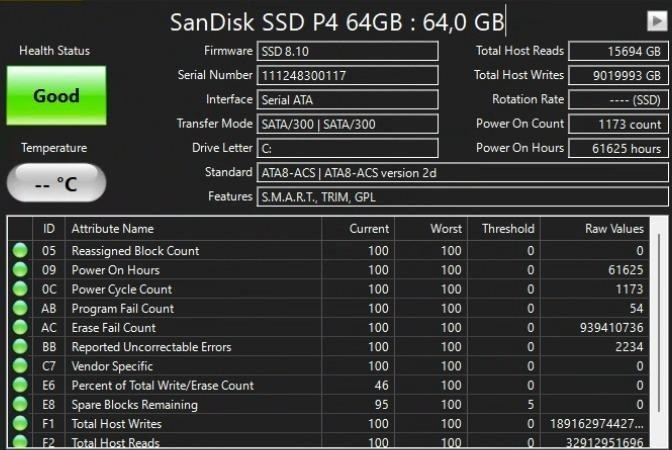
 ixteen years of non-stop operation and nearly nine petabytes of rewritten data—that is what an ancient 64 GB SanDisk P4 SSD managed to endure for Reddit user Fresh-Palpitation-72. For a drive of such a minuscule capacity by modern standards to churn through that mountain of information, it had to survive over 140,000 full overwrite cycles. While uncorrectable read errors have finally popped up in the boot sector, the core fact stands: this bargain-bin relic from the late 2000s stubbornly refuses to die.
The secret behind this longevity is simple: drives back then relied on robust SLC and MLC flash memory. They broke no speed records, but their endurance headroom was colossal. More importantly, this experiment offers a clear lesson about Terabytes Written (TBW) ratings that manufacturers list on spec sheets. Those warranty thresholds are merely corporate legal precautions, not an instant self-destruct countdown for your drive.
Everyday PC and laptop users have zero reason to obsess over write endurance or disable system services just to save a few megabytes. In real-world use, an SSD will become hopelessly obsolete or get replaced alongside the entire machine long before its memory cells degrade. Use your hardware without unnecessary paranoia—just make sure you maintain regular backups of genuinely important files.