
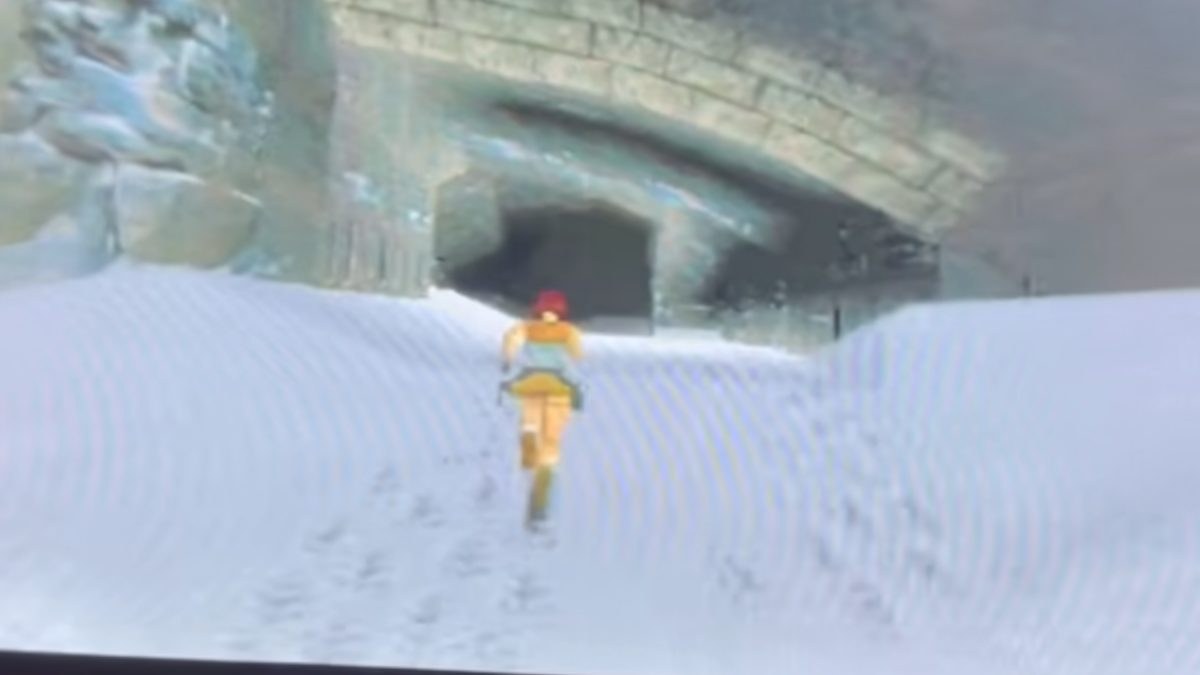
 iny microcontrollers once choked on enough memory just to blink a string of LEDs. Today, sub-$5 hobbyist silicon packs enough raw horsepower to run landmark 3D titles from the original PlayStation era. Developer alexkid77 proved the point by porting OpenLara, the open-source Tomb Raider engine, directly onto Espressif's dual-core ESP32-P4 microcontroller.
This is not a compromised console emulator crawling through translation layers; it is a native software-rendering pipeline running on bare metal. Clocked at 400 MHz across both cores, the ESP32-P4 calculates every 3D polygon in real time at an internal 320×240 resolution. The chip's integrated 2D Pixel Processing Accelerator (PPA) then hardware-scales the frame buffer directly to a 1024×600 display output. The setup rounds out full interactive play by routing stereo audio through an ES8311 codec and accepting input via a standard USB keyboard.
For retro enthusiasts and tinkerers, this project highlights a seismic shift in accessible computing. A chip that costs less than a fast-food lunch now renders complex mid-90s polygon worlds without a dedicated GPU in sight. Building a DIY retro gaming setup no longer requires hunting down vintage disc drives or buying costly single-board computers—pocket-change silicon can handle the job right at your desk.