
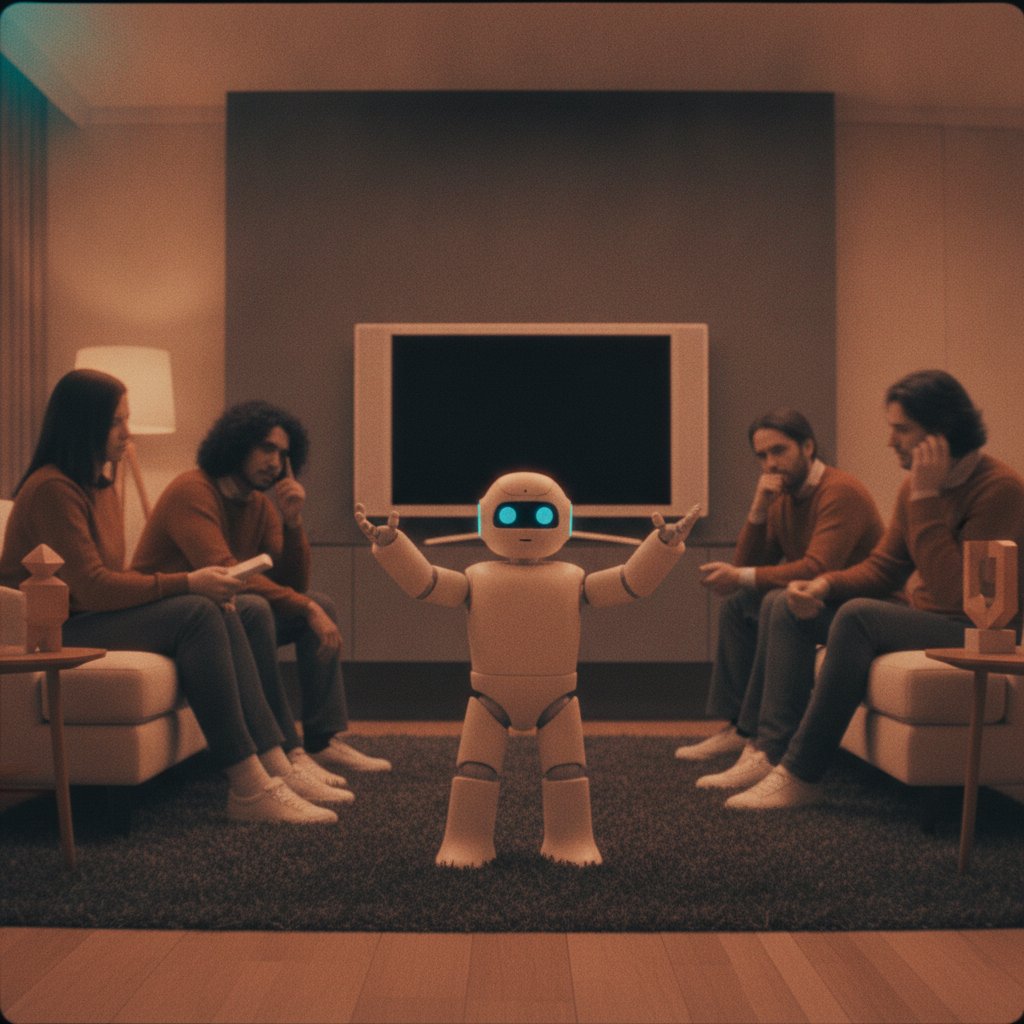
 f you watched Chinese robotics pioneer Unitree make its stock market debut with a staggering share surge topping 600%, you might assume walking mechanical butlers are about to tidy your living room. Market hype around the World Robot Conference in Beijing paints a fantasy of immediate domestic automation, but the actual hardware in public spaces tells a far more grounded story. When visitors encountered Wuji, a customized Unitree humanoid serving as a tour guide at eastern China's Hangzhou Robot School, the machine candidly asked visitors to bear with it. Speaking in an earnest synthesized voice, the self-described intern admitted it was feeling nervous because it was still in its trial training phase.
Unitree humanoids have racked up millions of viral views with choreographed martial arts demos and robot-on-robot kickboxing routines. Yet even Unitree admits in its own prospectus that large-scale commercial deployment faces severe uncertainty, warning investors directly that progress could easily fall short of market expectations. Entertaining an audience with scripted acrobatics in a controlled hall is worlds apart from safely navigating an unpredictable household without knocking over a child or shattering glassware.
The Training Room Bottleneck
Turning a bipedal chassis into an economically practical household tool demands relentless physical trial and error. At the Hangzhou Robot School, operated by Zhejiang University, engineers spend their days bridging the massive divide between staged demos and functional utility.
"The challenge goes way beyond just putting AI into a robot."
As Lian Jye Su from technology research group Omdia pointed out, the public routinely underestimates the brutal complexity of physical hardware solutions. Su warned that while buyers assume a humanoid will soon handle elder care simply because conversational AI models like ChatGPT sound competent, mechanical reality remains miles away from that milestone. Zhu Tianle, an engineer at the robot school, emphasized to AFP that enabling machines to genuinely understand and react to the physical world remains an unsolved global hurdle.
Geopolitics and the Consumer Verdict
Beijing has poured substantial state backing into humanoid hardware across its last two five-year plans, attempting to replicate its electric-vehicle supply chain efficiencies to drive down manufacturing costs. However, as Morningstar equity analyst Kangyuxiao Li noted to AFP, the next proving ground is not whether a biped can maintain balance on smooth floors, but whether it can perform economically valuable tasks at a cost ordinary consumers can justify.
For now, the gap between viral investor hype and real-world utility remains massive. Until humanoids can reliably navigate unmapped rooms, run safely around family members for hours without constant supervision, and cost less than an entry-level compact car, these bipedal wonders will remain confined to corporate showrooms and school lobbies as fascinating, high-priced curiosities rather than indispensable fixtures in your smart home.