
 he era of staged promo videos showing robot dogs doing effortless backflips on flat showroom floors is officially coming to an end. An international committee has approved the first unified testing standard for legged machines — a document titled "Robots — Performance characteristics and test methods for service robots — Part 5: Locomotion of legged robots," developed with significant input from Chinese engineers.
Until now, every manufacturer measured off-road capability by its own arbitrary metrics. In promotional clips, mechanical pets and humanoids conquered complex obstacles with ease, but in reality, unfinished prototypes frequently tripped over basic door sills or drained their batteries in twenty minutes when tackling a minor incline. Comparing the stability of two competing models on paper was virtually impossible without a shared baseline.
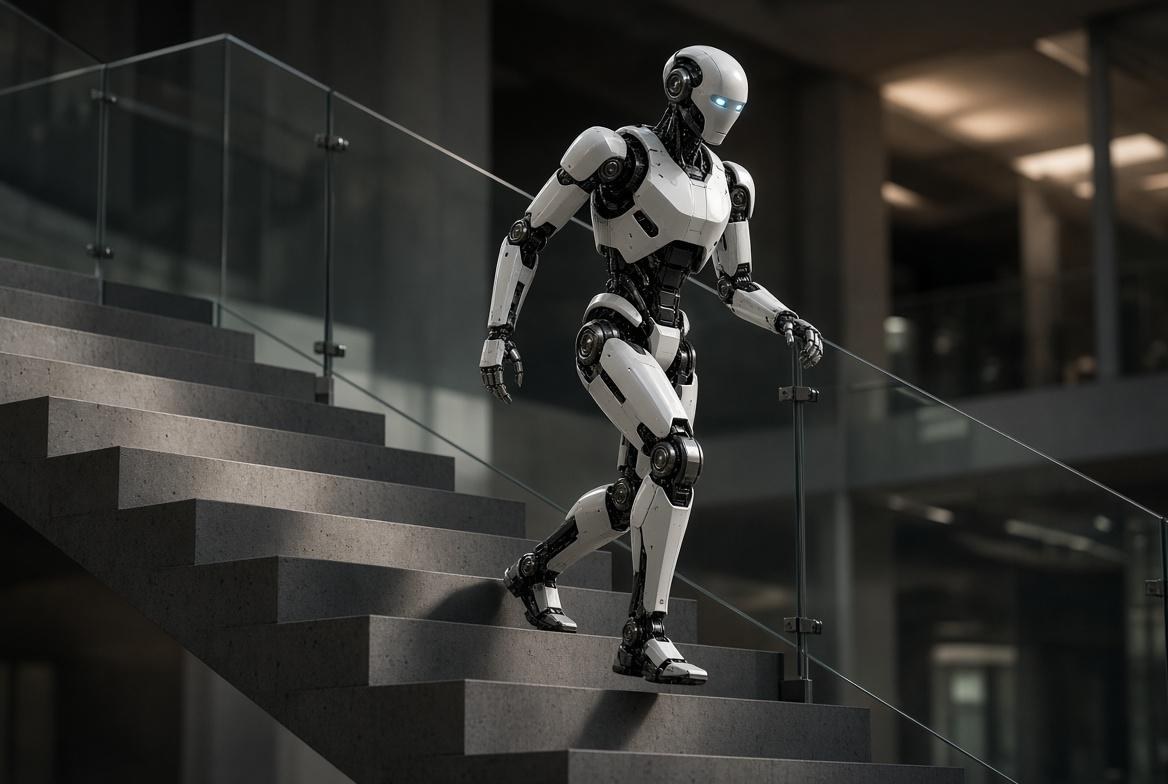
The new standard forces hardware out of sterile test labs. Machines will now be evaluated on steep stairs, gravel, slippery slopes, and artificial obstacle courses. The scorecard accounts not only for balance and actuator durability under load, but also for how onboard sensors handle real-world household hazards, like discarded slippers or uneven floor tiles.
For regular buyers, this establishes a clear dividing line between functional domestic hardware and fragile, overpriced novelties. Enforceable benchmark metrics will weed out half-baked prototypes before they hit retail shelves: spec sheets will finally tell you whether a robot can climb your front porch without smashing its built-in cameras or if it is doomed to live strictly on hardwood floors within five feet of an outlet.