
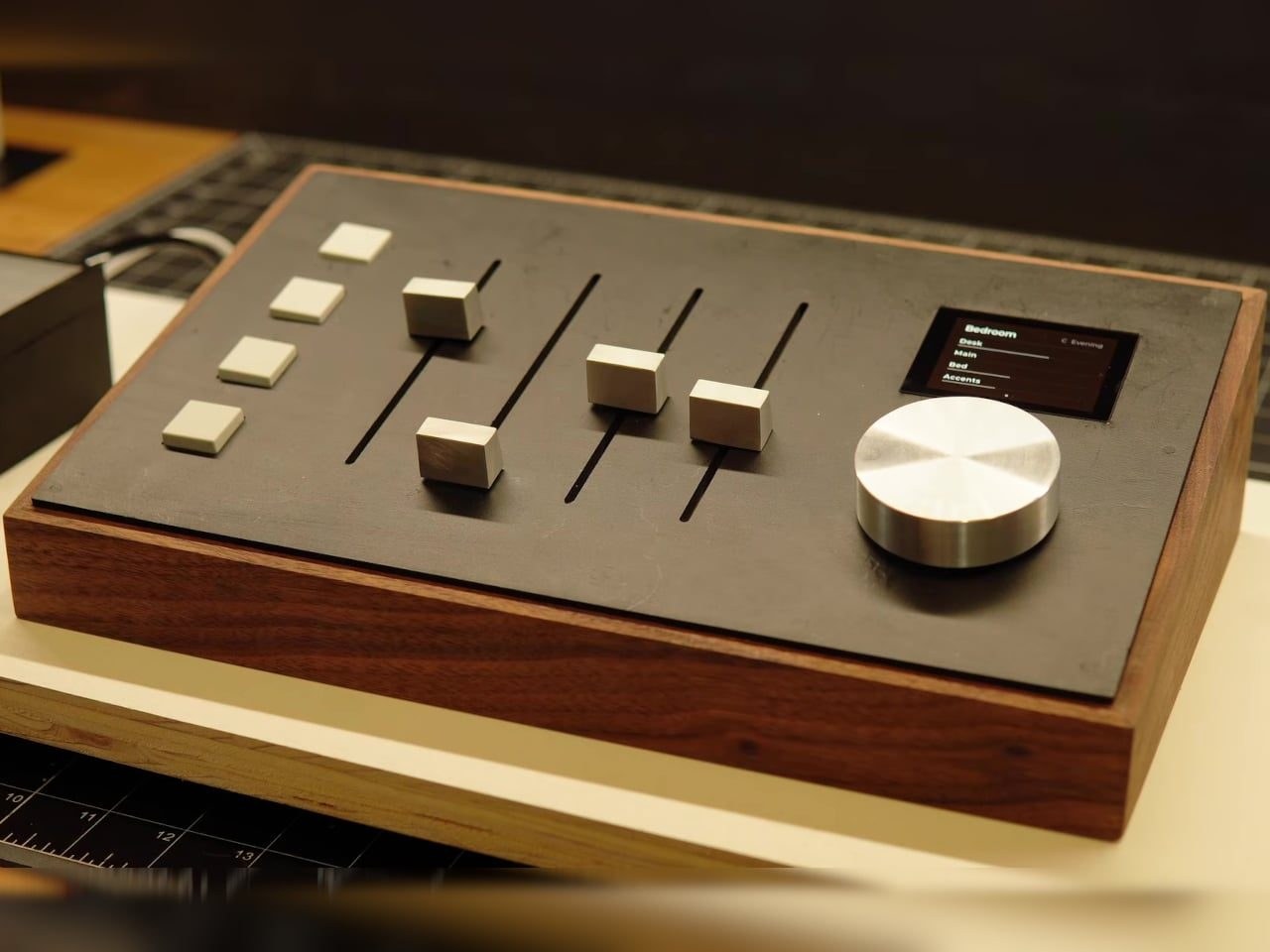
 mart home hardware suffers from a persistent, glaring flaw that most manufacturers simply ignore: physical wall controls completely lose track of reality the moment you adjust your lights through a phone app or a voice assistant. A classic slider or dial stays frozen wherever your hand left it, even if the light bulb has been dimmed to total darkness from another room. Designer Alex Dufetel of Sacreblue Studio tackled this disconnect head-on by building a desktop console with motorized faders that physically glide into place to match the true state of the house lighting.
Borrowing directly from professional audio mixing desks, where motorized sliders have tracked multi-track audio states for decades, the console maintains a strict two-way synchronization. When someone dims a bedroom light via a smartphone app from the couch, the console's physical slider silently moves across the track on its own.
Scalable Room Banks
Instead of cluttering a wall with dozens of separate knobs, the interface manages an entire household using a large aluminum knob that cycles through banks. Each bank represents a distinct room or lighting group shown on a small built-in display, instantly commanding the motorized sliders to reposition themselves the moment you switch rooms.
Four buttons sit beside the faders, handling lighting presets rather than individual brightness levels.
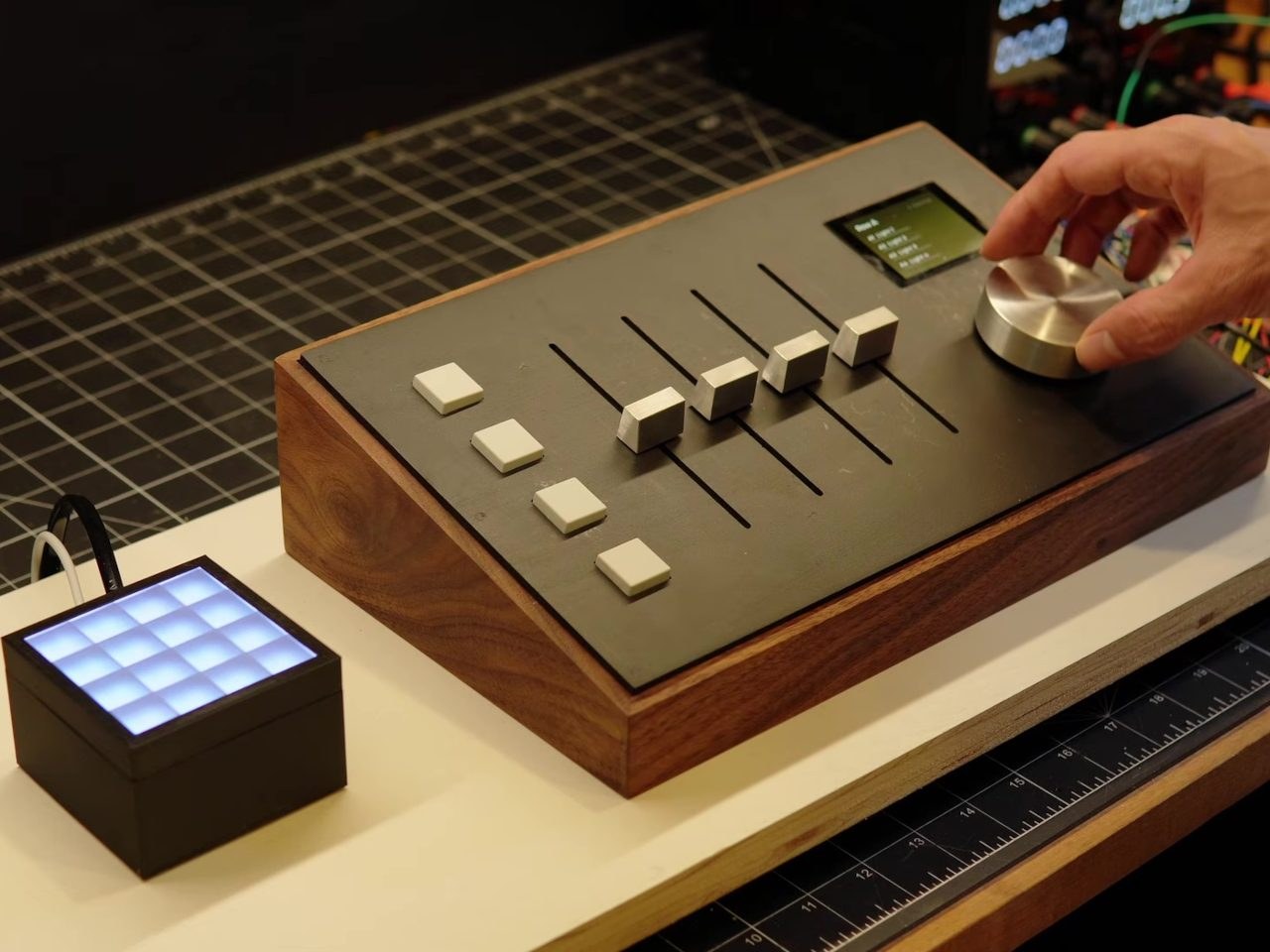
The function of these four preset buttons shifts dynamically depending on which room bank is currently active on the screen. To test and debug the setup safely before touching mains wiring, Dufetel developed a compact grid of small diffused LEDs on a desk, where each row simulates a full bank of four fixtures across sixteen total lights.
Walnut and Machined Metal
Unlike the sea of cheap injection-molded plastic that dominates modern consumer smart gadgets, the console body is crafted from solid walnut. Dufetel cut the rotary knob and fader caps straight from raw aluminum stock using a CNC machine. The unit currently features a painted-wood faceplate as a temporary placeholder ahead of a planned black anodized aluminum version.
Smart home hardware desperately needs fewer disposable plastic touchscreens and far more self-correcting mechanical interfaces. Moving physical sliders into alignment brilliantly bridges the annoying gap between automated phone commands and tangible desk controls.