
 ow many tangled cables do you untangle on your desk every morning? Most likely one for your phone, a second for your laptop, and a third for your headphones, with each one determined to knot itself into a tight mess. Against this backdrop, magnetic charging feels like salvation: the cord snaps in by itself, and if someone catches the wire with their foot, the laptop doesn't go flying off the desk—the magnet simply detaches. It looks like Microsoft has decided to finally make this idea work properly while Apple continues to cling to its proprietary standards.
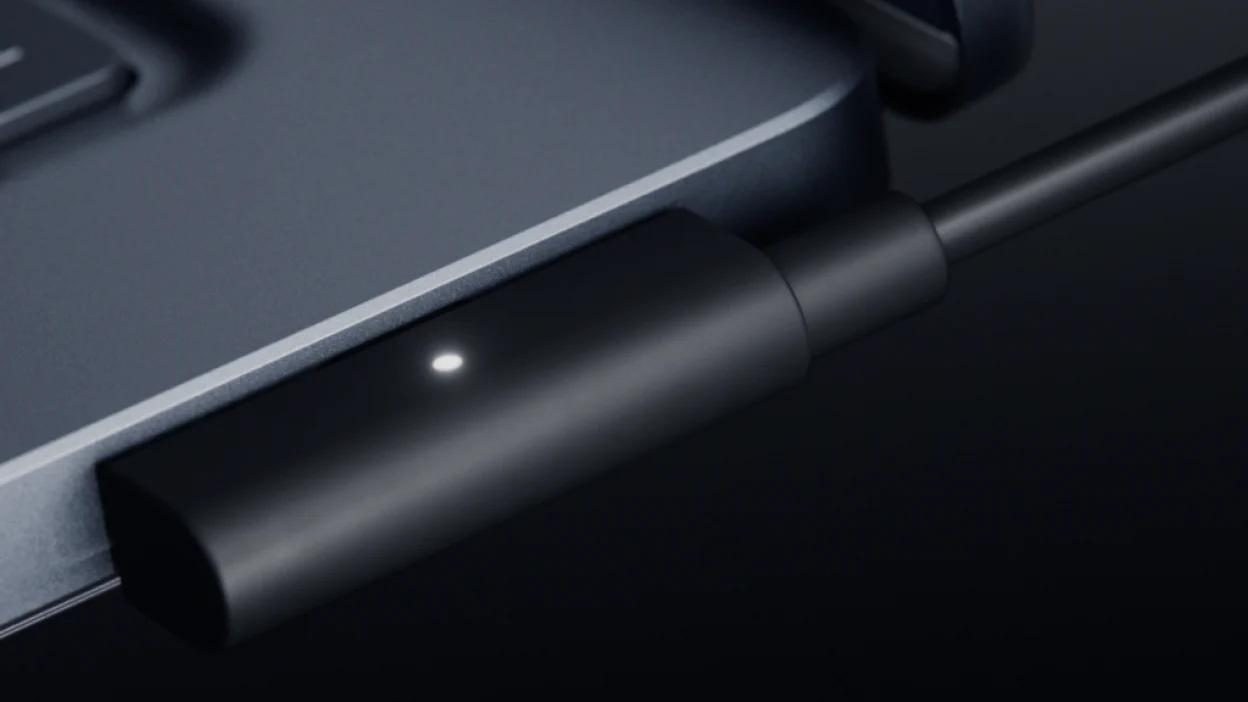
Microsoft has introduced the Surface Laptop Ultra featuring a USB-C port with a built-in Magnetic Connect mechanism. The company claims that when you bring the connector close, it automatically pulls itself into the port and locks with a satisfying click. According to Microsoft, this is the first-ever USB-C port with built-in magnets directly in the chassis, whereas third-party magnetic adapters have always been external add-ons.
Total versatility versus proprietary shackles
The main difference between this solution and Apple's approach is full compatibility with the standard USB-C specification. If you don't have a magnetic cable handy, the port functions as a regular USB-C connection and accepts absolutely any charging cord, piece of peripherals, or docking station.
The main difference from Apple's solution is full compatibility with standard USB-C.
Unlike this approach, MagSafe uses a proprietary connector that works with nothing except charging a specific laptop. In other words, Apple's proprietary cord does only one thing—transfers power to one strictly designated socket—leaving you to carry a zoo of different cables for every occasion.
What this means for your wallet
The new laptop starts at $2,599, putting the device right alongside top-tier MacBook Pro configurations. The price tag is steep, and for that kind of money you get a top-end device where competition is no longer about basic functionality, but about minor conveniences like that very clicking sound when you plug in the power.
Yet there is a flip side to this coin. The stated price automatically cuts off the mass buyer, turning the technology into a perk for wealthy enthusiasts or corporate budgets.
Surface Laptop Ultra launches with a $2,599 price tag. Brilliant: selling a regular USB-C port with a couple of magnets for the price of a used car—Microsoft's marketing team certainly knows how to take a punch.