
 f you genuinely believe that shielding your personal correspondence from tomorrow’s quantum computers requires ditching every piece of legacy hardware you own in favor of a corporate messenger billing you by the corporate limb, Legionlabs has some refreshing news. Instead of feeding billions to tech giants for yet another cloud-tethered subscription service with opaque key management, you can grab a dirt-cheap microcontroller and run future-proof end-to-end encryption right on your desk. Legionlabs built Selectric-256, a physical device designed to deliver military-grade messaging security to computers of literally any vintage.
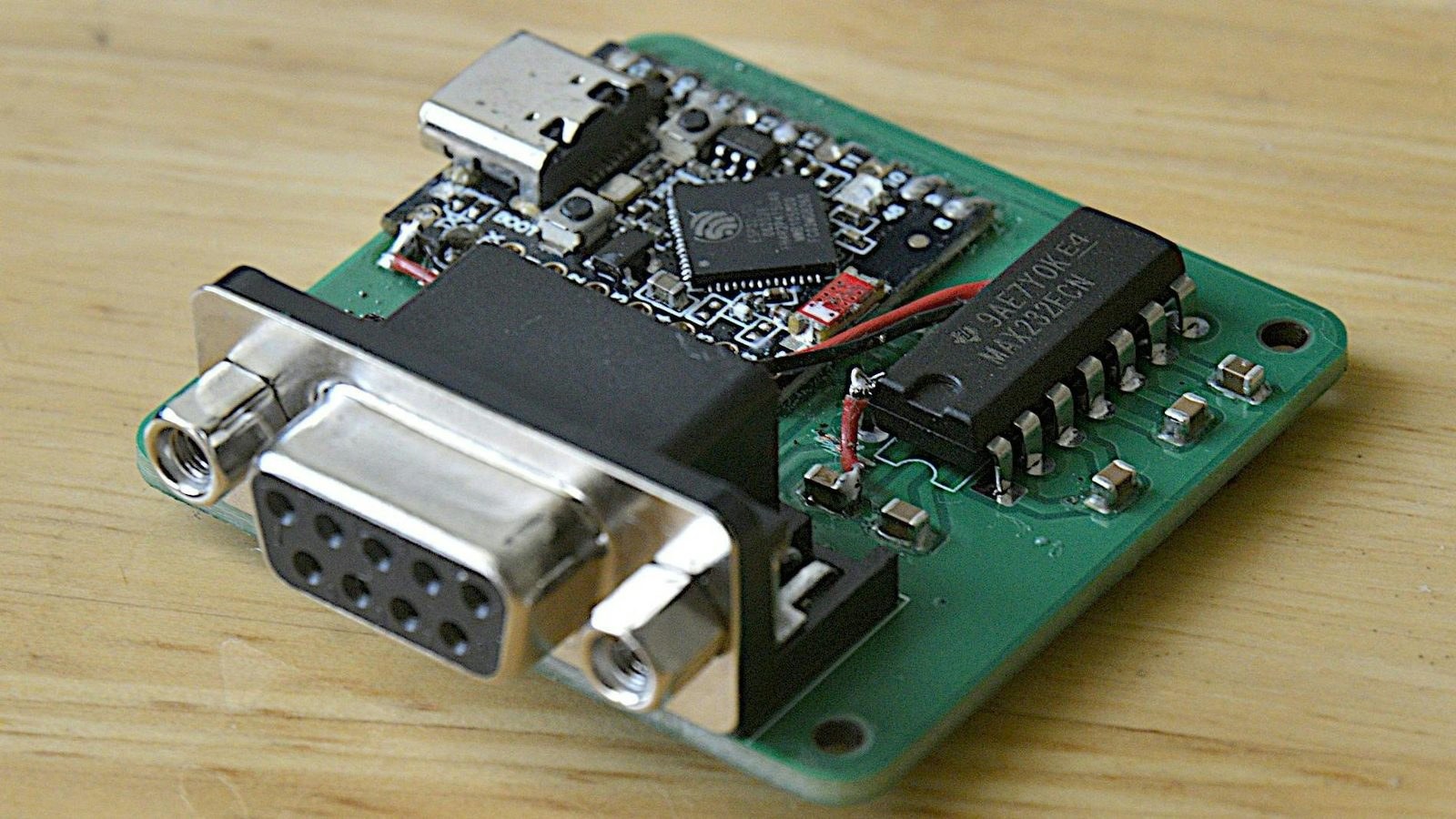
Selectric-256 is built around an ESP32 microcontroller and costs approximately $8 per device.
As Legionlabs demonstrated, this engineering trick relies on an ESP32 microcontroller, bringing the hardware cost to roughly eight dollars per unit. Yes, you read that correctly: comprehensive cryptographic protection now costs less than a fancy latte at your local artisanal coffee joint. The device hooks into your host computer via USB or a standard serial link, enabling encrypted messaging without demanding an active internet connection on the host machine itself.
The real beauty of the architecture lies in offloading all network overhead from your primary computer to an external gadget. The box connects to Wi-Fi, funneling traffic through public MQTT brokers that act as silent intermediaries between two linked endpoints. For the truly paranoid, the setup allows you to spin up a private broker and cut the cord from public infrastructure entirely. Every module stores two permanent 32-byte identifiers—one for itself and one for its peer—allowing the units to locate and authenticate one another across the ether.
The devices then use ML-KEM, a post-quantum key encapsulation mechanism, to establish an ephemeral shared secret.
According to Legionlabs, once the devices locate each other on the network, they leverage the modern ML-KEM protocol to forge a temporary shared secret, while actual messages are encrypted and verified using the robust AES-256-GCM standard. An encrypted session counter thwarts replay attacks and packet interception. For anyone hoarding an ancient museum piece in the closet devoid of USB ports, the designers thoughtfully included an expansion board based on the MAX232 chip to bridge the box with vintage serial interfaces.
It would be naive to view this project through rose-colored glasses. Let's be frank: setting up secret communications via a budget Arduino board demands actual technical literacy, manual text-config tweaking, and a willingness to wrestle with physical wiring. The stock system bypasses traditional TLS, and while the permanent identifiers never expose the raw encryption keys, a worst-case scenario could theoretically let a sophisticated adversary impersonate your hardware. This is definitively not a tool for the lazy office worker who expects a green verification checkmark with a single mouse click.
Yet if you require an isolated, offline communication channel for a secure workshop, a retro computing hobby, or simply out of sheer distain for corporate telemetry, alternatives at this price point simply do not exist. You get a tangible hybrid of vintage aesthetics and cutting-edge cryptography that operates independently of your main internet provider and refuses to log your data for Silicon Valley. Grab a soldering iron, flash the firmware, and take back ownership of the words you type.