
 hen your PC runs out of storage slots, the mainstream hardware industry typically offers one elegant option: throw out your old motherboard, processor, and RAM just to plug in a couple of new drives. Chinese hardware manufacturer JGINYUE decided to mock that expensive routine. As reported by Wccftech via Bilibili leaks and @unikoshardware, the company has engineered an expansion card featuring an AMD B650 chipset for just $58. It crams four M.2 NVMe slots and a fast USB-C port straight into older or stripped-down systems.
JGINYUE Crams AMD’s B650 Chipset Onto A $58 PCIe Card With Four M.2 Slots And 20 Gbps USB-C Port
This oddball contraption targets anyone who has hit a storage wall but refuses to drop hundreds of dollars on a full platform overhaul. JGINYUE is not even first to the punchline; as Wccftech notes, we saw a similar prototype from Lekuo a few months ago, attempting to turn a single PCIe slot into an entire peripheral hub using a laptop-grade chipset on a desktop card.
What You Actually Get in Your Hands
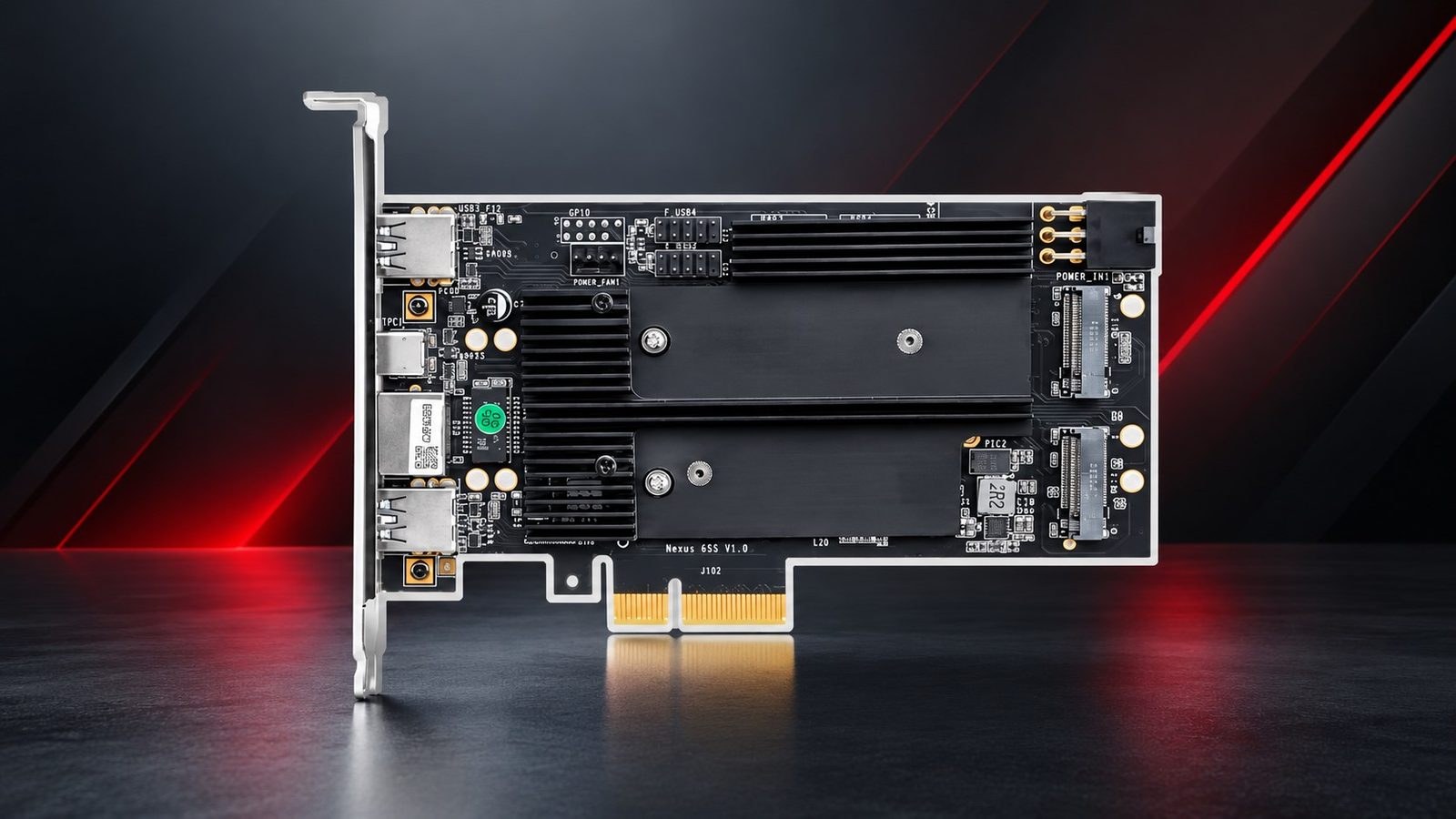
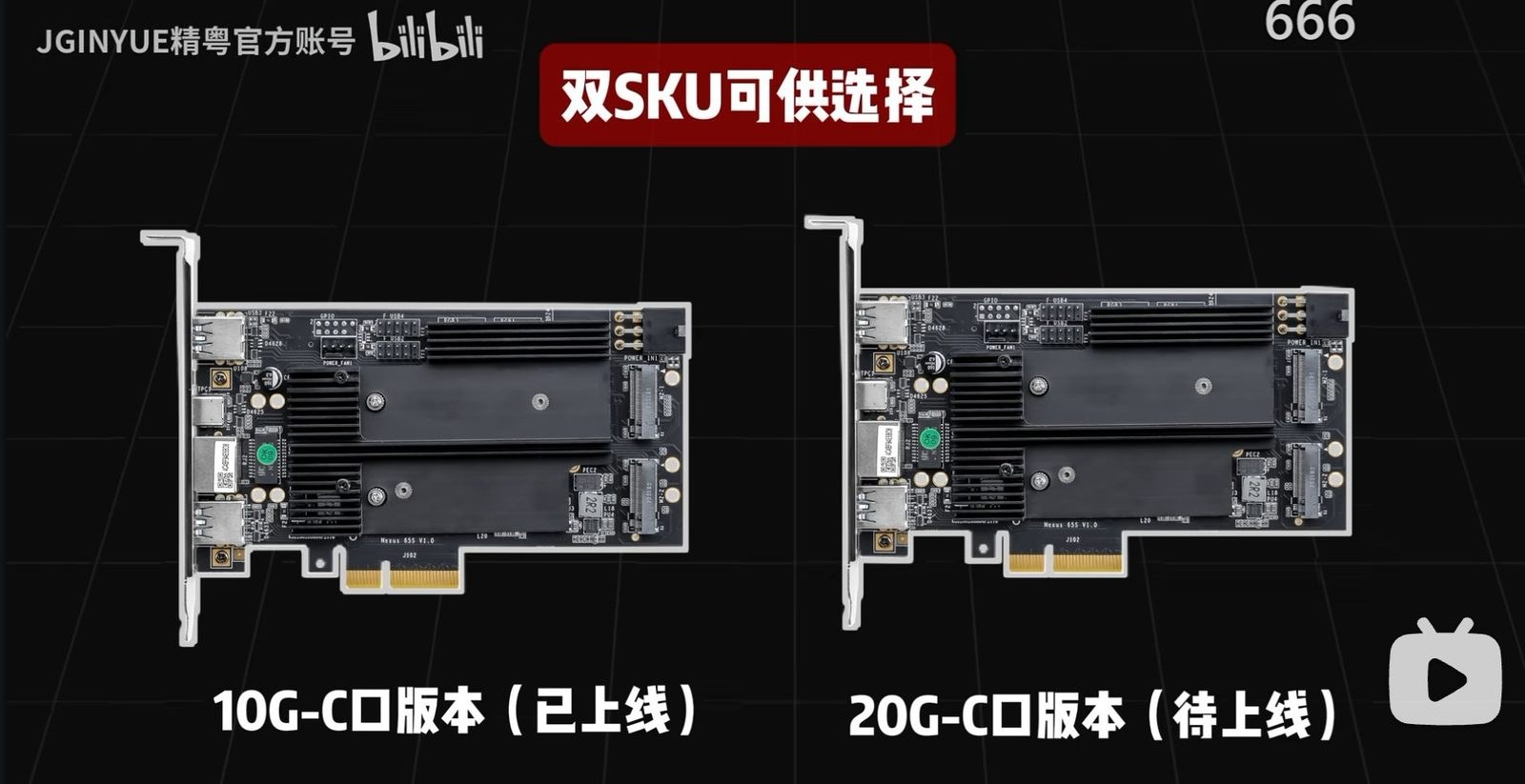
For 388 Yuan or roughly $58, the buyer receives an add-in card that packs four M.2 slots for high-speed NVMe drives, a 10 Gbps Type-C port, two USB 3.0 Type-A ports, and a 2.5G Ethernet controller, according to Wccftech's breakdown of the leaks. JGINYUE has also hinted that a faster 20 Gbps variant is waiting in the wings for those who care about external transfer speeds.
JGINYUE Debuts B650 AIC for $58, Boasting a 10 Gbps USB Type-C port, Four M.2 Slots, and Support for 40mm Fan
Yet the engineering compromises quickly surface when you look at how this thing stays cool. The board includes a 4-pin fan header, but sources warn it lacks proper speed control, meaning whatever mini-fan you plug in will likely scream at maximum RPM with no software adjustment. To combat the inevitable thermal throttling of four densely packed SSDs, JGINYUE added mounting brackets for a tiny 40mm fan directly on the card, alongside a mandatory 6-pin PCIe auxiliary power connector that the manufacturer insists on using even if you populate only the storage slots.
Before you rip open your case, remember the golden rule of budget hardware engineering: PCIe lane bifurcation. Unless your motherboard BIOS natively supports splitting those precious CPU or chipset lanes, slapping four SSDs onto a single PCIe slot might leave you with unrecognized drives or choked bandwidth. For $58, it is a brilliant garage-workshop hack for enthusiasts willing to wrestle with BIOS settings and tiny fans, but casual users looking for a plug-and-play storage upgrade are better off paying for a standard SATA drive or saving up for a proper platform swap.