
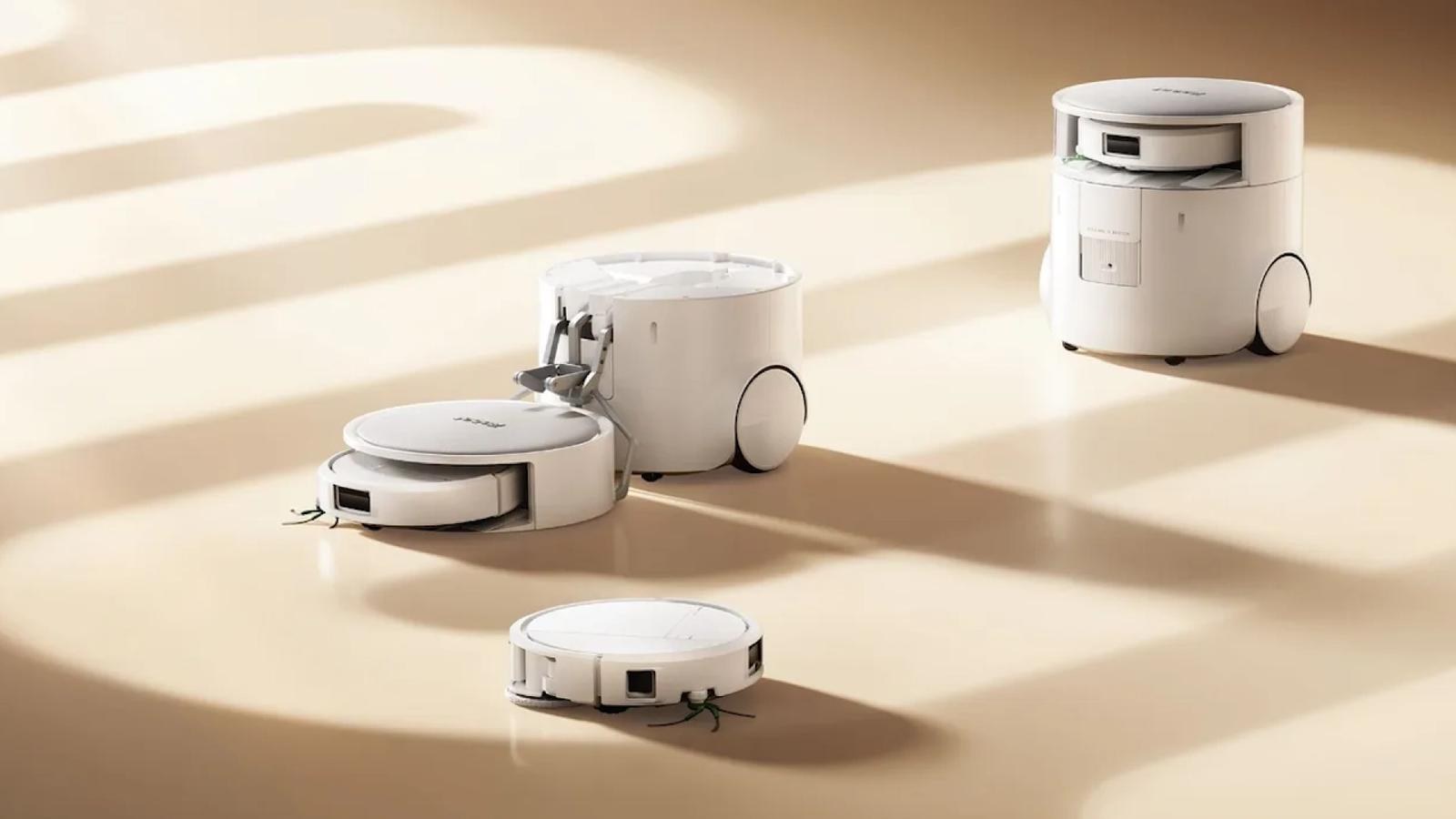
 ne vacuum at home gets the job done; two crammed into a single system is a guaranteed maintenance nightmare. Tackling the perennial headache of dust hiding under low furniture, iRobot engineers took an eccentric route and built the Roomba Duo prototype. Instead of engineering a slim, versatile chassis, the designers piggybacked a compact secondary vacuum onto the main unit.
The concept sounds clever only on paper. While the bulky base station steams the floor and picks up larger debris, a miniature companion rides quietly on its back. The integrated steam mop and docking mechanism make the main unit tall and unwieldy. When it hits low-clearance furniture or a tight corner, a built-in mechanical arm lowers the mini-robot to the floor so it can squeeze into spaces the mothership cannot reach.
In an everyday apartment, this mechanical balancing act quickly runs into practical reality. Building a delicate robotic arm and a complex docking interface—while forcing the user to service two separate motors and two batteries just to clean under a sofa—is a questionable trade-off. Buyers end up with an oversized machine that needs massive clearance to maneuver, paired with twice the failure points at a steep price. The prototype highlights an industry running out of practical ideas: rather than streamlining device footprints, manufacturers are asking consumers to cover maintenance costs for two vacuums in a single box.