
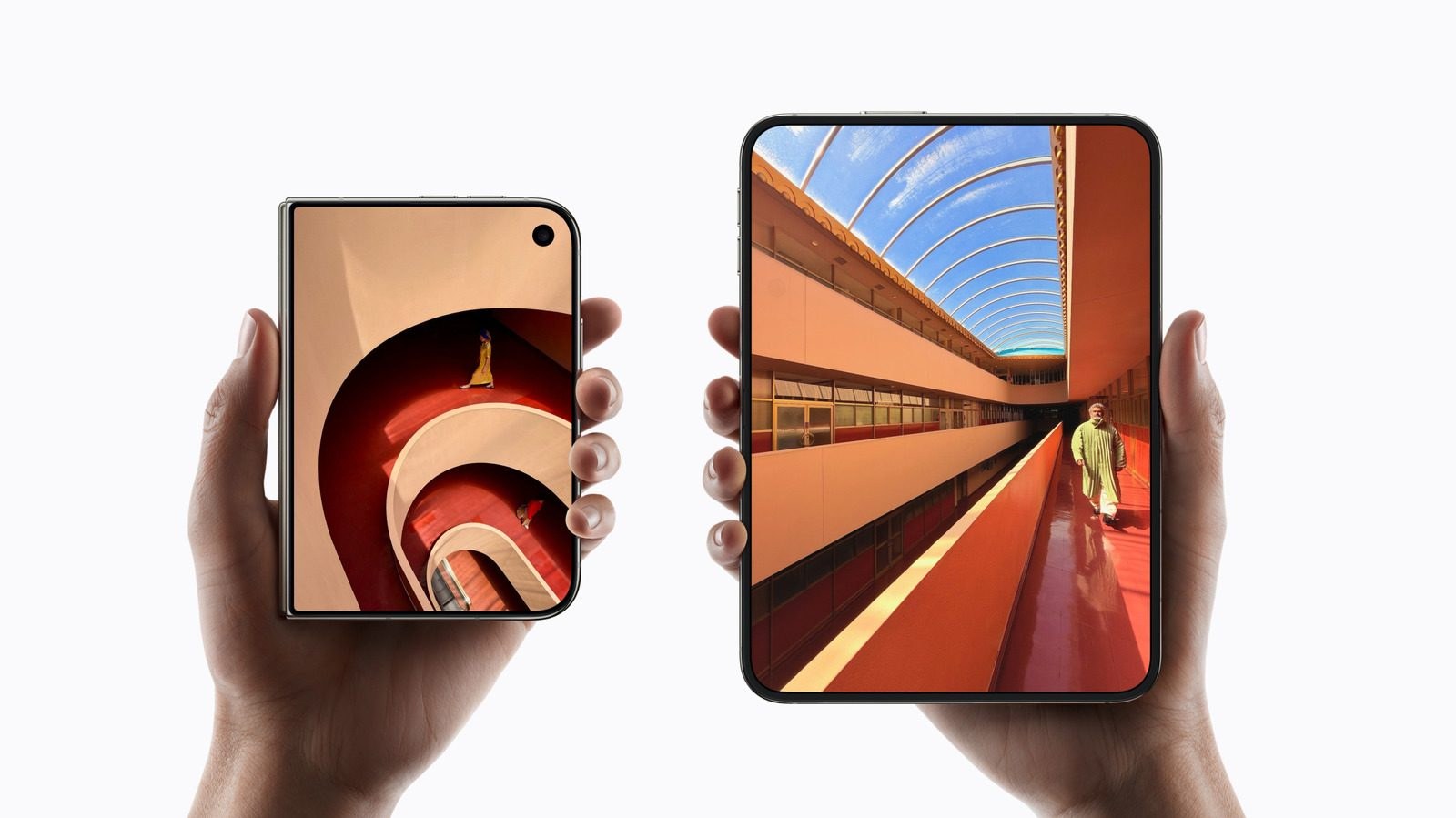
The Passport Shape Arrives
 f you spent the last five years dodging foldables because they felt like heavy TV remotes in your pocket, this generation is gunning directly for your wallet. Samsung made the first move by launching the Galaxy Z Fold 8, ditching its awkwardly narrow cover screen for a broader passport-style footprint. The shift resonated instantly: Samsung reported that the Galaxy Z Fold 8 and its pricier Fold 8 Ultra sibling outsold the Fold 7 line by 30 percent in their opening month. Now Apple has finally stepped in with the iPhone Duo, copying that exact squat geometry. In your hand, the payoff is immediate: closed, you are holding a standard, usable smartphone; unfolded, you get a portable square workspace.
Behind the hinge, however, the hardware lineage is ironic. Samsung Display built the folding panels for both handsets. The Galaxy Z Fold 8 packs a 7.6-inch inner screen running 2,448 by 1,848 pixels at 120Hz alongside a 5.5-inch outer panel. Apple matched that with its own 7.6-inch inner display running 1,878 by 2,670 pixels at 120Hz, flanked by a 5.4-inch cover screen.
Apple claims the inner screen of the iPhone Duo has 40 percent higher stiffness than other materials used in the industry.
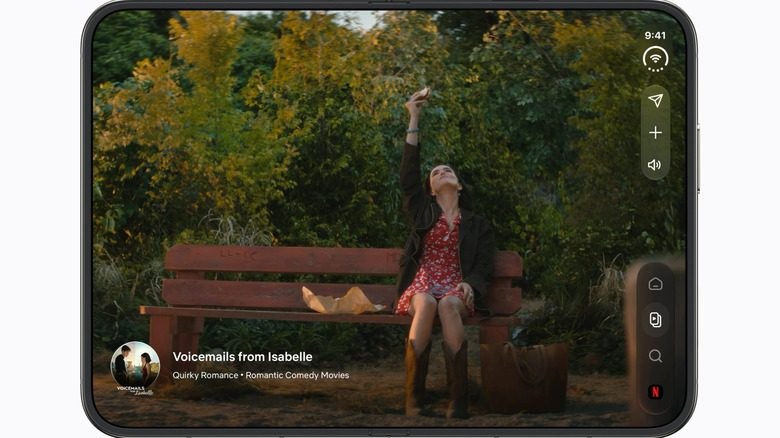
In reality, Samsung is happily supplying the underlying flexible glass to its fiercest rival while fighting to keep its own retail lead on store shelves.
For everyday buyers, the calculation comes down to trade-offs rather than raw specs. Both devices trim chassis thickness and soften the center crease, but you are still paying a steep early-adopter premium for fragile hinge mechanics and smaller battery endurance compared to standard flagships. Unless having a tablet folded in your pocket genuinely changes your daily commute or workflow, sticking with a proven glass slab remains the smarter financial call.