
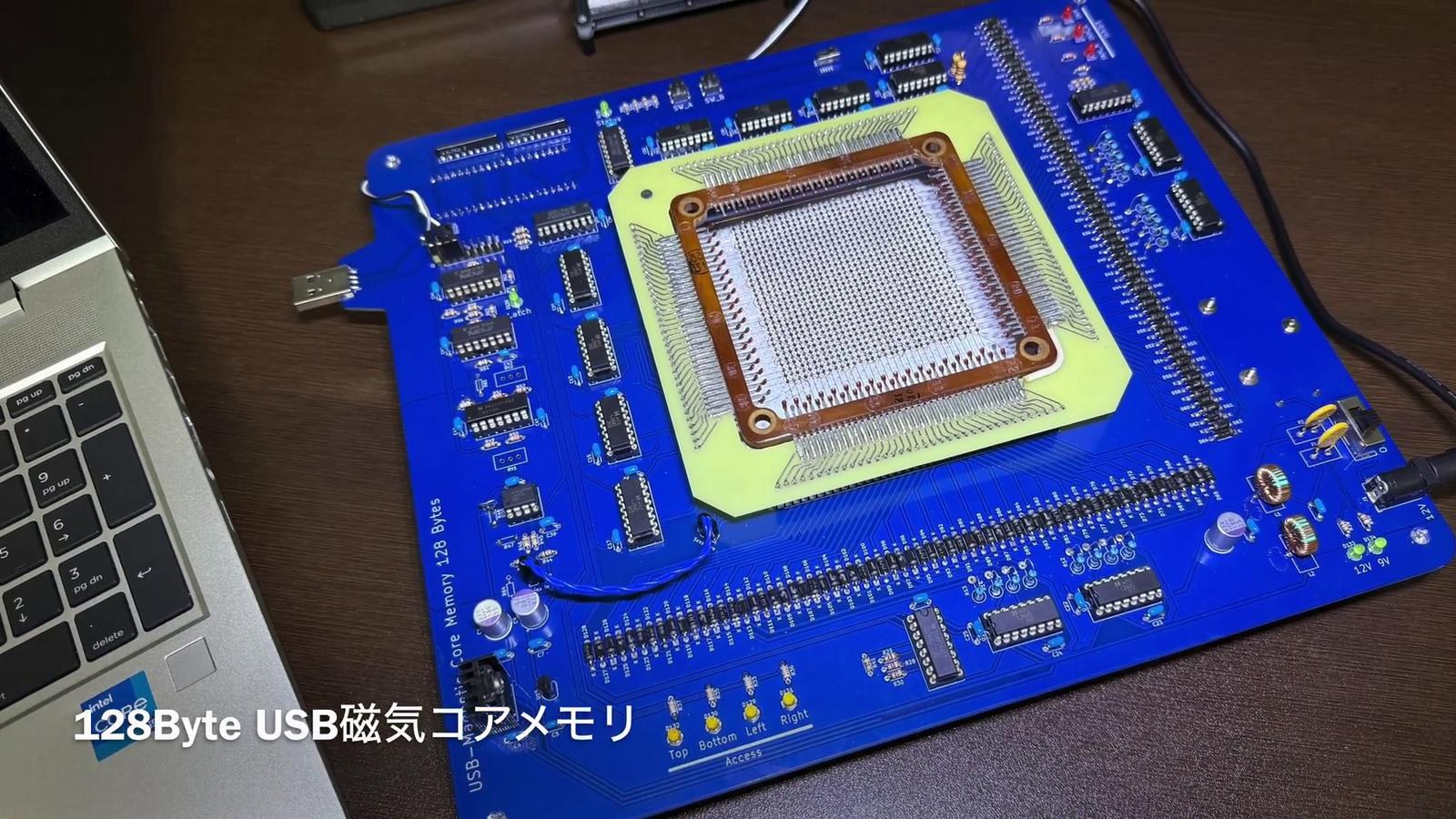
 circuit board measuring 30 by 30 centimeters—about the size of a large pizza box—offers a grand total of just 128 bytes of storage. Japanese hardware enthusiast dydt_Nao has built what might be the bulkiest and most fascinating USB flash drive today. Instead of a silicon chip, it runs on magnetic-core memory: a woven grid of 1,024 tiny ferrite rings, the exact tech that powered mid-century mainframes.
Each ring in the 32-by-32 matrix holds a single bit of data depending on its magnetic orientation. An affordable Raspberry Pi Pico microcontroller manages operations and connects via a standard USB-A plug, while red LEDs illuminate every read and write cycle across the grid. The storage capacity is just enough for a tiny 32x28 monochrome bitmap or a short text note. The maker successfully transferred a text file between two modern PCs—with Windows recognizing the vintage-tech drive without issue.
While carrying this behemoth in a pocket makes zero practical sense, the tabletop monster illustrates the evolutionary leap in computing better than any chart: where rooms of ferrite cores once held bytes, a modern fingernail-sized chip holds terabytes.