
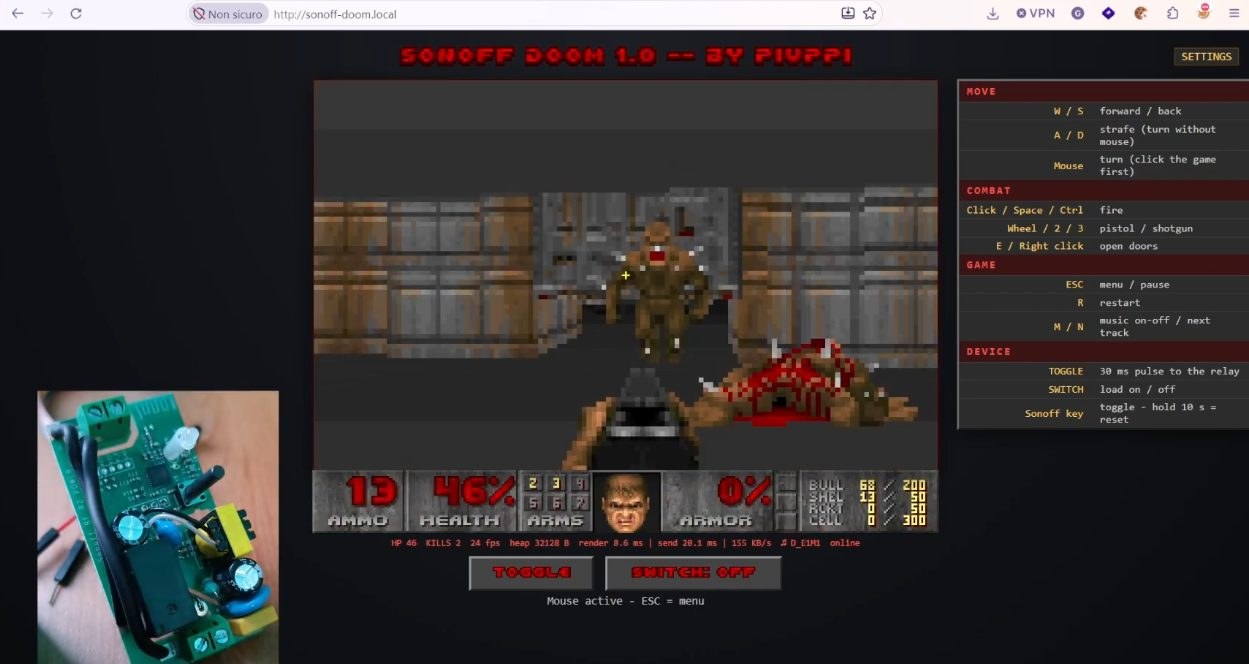
 hile major manufacturers spend years convincing you to lock yourself into closed ecosystems and pay monthly subscriptions just to check your front door, an independent modder known as [piuppi] decided to run the rendering engine of Doom on a Sonoff Basic R2 relay—a tiny piece of hardware whose only designated purpose in life is to click a lamp on and off. We have been conditioned to accept that every mundane appliance needs a dedicated app, a cloud connection, and regular software bloat to function. Yet when a chip that costs less than a cup of coffee manages to crunch graphical data from a legendary shooter, it becomes rather obvious how much headroom hardware actually has.
Let us be entirely honest about what is happening here before anyone rushes to replace their thermostat with a gaming rig. This is not a fully playable, fluid build of the game; it is a technical demonstration capable of rendering map geometry and textures within a severely stripped-down environment. According to the technical documentation published by the author, replicating this stunt requires pulling asset data from a legitimately purchased copy of the game via a GitHub repository. You will not be playing deathmatches on your hallway switch tonight, and nobody in their right mind should treat this as a replacement for actual gaming hardware.
The GitHub repo includes excellent documentation should you want to rip and tear on your own Sonoff device.
What This Means for Your Living Room
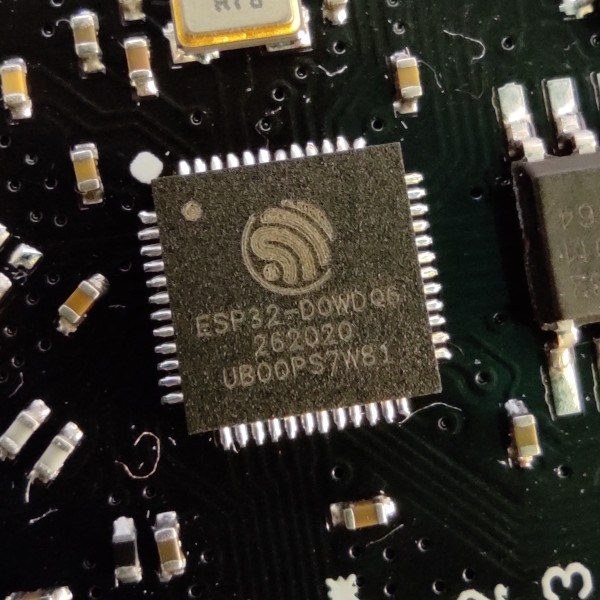
The genuine humor of this experiment lies entirely in its absurdity and its silent critique of the consumer electronics market. Once configured, the relay actually maintains its primary function—it continues to switch your lights while hosting a web server that lets you inspect map geometry from any browser on your local network. It turns out that a generic microcontroller hidden behind your wallpaper is quietly capable of handling workloads that software vendors routinely claim require an upgraded hub or a cloud subscription.
Compare this reality to the parade of overpriced smart home appliances that lose core features the moment a server goes down or a manufacturer decides to sunset support. We are sold ecosystems built on planned obsolescence while garage engineers prove that a five-dollar switch from an online marketplace possesses enough raw computing muscle to render retro classics. If anything, this project serves as a sharp reminder that the limitations in your smart home are rarely technical—they are commercial decisions designed to keep you buying new boxes every three years.