
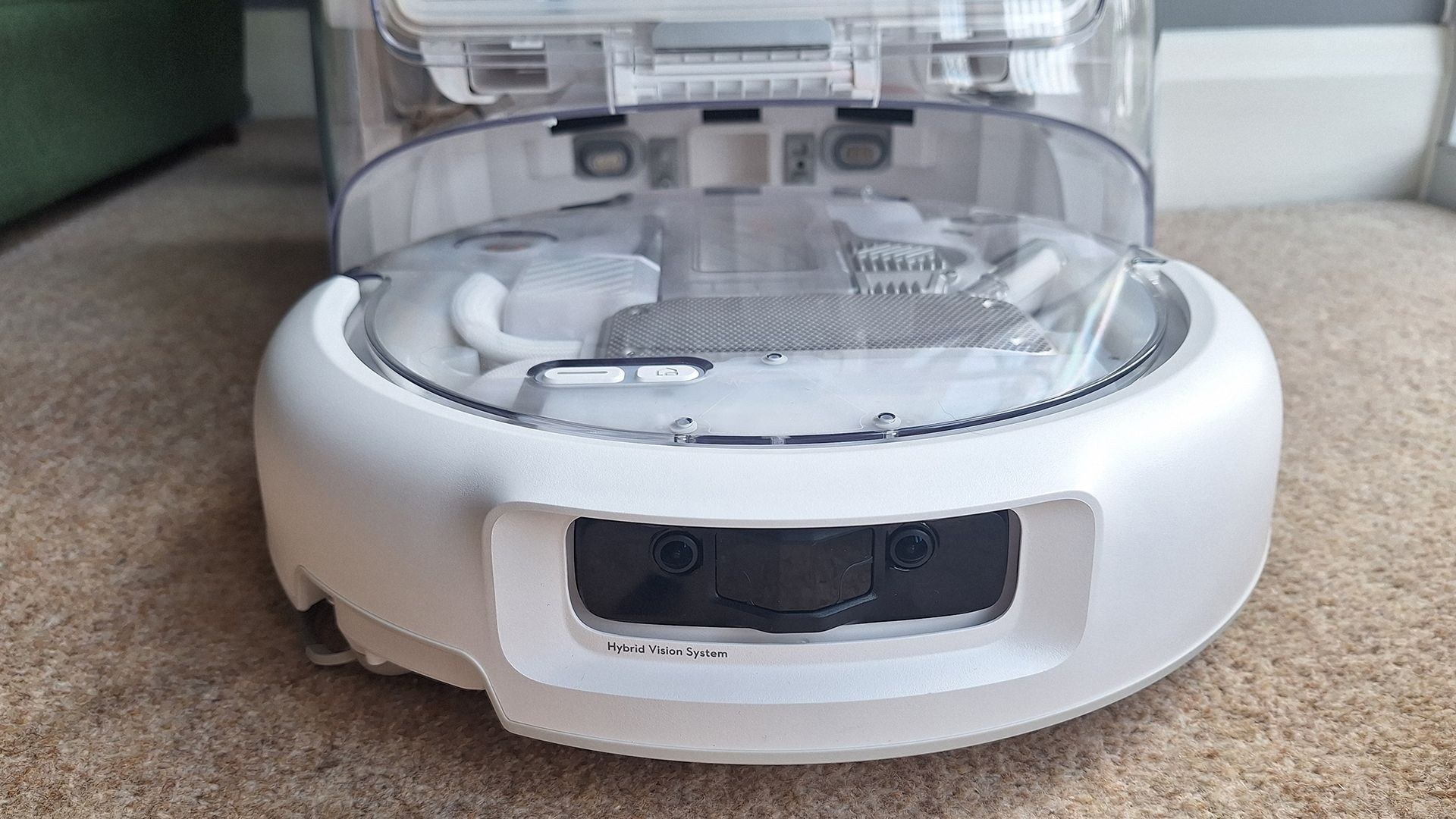
 ost robot vacuums hide in plain sight as boring white plastic pucks. DJI decided to build something that looks like an iMac G3 crossed with H.R. Giger's sketchbook. The DJI Romo 2 Series arrives in two distinct flavors: a transparent P2 model that puts its internal tubes and mechanical guts on display as an interior centerpiece, and an opaque A2 version for anyone who prefers discreet appliances. Behind the retro-futuristic styling sits an aggressive attempt to port aerial hardware directly onto your floorboards.
Instead of standard mechanical bumpers, the Romo 2 borrows navigation tricks straight from quadcopters, packing a Structured-Light Speckle Projector LiDAR alongside dual fisheye vision sensors. The setup generates real-time 3D depth maps, allowing the machine to spot and dodge obstacles as thin as 2 millimeters—tackling stray cables, floor-standing mirrors, and transparent glass partitions that usually trap traditional cleaning pucks.
Cutting the cord after security concerns
The real turning point for this hardware is not just obstacle detection, but privacy damage control.
Following Romo's hacking drama, DJI has added 'Local Data Mode', which severs the bot's internet connection entirely
This offline switch directly addresses the high-profile vulnerabilities that plagued the first-generation model. By locking the device into Local Data Mode, video feeds and sensor maps stay confined to your local network, ditching cloud synchronization entirely. For smart home owners, paying a premium for drone-grade optics only makes sense if you actually care about keeping live video feeds of your living room off external servers. If you are comfortable relying on cloud apps, cheaper alternatives clean just as well, but DJI is banking on the idea that local privacy and exposed mechanics can turn a chore appliance into an enthusiast gadget.