
 uilding a pocket gaming gadget or a programmable toy has quietly turned into an expensive hobby. While single-board powerhouses like high-tier Raspberry Pi setups easily balloon past reasonable budgets, Arduboy is steering the DIY scene back to basics. Instead of forcing beginners to overpay for raw silicon they will never fully utilize, the project has launched early units of its CHGame Rev0 platform as a $39 development kit.
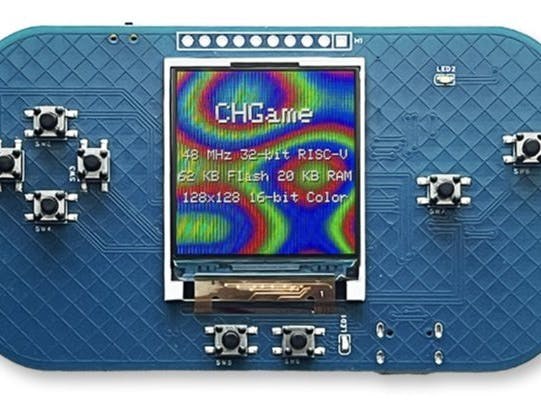
Make no mistake: this is not a finished handheld ready to toss into a pocket alongside your keys. Buyers receive a bare circuit board intended to give developers and curious tinkerers an early sandbox while work continues on the final molded casing. Instead of chasing bloated specs, Arduboy anchored the board to the WCH CH32X035G8U6, a lightweight 32-bit RISC-V microcontroller humming along at 48 MHz.
Color Gaming on Minimal Specs
Keeping hardware affordable means accepting tight constraints that demand clever coding rather than brute processing power.
"It has 64 KB of flash memory and 20 KB of RAM, along with DMA and programmable I/O capabilities."
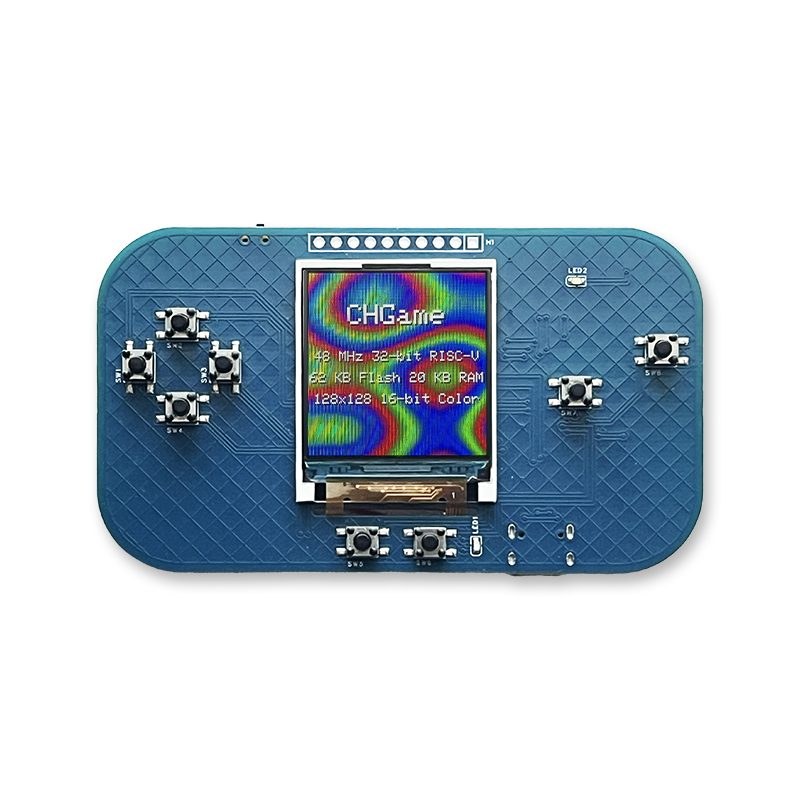
Those memory ceilings keep the architecture grounded, but Arduboy pairs them with a 1.44-inch ST7735 color LCD delivering a punchy 128×128 resolution in 16-bit color. For physical inputs and basic feedback, the exposed board integrates eight tactile buttons, a piezo speaker, and a programmable LED. Removable storage runs through an onboard microSD slot, backed by an included 200 mAh lithium-polymer battery that keeps the experiments portable.
Built for Hacking and Future Scale
For anyone looking to tinker without wrestling with obscure toolchains, the CHGame Rev0 stays fully Arduino-compatible and requires zero proprietary drivers. The bare-board layout exposes its hardware connections deliberately: an expansion port provides direct access to GPIO, I2C, and UART interfaces. That layout effectively turns the handheld into a self-contained RISC-V development rig with a built-in screen and controls.
Right now, paying $39 gets you an exposed dev board to help fund ongoing manufacturing runs. As production volume scales up, the final cost of the boxed hardware is slated to drop even further. If you simply want a polished, drop-resistant retro toy, wait for the finished consumer shell; if you want an open RISC-V testbed to learn hardware-level programming today, the bare board delivers unmatched value for pocket change.