
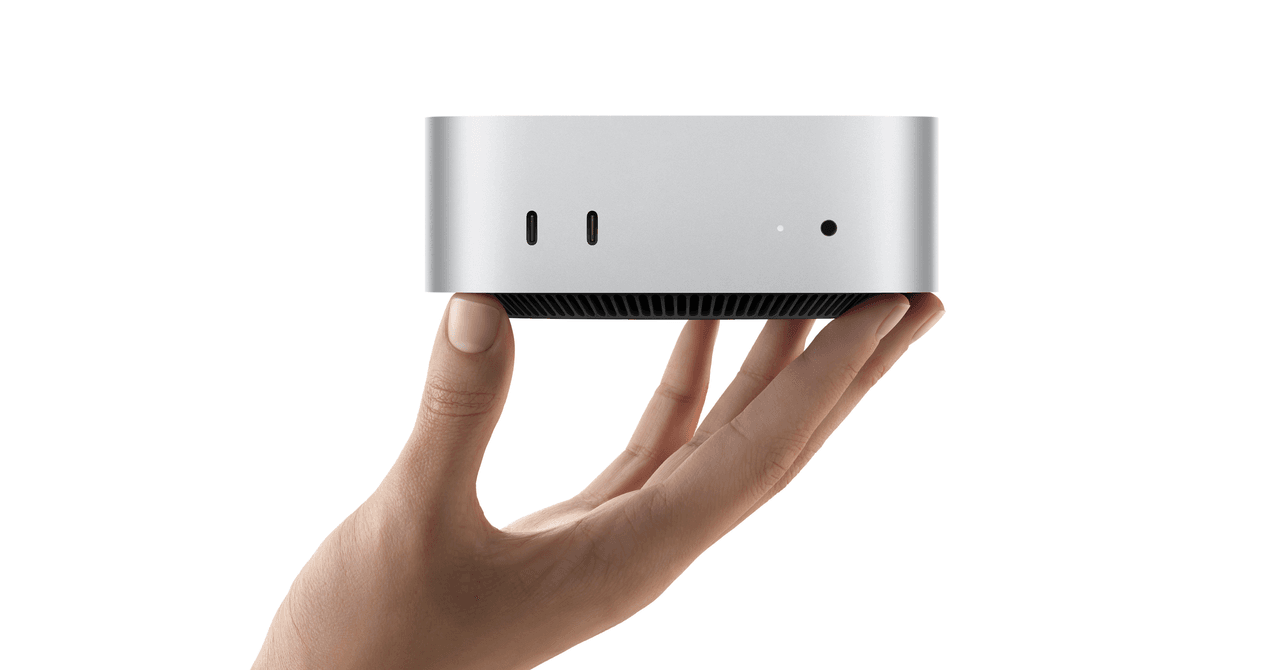
 pple has finally replenished its desktop inventory after letting retail stock dwindle for months, bringing refreshed editions of the Mac Mini and Mac Studio to store shelves. On the outside, nothing changed: you get the exact same compact aluminum enclosure. Under the hood, however, Apple bypassed the standard M5 tier entirely to debut its first 2-nanometer architecture in the M6, while handing the Mac Studio the four-die M5 Ultra powerhouse. The catch sits squarely in the checkout cart.
Apple hiked the starting price of the base Mac Mini to $899—a crisp $200 markup over its predecessor. For that extra cash, you receive 16 GB of unified memory and a 2nm chip delivering up to 170 GB per second of memory bandwidth across configurations topping out at 32 GB. For everyday web browsing, streaming, and editing spreadsheets, paying a premium for invisible micro-architecture tweaks is a steep ask.
The M6 Core Layout and the Mac Studio Monster
The M6 debuts Apple's first 12-core layout, splitting labor between two super cores, four performance cores for multithreaded loads, and six efficiency cores that keep the chassis silent during light routines. According to Apple, this setup delivers 20 percent faster multithreaded performance than the M5 and 40 percent over the M4. The GPU scales to 12 cores, backed by Neural Accelerators and a dual 16-core Neural Engine tuned to run localized AI workloads locally without throttling or turning on loud cooling.
Apple claims the M6 is 20 percent faster than the M5 in multithreaded performance and 40 percent faster than the M4.
Apple claims these graphics enhancements double the M4's gaming and rendering throughput. For heavier workloads, the Mac Mini can also be outfitted with an M5 Pro, while the Mac Studio climbs to the M5 Max or the M5 Ultra—the latter linking four dies through an upgraded UltraFusion interconnect yielding over 4.4 TB per second of bandwidth.
Delivery Dates and the Upgrade Reality
If you already own an M4 or M5 machine, jumping to the M6 makes little financial sense, as everyday desktop tasks will not saturate 12 processing cores or justify the $200 surcharge. The upgrade only pays off for users coming from aging Intel boxes or base M1 systems who require silent local AI processing and heavier compute. For everyone else, this release serves primarily as a paid preview of the 2-nanometer silicon destined for future MacBooks.