
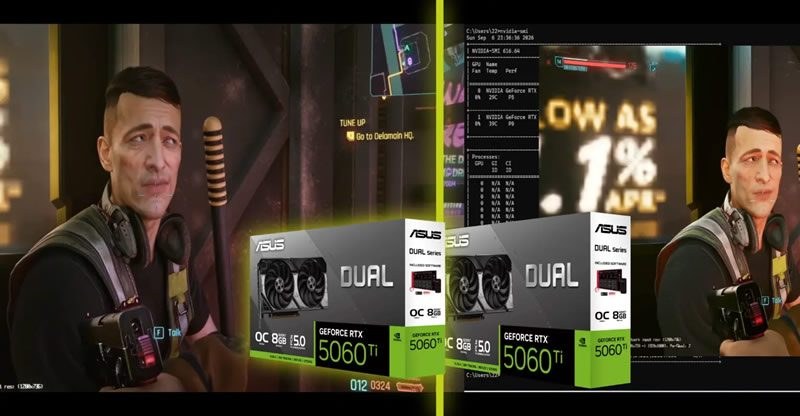
 uying a brand-new graphics card today can blow a massive hole in any personal budget. That is why hardware enthusiasts are reviving the long-forgotten concept of running a dual-GPU tandem in a single PC rig. According to recent engineering teardowns, developers are revisiting this division of labor: offloading frame generation workloads onto a secondary, less capable chip.
How it works in practice
The mechanics behind this task-sharing approach are straightforward, even if you do not know a transistor from a capacitor. The primary graphics card handles native, heavy lifting: geometry, shaders, and high-resolution textures. The secondary, older accelerator takes over the rest of the pipeline—specifically, neural-network-driven frame synthesis via technologies like a hypothetical DLSS 5.
Offloading AI frame generation to a dedicated secondary GPU revives an old multi-card concept with a neural twist.
On paper, this hybrid setup frees up the primary chip and delivers significantly smoother gameplay without forcing you to spend thousands on a flagship board. In practice, however, control responsiveness remains the biggest hurdle: if AI-generated frames introduce input lag and a floaty "jelly mouse" feel, no amount of visual polish will save a fast-paced shooter.
The hidden costs of an old trick
Do not rush to cancel your marketplace listing and plug a dusty graphics card into your motherboard's second slot just yet. First, running two graphics cards instantly turns a PC case into an overheating radiator and demands a substantially beefier power supply unit, costing a pretty penny to replace.
Second, Nvidia spent years deliberately stripping official multi-GPU profile support out of consumer game drivers. Making such hybrid configurations work requires unsupported workarounds, leaving setups vulnerable to constant crashes after every system update.
Key takeaways
- Repurposing an old graphics card as a dedicated AI coprocessor sounds tempting on paper, but selling it remains the smarter choice for regular consumers.
- The added costs of a spacious high-airflow case and a 1000W power supply easily wipe out any perceived hardware savings.