
 uying an expensive gaming laptop should guarantee peak performance without a built-in self-destruct mechanism. Yet manufacturers like ASUS keep chasing liquid metal thermal interfaces to show off flashy cooling charts in marketing decks, brushing aside the long-term structural risks to your machine. Liquid metal relies heavily on gallium, an electrically conductive material that aggressively eats through aluminum and demands nickel-plated copper or pure copper heatsinks just to prevent instant disaster. To keep this volatile fluid from spilling out and frying motherboards, hardware makers install rubber barriers and foam gaskets, but trapping a reactive liquid inside a hot, portable chassis creates brand-new points of catastrophic failure.
Chemical Corrosion in Daily Use
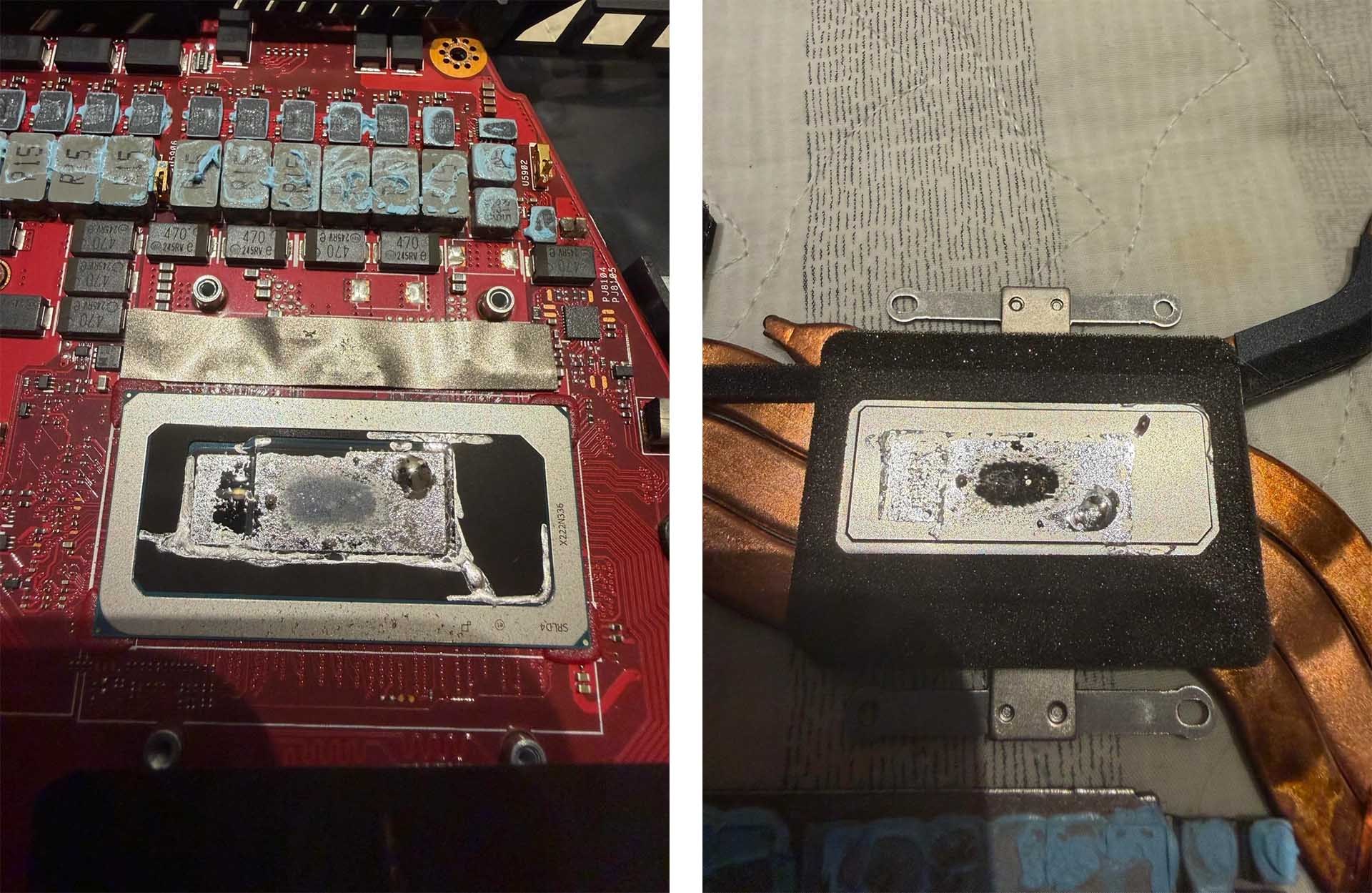
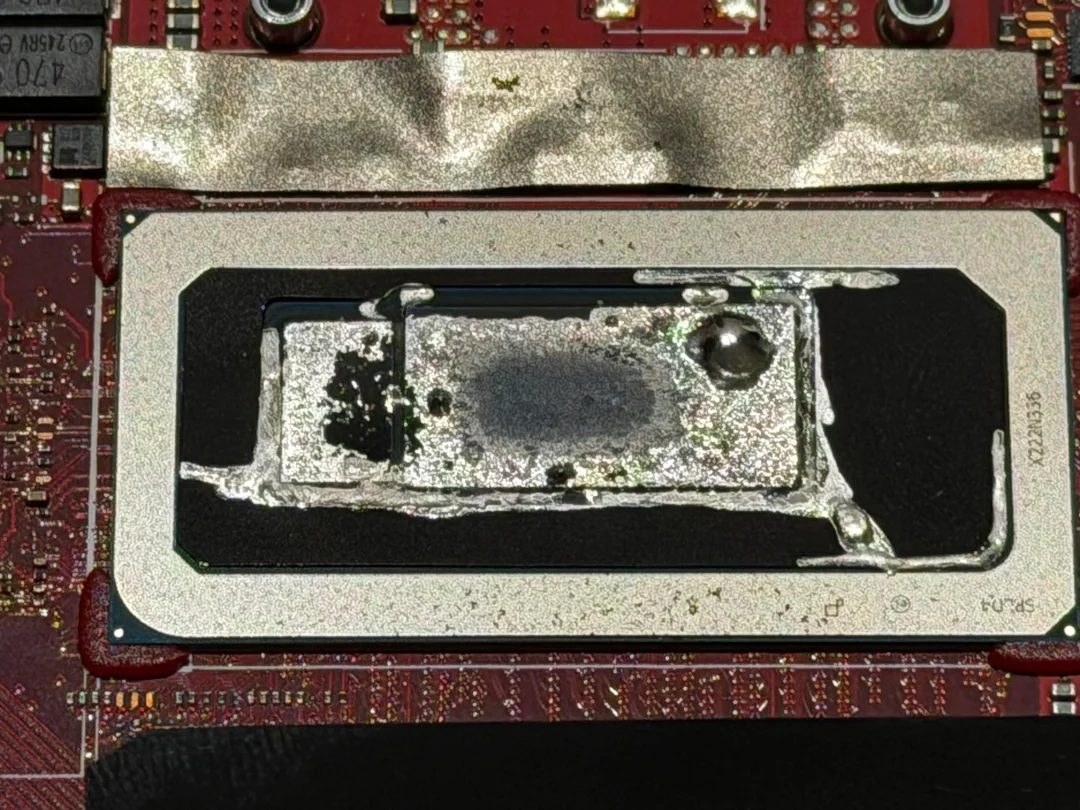
A recent case shared by Redditor nicknickmeetnick reveals exactly what happens when these engineering shortcuts catch up to everyday users. The owner purchased an ASUS ROG Zephyrus M16 in February 2023 and never subjected it to grueling gaming marathons, complex programming workloads, or rendering tasks. Despite this gentle office routine, the laptop suddenly died from thermal throttling and shut down. Upon teardown, the owner found that ASUS had blended the liquid metal with chemical additives to stop it from pumping out.
Liquid metal comprises gallium that’s not only electrically conductive, but it can also dissolve aluminum.
Rather than protecting the components, these chemical compounds triggered severe corrosion across the heatsink and etched directly into the bare silicon die. As a Wccftech report highlighted, using volatile mixtures and harsh additives exposes costly hardware to needless chemical degradation when safer, reliable thermal solutions should have shipped from the factory.
The Phase-Change Alternative That Works
While laptop brands rely on liquid metal to chase marginal temperature wins in initial reviews, dependable alternatives like Honeywell PTM7950 phase-change material solve heat transfer without risking short circuits or corroded dies. In the case of the damaged Zephyrus M16, applying standard thermal paste immediately yielded a 3x gaming frame rate jump simply because the degraded, crusty factory compound had stopped conducting heat altogether. Repair shops remain inundated with boards fried by conductive run-off, making a proactive switch well worth the effort.
Anyone running a high-end gaming machine should consider replacing factory liquid metal with an 80 x 80 x 0.25mm sheet of Honeywell PTM7950 (readily available for around $24 on Amazon), paired with high-performance thermal putty like UPSIREN UTP-X Ultra for the VRMs and video memory. Relying on factory liquid metal turns a two-thousand-dollar rig into a ticking clock where reactive fluids quietly chew through silicon until the system shuts down for good.