
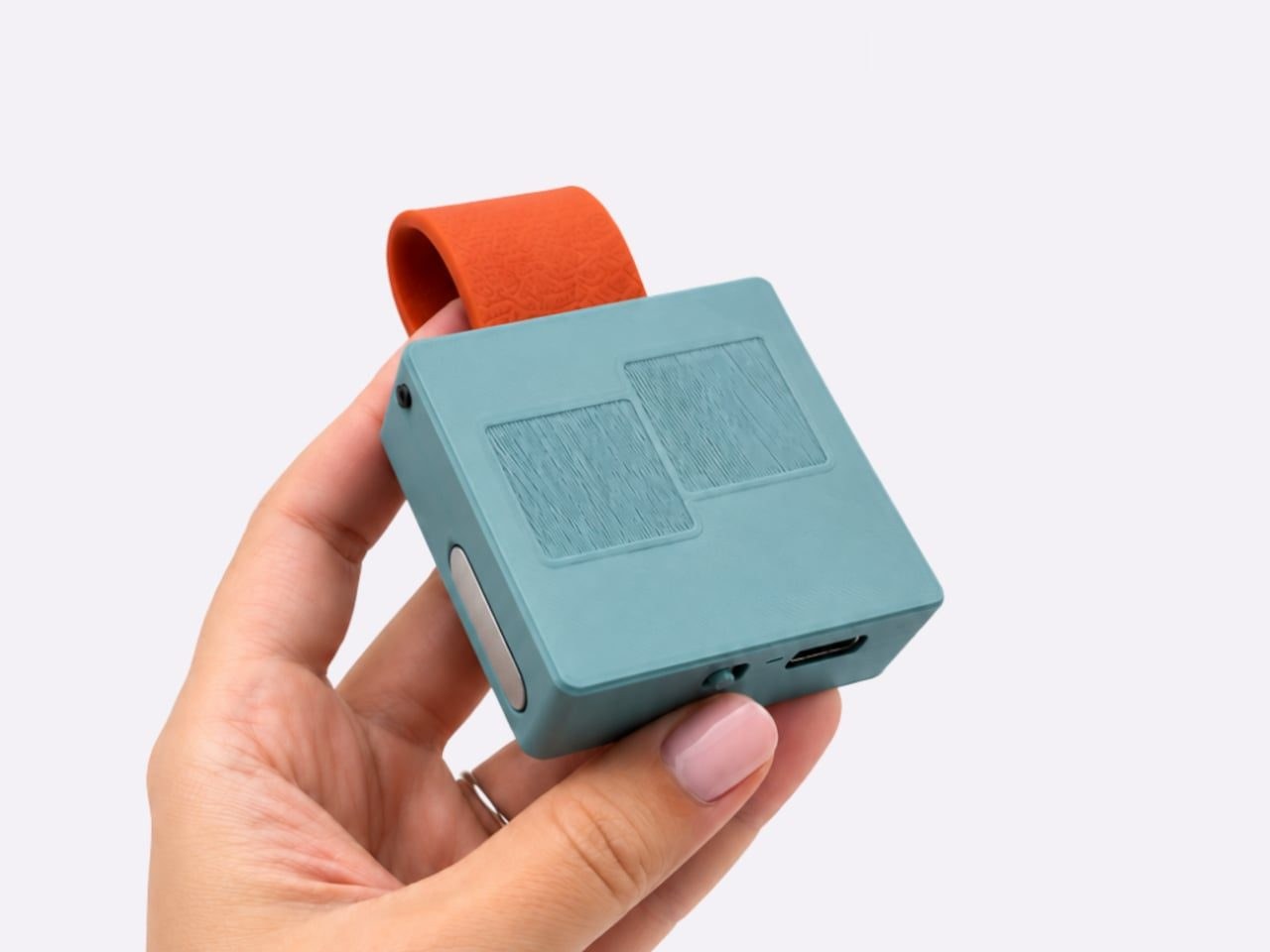
 hen smart glasses leave you with a choice between talking out loud to an empty room or fishing a phone out of your pocket, typing becomes an awkward puzzle. MindRove’s TypAir offers a quieter option, attaching a gesture-based Bluetooth keyboard to your clothing so your fingers can enter text without a conventional set of keys. It is still a working prototype, putting the typing surface beside your hip rather than asking you to find room on a table.
The Pocket Keyboard Reality
TypAir has a compact, roughly square body that attaches magnetically to clothing, pockets, or other straps using a strap. Worn near your hip, TypAir could let you enter a short reply with your hand close to its natural resting position, although comfort will depend on the attachment point, the garment, and the hardware’s eventual proportions. Instead of traditional lettered keys, TypAir translates a predefined set of finger gestures into characters. MindRove also plans customizable gestures for letters, symbols, shortcuts, and commands. A browser guide assigns A to a tap in the bottom-left corner, meaning you have to learn an alphabet before typing becomes familiar.
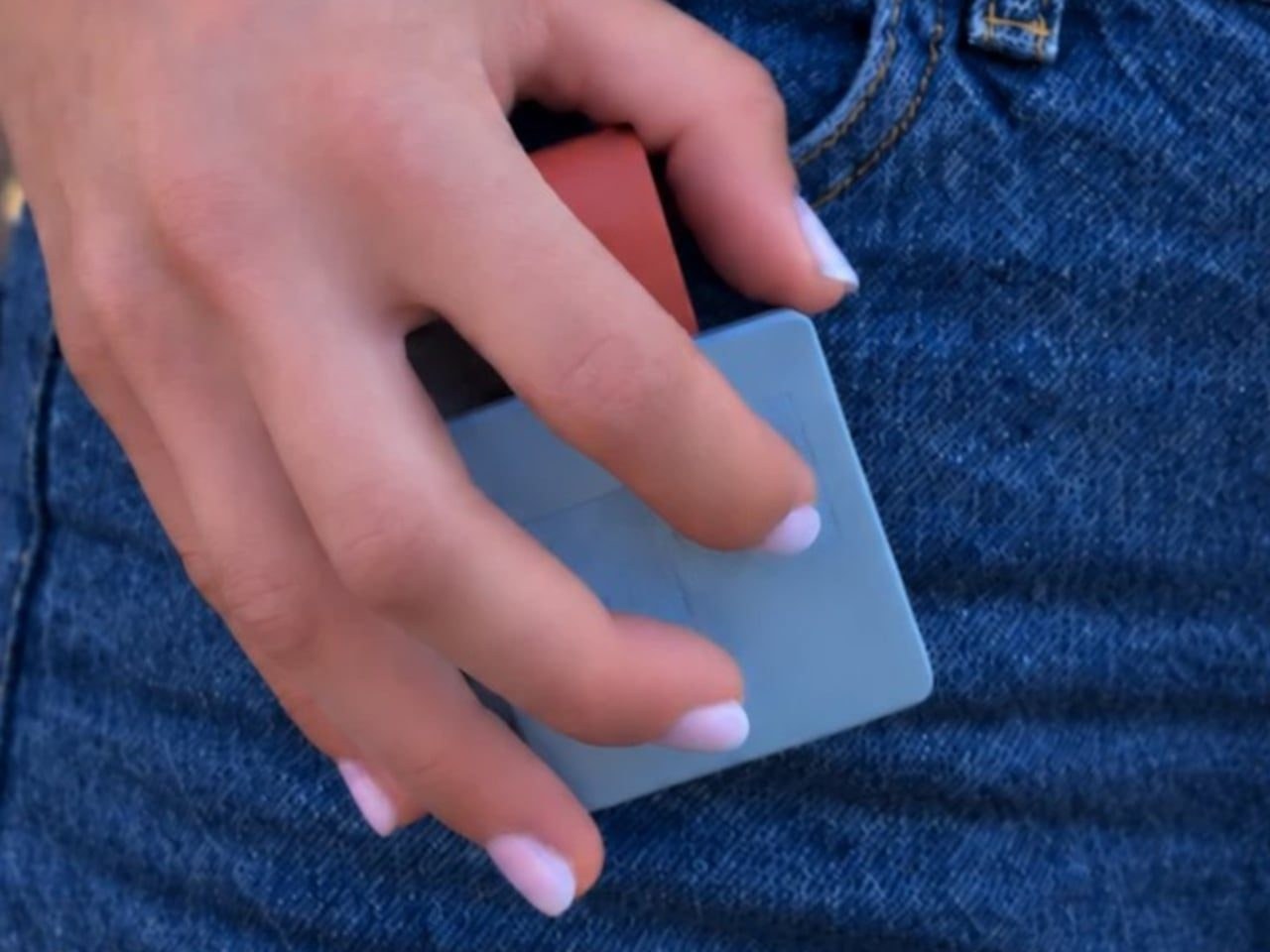
TypAir translates a predefined set of finger gestures into characters instead of using lettered keys.
That flexibility acknowledges something wearable electronics sometimes overlook: people might accept the function but still dislike having another gadget attached to them. A keyboard worn on clothing becomes part of an outfit, so the module and strap can be paired in different colors, with black-on-black offering a quieter presence and brighter combinations making the attachment more noticeable.
Practical Limits and Compatibility
As MindRove stated, the appeal is clearest in moments when speaking would be intrusive, such as composing a message while waiting for an appointment, provided your connected glasses support Bluetooth keyboard input. MindRove lists Android and Windows support for TypAir, while iOS and macOS remain under development. The connected app matters just as much as the hardware.
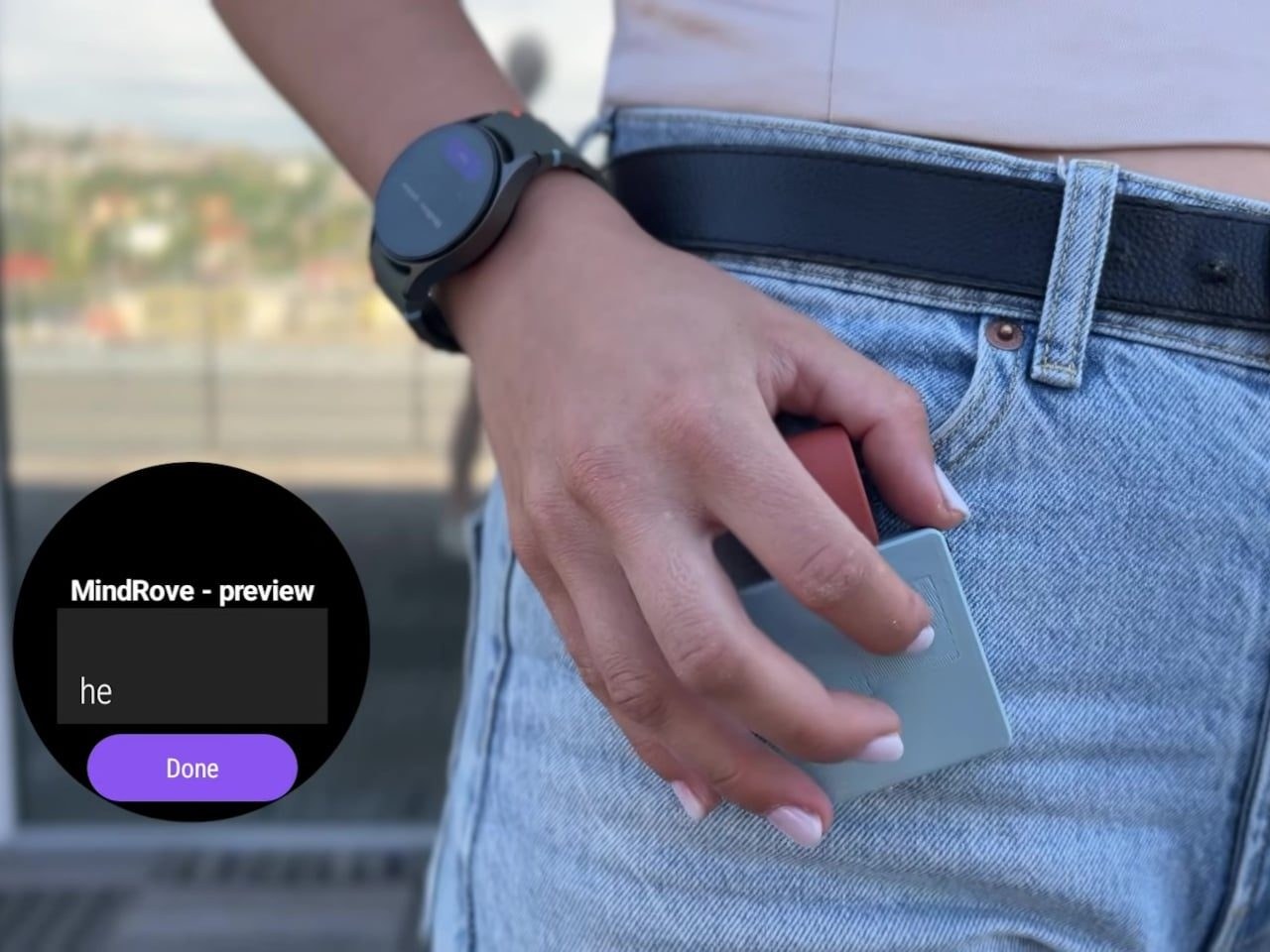
As the company stated, it claims more than six hours of use per charge.
That adds another battery to your routine, and the stated runtime doesn't establish that it will stay available throughout a full working day. As MindRove explained, the wearable design, gesture recognition, and manufacturing preparation still need further work. Those unfinished details will determine how practical the idea becomes when your fingers have to locate the controls without looking down across the clothes you actually wear.
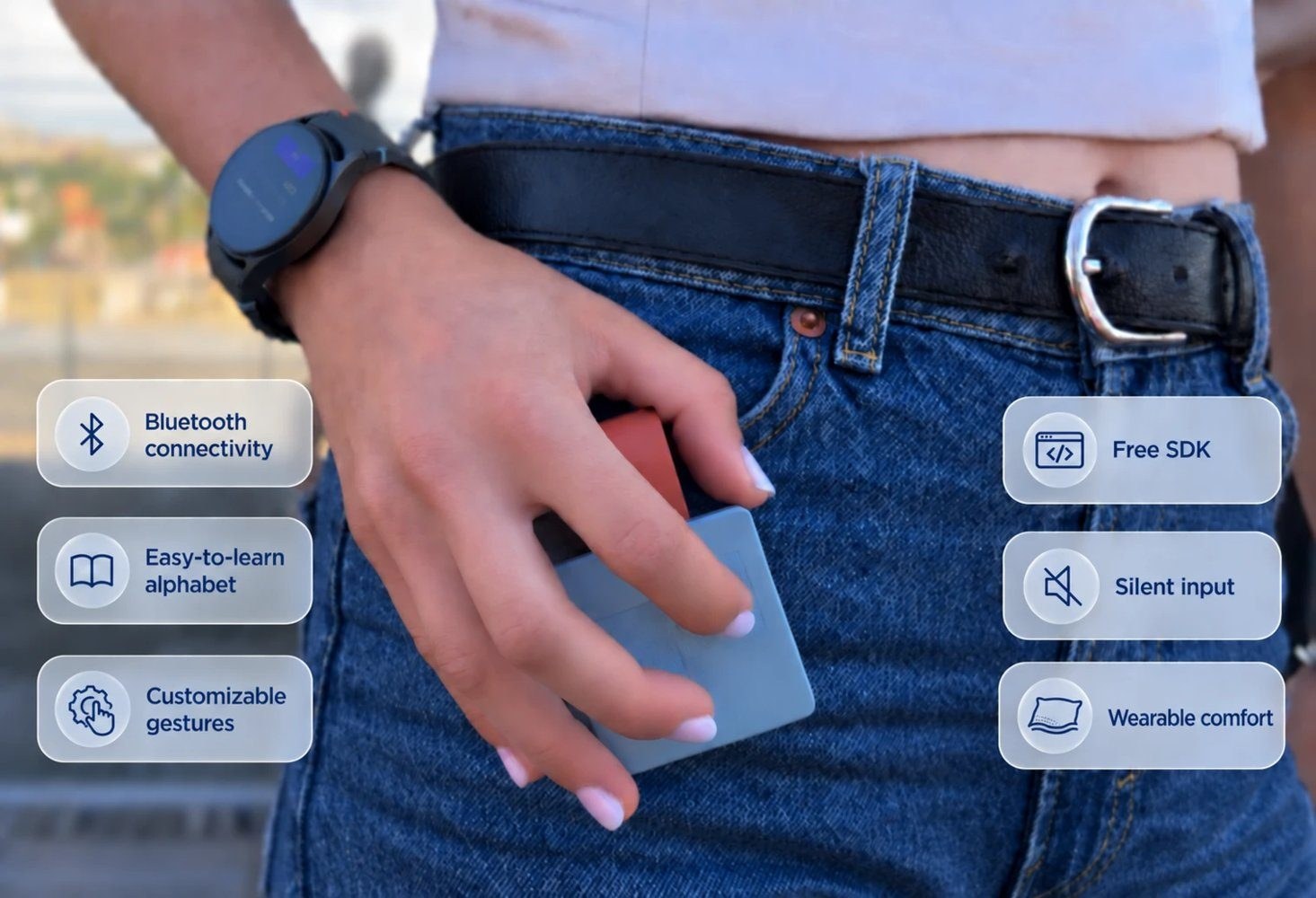
Typing without a physical keyboard by tapping your hip sounds like a sci-fi dream until you remember you have to relearn the alphabet to send a simple text. With Android and Windows support already listed by MindRove while users wait, and battery life that barely clears six hours on company claims, this prototype stays strictly in the workshop for now. Skip this experiment unless you enjoy beta testing hardware that still needs basic work on its design and gesture recognition.