
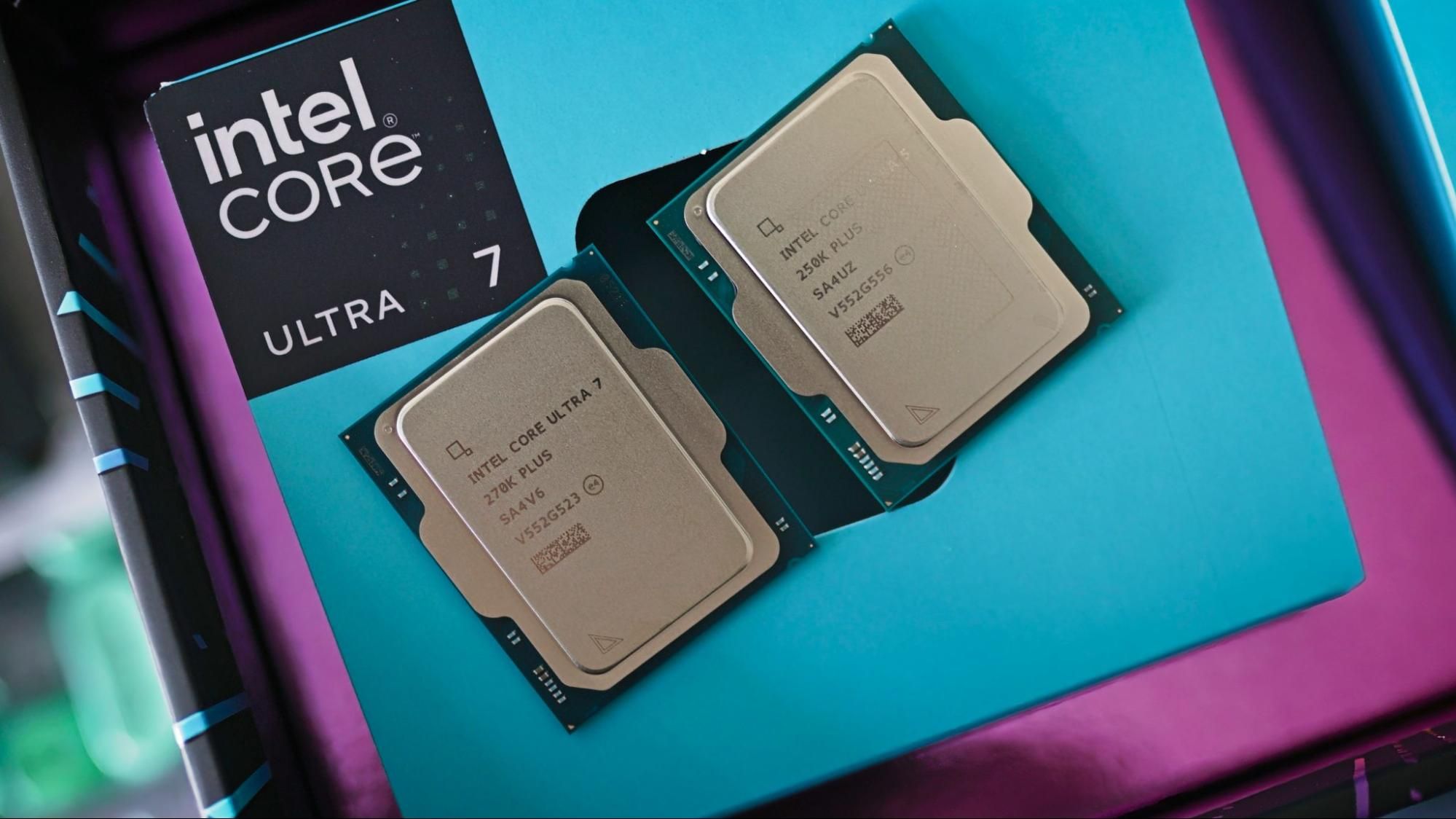
 or months, AMD enjoyed absolute dominance on Amazon's desktop processor sales charts, even boasting that it locked down every single slot in the top ten. That total monopoly just cracked. As spotted by Wccftech and reported by Tom's Hardware, two Intel chips have fought their way back into the retail rankings, proving that aggressive discounts and all-around utility still beat pure brand loyalty when buyers actually pull out their wallets.
Intel's newest desktop processor, the Core Ultra 7 270K Plus, broke in at number six for $290, while the previous-generation workhorse Core i7-14700K secured the number nine position at $312. AMD still maintains a massive footprint with chips like the chart-topping Ryzen 7 9800X3D and the ultra-budget Ryzen 5 5500 sitting strong at number two. Yet Intel's sudden resurgence reveals that buyers are looking beyond gaming-only marketing when building a versatile rig.
The Price-to-Work Balance
If you use your computer for real work alongside gaming, the $290 Core Ultra 7 270K Plus represents a serious course correction for Intel's Arrow Lake platform. Tom's Hardware benchmarks show that this processor beats every single chip in the top ten for combined single-core and multi-core productivity tasks, save for AMD's flagship $569 Ryzen 9 9950X3D, which sits in an entirely different price bracket even with its 19% discount off its $699 list price.
The Core Ultra 7 270K Plus beats everything else in the top 10 for both single- and multi-core performance save for the $569 Ryzen 9 9950X3D.
In pure gaming, AMD's specialized 3D V-Cache memory architecture remains unbeatable at the high end because games thrive on massive on-chip cache rather than raw clocks. Even so, the Core Ultra 7 270K Plus trails just slightly behind the beloved Ryzen 7 7800X3D, which holds the slot right above it. When you weigh the fact that the 270K Plus delivers heavy-duty productivity without the premium tax, AMD's gaming-first narrative starts to lose its grip.
The Real Cost of Motherboards and Memory
Choosing a processor is fundamentally about total platform cost, where memory and motherboard choices quickly inflate the final bill. Building a PC on modern platforms like AMD's Socket AM5 or Intel's Arrow Lake requires newer, costlier DDR5 memory. That requirement explains why budget-conscious buyers still prop up older chips, keeping AMD's Ryzen 5 5600X and Ryzen 7 5800X3D high on Amazon's charts.
This dynamic also keeps Intel's Core i7-14700K remarkably relevant. Unlike newer silicon, the 14700K drops into readily available LGA 1700 motherboards and runs on cheap DDR4 memory recycled from an older system. While staying on an end-of-life platform means no future CPU upgrades without replacing the board, it saves hundreds of dollars upfront. AMD may celebrate benchmark crowns, but discounted $290 chips prove that buyers still care most about total out-of-pocket value.