
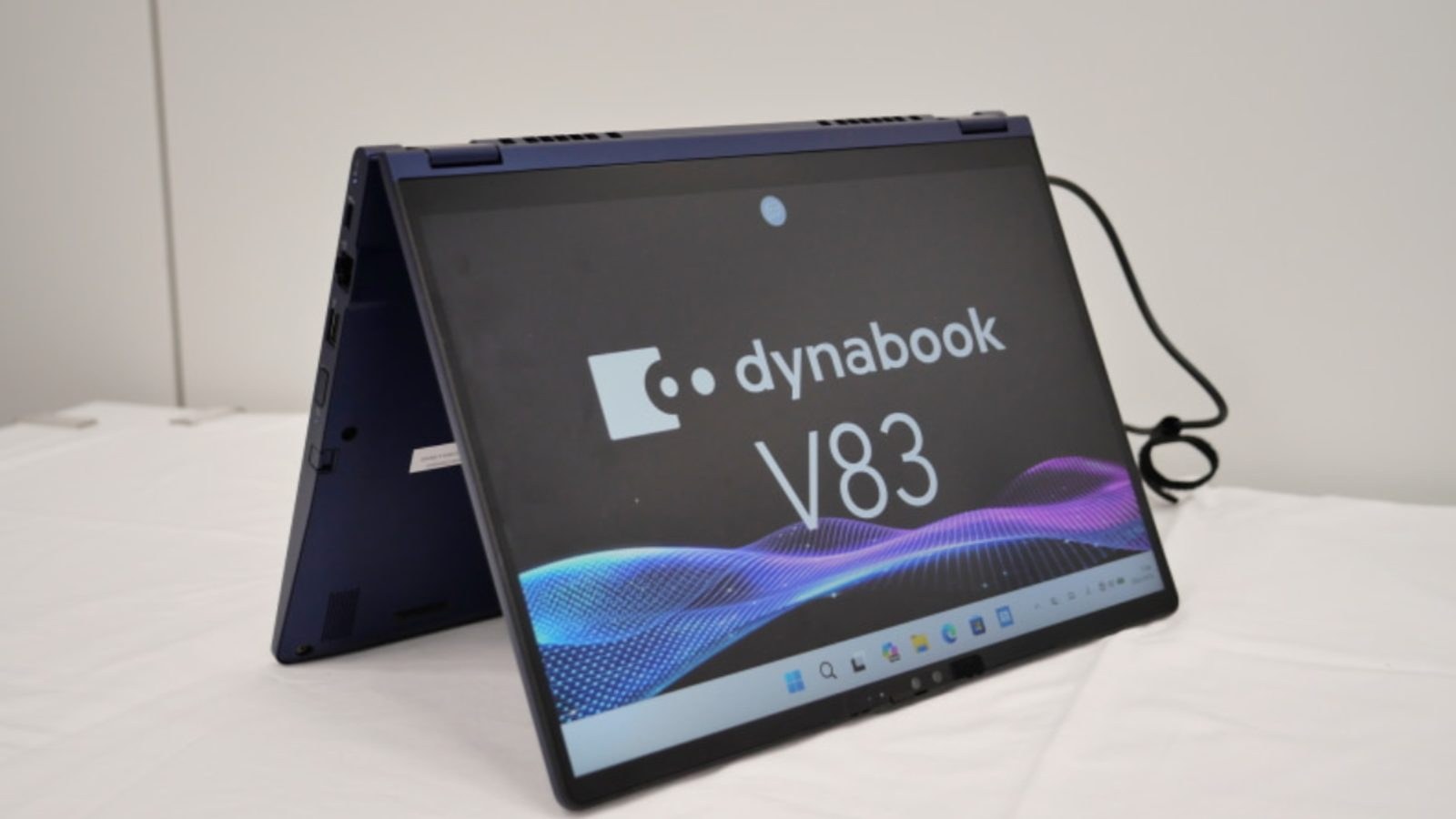
 hen you hunt for a genuinely portable laptop, the market usually forces a miserable choice: either a featherlight slab of plastic without a single standard port, or a heavy workstation that leaves your shoulder aching by evening. Japanese engineers decided to play in a different league and built a machine that shatters these traditional compromises.
Into this near-weightless chassis they somehow managed to cram not just solid hardware, but features that modern ultra-portable makers abandoned years ago in a blind panic for thinness. You get a full-sized Gigabit Ethernet port for wired internet, a pair of modern Thunderbolt 4 connectors, and a stylus that tucks straight into the body and charges right there.
What the numbers actually hide
Beneath this sleek dark-blue shell sit Intel Core Ultra processors, paired with 16GB or 32GB of RAM and a fast solid-state drive. The 1920-by-1200 screen delivers a crisp image, while a built-in fingerprint reader and facial recognition camera handle security. But the loudest claim from the maker lies in battery life: the Japanese promise 28.5 hours in standby mode and 16 hours of video playback.
"Its 989g weight and battery endurance remain manufacturer estimates that no independent test has verified."
Yet here lies the core catch that glossy brochures prefer to skip. The manufacturer quietly keeps quiet about the actual battery capacity in watt-hours, leaving all those endurance claims as internal company statistics that no independent expert has verified yet.
The price tag and the brutal reality
If you are already reaching for your wallet hoping to grab this marvel of engineering, it is time to cool your jets. The base configuration starts at ¥1,057,320, which translates to roughly $6,740. For that kind of cash, you get a standard feature set that other brands sell for a fraction of the price. Upgrading to a higher memory tier costs even more, and paying that sort of ransom for nine hundred grams and a built-in pen silo looks like outright cheek from the brand.
Dynabook managed to pack everything travelers dream of into a single shell: a feather-like weight, a complete port selection, and a hidden stylus. But when a routine office ultra-portable costs a small fortune purely due to exotic manufacturing, buying it turns into an expensive hobby for enthusiasts with bottomless pockets.
What’s behind it
A price tag of 6,740 dollars turns the lightweight Japanese machine from a handy travel laptop into an isolated corporate experiment. Dynabook kept a rare port selection and a built-in stylus, yet charged the equivalent of multiple capable computers for familiar screen and chip specs. Meanwhile, the claimed battery endurance of up to 28.5 hours in standby still relies entirely on the vendor's internal tests. The engineering triumph over bulk collapsed against a price list where every saved gram costs like fine jewelry.